





.webp "Repreve High Quality Micro Peach Knitted Recycled Pet Double Polyester Spandex Fabric for Yoga Wear Leggings")


.webp "4 Way Stretch Breathable Quick Dry Sorona Polyester Spandex Sportswear Polo Shirt Fabric")


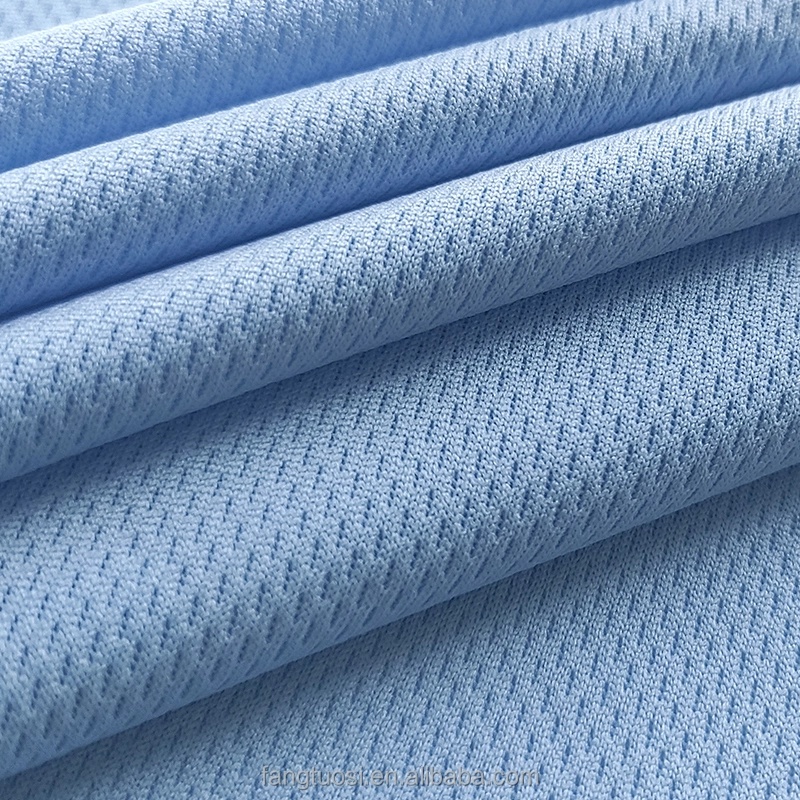
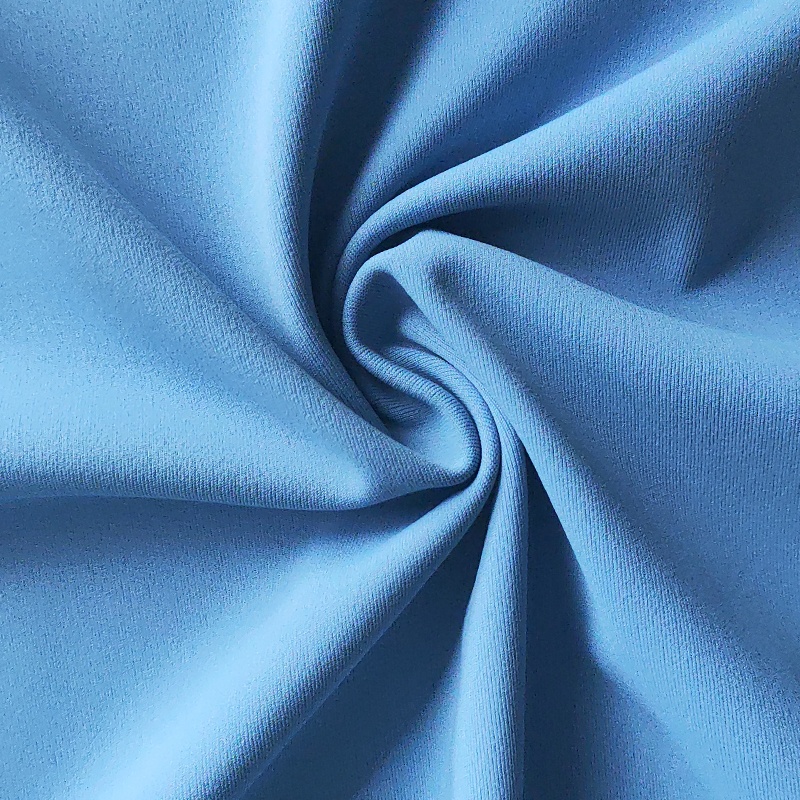
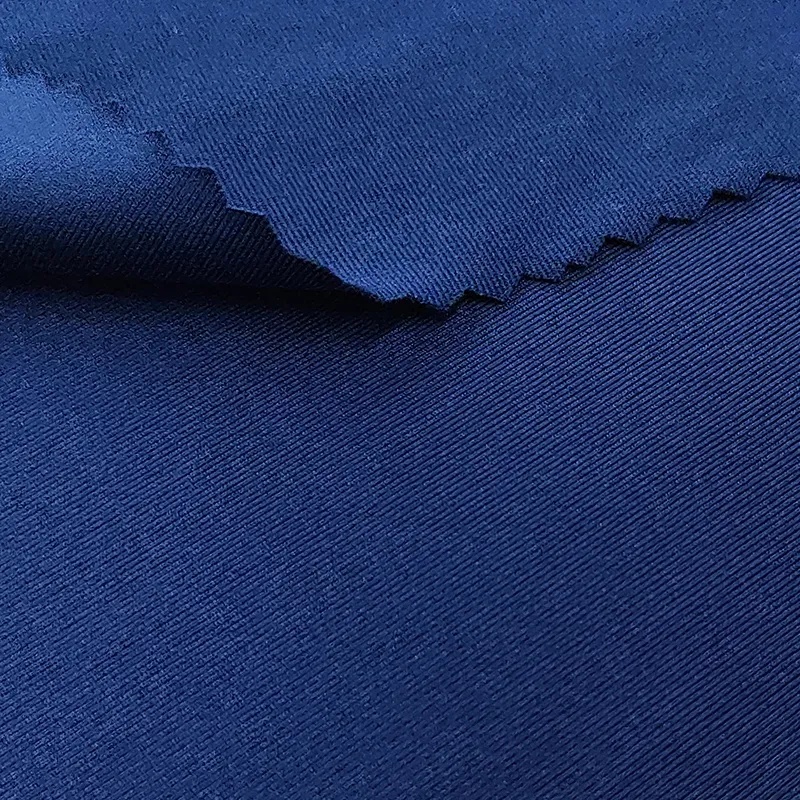


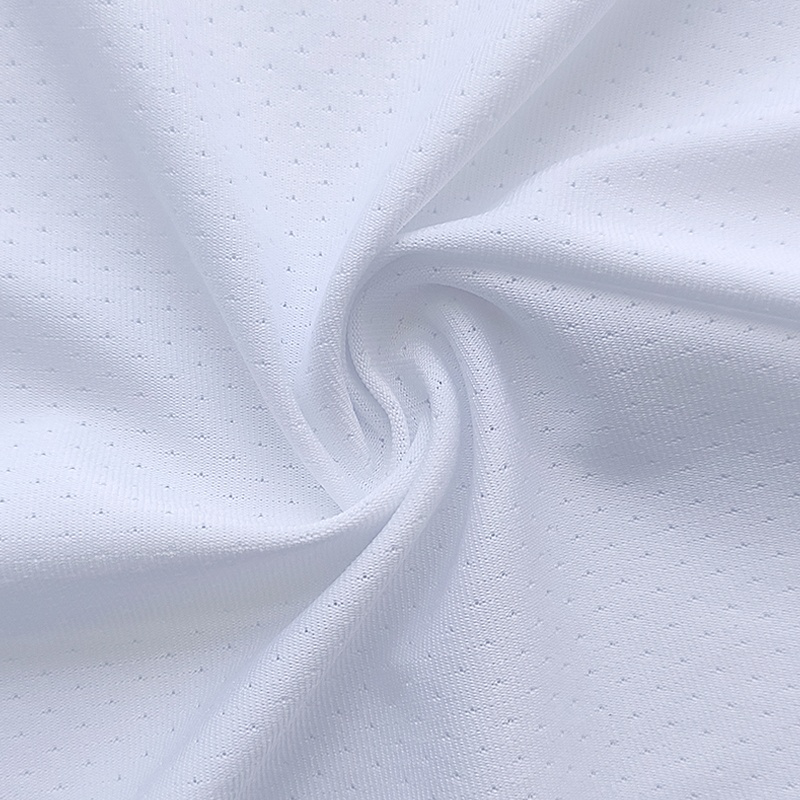


Recycled Nylon – Perfect for luxury swimwear, high-end yoga leggings, and performance gym wear.
Recycled Polyester – Ideal for mass-market sportswear, including jerseys, hoodies, and team apparel, offering eco-conscious appeal.
Nylon-Spandex & Polyester-Spandex Blends – Suitable for leggings, compression gear, and multi-sport apparel requiring high stretch and recovery.
Because it’s one of the most produced and consumed synthetic fabrics in the world, polyester is readily available in a wide variety of styles, weights, and finishes. Whether it’s smooth, textured, or mesh, polyester can be produced in many forms to suit different needs. This wide availability also makes polyester a preferred choice for sportswear fabric wholesale buyers looking for consistent quality and reliable supply.
By combining polyester, nylon, and spandex, our spandex polyester blends balance stretch, durability, and moisture management. These fabrics are suitable for leggings, team sports uniforms, jackets, and multifunctional activewear, providing both comfort and performance.
Function fabric, also known as functional textile or functional fabric, is a category of advanced fabric materials designed to go beyond basic coverage. These textiles incorporate specialized properties to meet specific demands in athletic fabric, jersey fabric, and beyond. Common technologies include:
Moisture-wicking and quick-dry properties
UV protection and UPF50 ratings
4-way stretch for unrestricted movement
Waterproof-breathable laminates
Antibacterial and odor-resistant treatments
Use of eco-friendly fibers, including recycled polyester fabric and ocean-recycled nylon fabric, combining sustainability with high performance
From spinning and weaving to knitting, dyeing, and finishing, all processes are managed under one roof, ensuring seamless quality control and efficiency for functional fabrics.
As a trusted fabric manufacturer, we provide competitive rates and reliable worldwide delivery, supporting brands in the textile industry with sustainable, high-performance fabric solutions.
Fitness Brands: Customizable designs for CrossFit, Pilates, or barre studios, with rapid prototyping (7-10 days) and bulk orders (MOQ: 100m).
Retail Partnerships: White-label options for high-performance lines, emphasizing UPF protection and antimicrobial finishes.
By merging technical precision with aesthetic flexibility, our polyester spandex, nylon spandex and milk silk fabrics empower brands to create gym wear that balances functionality, comfort, and sustainability. For swatches or OEM inquiries, contact us to explore tailored solutions.
polyester spandex Blends (80-85% Polyester + 15-20% Spandex): Optimized for abrasion resistance and moisture-wicking, our polyester spandex fabrics (180-220gsm) withstand rough terrain and brush contact common in mountain biking. The polyester base ensures UV protection (UPF50+), while spandex provides 4-way stretch for dynamic movements like jumps and sharp turns.
Nylon spandex Blends (70-80% Nylon + 20-30% Spandex): Renowned for softness and tear resistance, these fabrics mimic premium brands like Assos, ideal for long-distance endurance rides. Nylon’s hydrophobic properties repel light rain, while spandex maintains compression for muscle support.
clothing fabrics
As a fabric manufacturer specializing in polyester-ammonia and nylon-ammonia blends, our yoga apparel textiles are engineered to deliver performance, durability, and style for yoga pants, sets, tank tops, and more. While seamless knitting is outside our current capabilities, we excel in producing versatile, high-performance fabrics tailored for both athletic and lifestyle wear.
100% polyester fabrics deliver lightweight durability, quick-dry performance, and UV resistance, ideal for high-intensity sports like football jerseys, basketball uniforms, and moisture-wicking gymwear. Enhanced with breathable textures and GRS-certified recycled options (e.g., REPREVE®), they balance cost-efficiency with eco-compliance for mass production.
Engineered for high-intensity sports, this lightweight fabric features a hexagonal honeycomb mesh structure to maximize airflow and keep athletes cool. The polyester blend offers quick-dry moisture management and UV resistance, essential for outdoor football matches. OEKO-TEX® certified for safety, it withstands rigorous movement without losing shape or color vibrancy. Ideal as football jersey fabric for breathable jerseys and training gear, its durable construction resists abrasion while maintaining a soft touch. Precision manufacturing ensures eco-friendly processes and consistent performance for team uniforms.
Engineered with breathable bird-eye texture for enhanced airflow and rapid moisture evaporation, this lightweight jersey fabric is ideal for high-performance sportswear like football jerseys, training suits, and gym apparel. Made from GRS-certified recycled polyester, it combines UV resistance (UPF 50+) and abrasion-proof durability, supporting eco-conscious brands with OEKO-TEX dyeing and vertical production.
Jacquard-knit fabric combining polyester's durability with spandex elasticity for multidirectional stretch and team jersey customization. Textured weave enhances airflow and resists pilling during rigorous use. Moisture-wicking properties maintain dryness, while colorfast fibers ensure vibrant print retention. Lightweight construction supports athletic mobility without compromising shape integrity. Suitable for high-performance sportswear requiring abrasion resistance and design versatility. OEKO-TEX certified for safe, long-lasting wear.
Lightweight nylon-spandex blend fabric in a single jersey knit, offering softness and balanced stretch for athletic comfort. Smooth, breathable structure supports unrestricted motion during high-intensity activities. Resists chlorine and saltwater exposure, ensuring durability in active environments. Quick-drying efficiency maintains dryness, while abrasion-resistant fibers retain shape through repeated use. Certified for safe skin contact. Ideal for sportswear requiring lightweight flexibility, long-lasting wear, and adaptable performance.
Jacquard-knit fabric combining polyester's durability with spandex elasticity for multidirectional stretch and team jersey customization. Textured weave enhances airflow and resists pilling during rigorous use. Moisture-wicking properties maintain dryness, while colorfast fibers ensure vibrant print retention. Lightweight construction supports athletic mobility without compromising shape integrity. Suitable for high-performance sportswear requiring abrasion resistance and design versatility. OEKO-TEX certified for safe, long-lasting wear.
Nylon (polyamide) is petroleum-based with silky smoothness(ECONYL® recycled from fishing nets), offering closed-loop potential
Polyester (PET) combines strength with recyclability (e.g., GRS-certified REPREVE from plastic bottles), dominates mainstream eco-applications.
Polyester, nylon, and blends with spandex or Lycra are commonly used for moisture-wicking properties.
Polyester is incredibly strong and resistant to stretching, shrinking, and abrasions, which makes it highly durable.
Virgin PET chips or recycled flakes (e.g., REPREVE® from plastic bottles) are purified and dried (≤50ppm moisture) to ensure melt-spinning stability.
Fujian East Xinwei Textile Technology Co., Ltd as a vertically integrated textile leader, we unite spinning, weaving, and dyeing under one roof, operating 78,000㎡ dyeing facilities (12 lines, 4,000+ tons/month) and 83,000㎡ knitting mills (400+ circular machines, 15,000+ tons grey fabric/month). Our GRS, OEKO-TEX, and ISO-certified production ensures premium sportswear fabrics (recycled polyester, nylon blends) with 72-hour rapid prototyping. Serving global brands across 30+ countries, we specialize in eco-friendly, high-performance materials for yoga, cycling, and team sports, exported primarily to Asia and North America. Committed to “Quality First, Excellence Always”, we deliver innovation from yarn to finished fabric with end-to-end traceability.
Before dyeing , inspect if there are defectives like oil needle, horizontal strip, vertical strip, missing needle, yarn break , broken holes on the surface of fabric
East Xinwei founded Dongguan office ---Established in China's manufacturing hub, this office leveraged Dongguan's strategic location near Guangzhou-Shenzhen economic corridor to access global supply chains, aligning with the city's emerging role in electronics and textiles.
Yarn Texturizing: Textured yarns are processed via advanced texturizing machines to enhance elasticity and durability.
100% polyester pique fabric engineered with a textured knit for accelerated moisture dispersion and airflow enhancement. Lightweight structure balances breathability with durability, resisting pilling and deformation during repeated use. Chlorine/saltwater-resistant fibers ensure performance retention in harsh outdoor conditions. Non-abrasive surface minimizes friction during high-intensity activities. Designed for sportswear requiring rapid drying, long-term wear resilience, and adaptability to extreme environments.
UPF50+ certified polyester fabric with honeycomb knit structure for enhanced airflow and lightweight durability. Engineered moisture-wicking properties accelerate drying during intense activity. Resistant to chlorine, saltwater, and UV degradation, maintaining performance through repeated use. Smooth, abrasion-resistant surface minimizes irritation. Ideal for high-exposure sportswear requiring breathability, sun protection, and long-lasting structural integrity.
Polyester-spandex blend jersey fabric with waterproof coating, offering balanced breathability and weather resistance. Four-way stretch enhances mobility without compromising structural integrity. Durable construction withstands repetitive movement and outdoor conditions. OEKO-TEX certified for safety, resistant to abrasion and surface wear. Suitable for high-activity sports shirts requiring water protection and flexibility. Maintains shape through extended use.
Lightweight polyester jersey fabric engineered with advanced cooling technology for temperature regulation during outdoor activities. Moisture-wicking properties enhance breathability and quick-drying performance. Durable construction withstands repetitive motion and maintains shape integrity. OEKO-TEX certified for safe skin contact, resistant to UV degradation and abrasion. Ideal for high-intensity sportswear requiring comfort and long-term durability in varying climates.
GOTS-certified 100% organic cotton jersey fabric, specifically designed for infant apparel. Hypoallergenic and free from harmful chemicals, ensuring safety for sensitive skin. Soft, breathable knit structure provides comfort while maintaining durability through repeated washing. Compliant with international organic textile standards for sustainable production. Ideal for baby bodysuits, t-shirts, and eco-conscious clothing lines requiring non-toxic materials.
Soft, breathable cotton-spandex blend with four-way stretch for comfort and mobility. Single jersey knit construction ensures smooth texture and durability through repeated washing. Hypoallergenic and Oeko-Tex certified for skin safety. Ideal for everyday t-shirts requiring flexibility and shape retention. Resists pilling and maintains color vibrancy over time.
Blended fabric combining polyester's durability with cotton's breathability in a striped French terry knit. Brushed inner loops provide thermal insulation and moisture absorption, ideal for hoodies and athleisure wear. Resists pilling and shrinkage while maintaining shape through repeated use. OEKO-TEX certified for safety. Suitable for casual and sportswear applications requiring softness and structural resilience.
Recycled Polyester Cotton Blend Fabric combines recycled PET (from plastic bottles) and cotton fibers, offering sustainability and functionality for casual T-shirts. It reduces environmental impact by repurposing waste, lowering CO2 emissions and water usage. The blend (e.g., 65% polyester, 35% cotton) balances breathability, softness, and durability, ideal for daily wear. Its moisture-wicking properties and wrinkle resistance enhance comfort, while recycled components meet eco-certifications like OEKO-TEX. Brands like Zara use such fabrics, proving its viability in stylish, eco-conscious apparel. This fabric supports circular fashion, aligning with global sustainability goals.
Recycled fabrics, such as rPET (from plastic bottles) and regenerated fibers from textile waste, drastically reduce reliance on virgin resources.
Function fabrics excel at maintaining optimal body temperature and managing sweat. For instance:
Phase-change materials like EvenTemp™ use microcapsules to absorb or release heat, balancing warmth and cooling during activity.
Moisture-wicking synthetics (polyester, nylon) draw sweat away from the skin, while breathable membranes(e.g., CAMEL-TEX) allow vapor escape without compromising waterproofing.
Far Infrared (FIR) technology in bioceramic-infused fabrics enhances blood circulation, reducing muscle fatigue and accelerating recovery.
Function fabrics now combine smart fibers(e.g., energy-harvesting, self-powered textiles), nanomaterials(MXene, graphene), and conductive composites(liquid metal-reinforced PU/CNT structures). These enable real-time sensing, adaptive thermal regulation, and wireless communication for IoT integration.
Made of cellulose (87–90%), with natural impurities and moisture .
Fibers form fluffy, round bolls after seed maturation, which are mechanically processed into yarn and woven into fabric
Cotton allows air circulation, absorbs moisture (up to 8–10% of its weight), and feels soft against the skin, making it ideal for everyday wear and sensitive skin . Its hypoallergenic nature reduces irritation, even for infants or eczema-prone individuals .
Spandex adds 5–20% stretch to the fabric, allowing garments to conform to body contours while retaining shape after movement. This makes it ideal for activewear, swimwear, and form-fitting casual wear.
The spandex component (typically 5–20% of the blend) provides exceptional elasticity, allowing the fabric to stretch up to 500–700% of its original length while maintaining shape recovery. For example, sports bras with 20% spandex adapt dynamically to body movements during high-intensity activities like yoga or running, ensuring unrestricted motion and muscle support. This elasticity is critical for compression gear, swimwear, and leggings, where flexibility and a snug fit are paramount.
Spandex provides 500–700% elasticity, enabling the fabric to stretch in 4 directions while maintaining shape recovery. This ensures swimwear and athleisure garments (e.g., leggings, rash guards) move seamlessly with the body during activities like swimming or yoga, reducing friction and enhancing mobility. For example, a blend with 18% spandex offers compression-like support for muscle stability without restricting movement
Nylon spandex is the top choice for swimwear due to its chlorine resistance, quick-drying properties, and ability to retain shape in water. Its 4-way stretch ensures a snug, body-conforming fit, ideal for competitive swimsuits and casual beachwear. For example, blends with 20% spandex provide compression and flexibility, while specialized treatments like PBT coatings enhance resistance to pool chemicals.
Jacquard fabric is created using a specialized loom (or a Jacquard attachment) that controls individual warp threads, allowing for raised motifs, reversible patterns, and detailed designs like florals, damasks, and geometrics.
Unlike printed fabrics, the patterns are woven into the material, making them durable and resistant to fading.
Quick-drying performance in modern textiles is largely achieved through microporous structures and capillary action, where tiny pores and surface channels in fibers like polyester or nylon pull moisture away from the skin and spread it across the fabric for faster evaporation. This mechanism is widely applied in high-performance function fabric, helping improve breathability and comfort in active wear.
For example, Nike’s Dri-FIT technology uses a microporous structureto pull moisture to the fabric’s surface, outperforming traditional cotton, which retains moisture and causes discomfort. This feature is critical for sports like running and yoga, where prolonged dryness enhances performance
UPF50+ blocks 98% of UV radiation, surpassing lower-rated fabrics (e.g., UPF30 blocks 97.4%) and offering 20x more protection than untreated cotton (UPF 5-8).
It provides full-spectrum defense against both UVA (skin aging) and UVB (sunburn) rays.
UPF50 fabrics are primarily made from synthetic fibers like polyester or nylon, which inherently have dense molecular structures that naturally block UV radiation.
Advanced treatments such as titanium dioxide (TiO₂) or zinc oxide (ZnO) coatingsenhance UV absorption by reflecting or scattering harmful rays.
Chemical Agents: Silver ions (Ag⁺), chitosan, and quaternary ammonium salts disrupt bacterial cell walls or interfere with metabolic processes. For example, silver ions embedded in fibers release over time, achieving >99% bacterial reduction.
Physical Barriers: Superhydrophobic surfaces (inspired by lotus leaves) prevent bacterial adhesion by trapping air layers, while graphene’s sharp edges rupture microbial membranes.
Natural Compounds: Bamboo fibers contain "bamboo kun," a bioactive agent that inhibits bacterial growth by 70–99%.
Mechanism: Fabrics are coated with antibacterial agents (e.g., silver ions, quaternary ammonium salts, or chitosan) via dipping, spraying, or padding. These agents disrupt bacterial cell walls or metabolic processes.
Example: Chitosan, derived from crustacean shells, binds to bacteria’s negatively charged surfaces, causing lysis.
Durability: Post-finished fabrics may lose efficacy after 10–20 washes if exposed to anionic detergents.
Blocks water penetration through coatings (e.g., polyurethane) or membranes (e.g., Gore-Tex®), with hydrostatic head ratings up to 20,000 mm, ensuring dryness in heavy rain or snow.
Seam-sealed construction prevents leaks at stitching points, critical for extreme environments.
Microporous Membranes:
Gore-Tex®: Uses PTFE membranes with 0.1–5 μm pores to block liquid water while allowing vapor escape (>10,000 g/m²/24h breathability).
eVent®: Features direct-venting technology for faster moisture expulsion (5,300 g/m²/24h breathability), ideal for high-intensity activities.
Polyurethane (PU) Coatings: Cost-effective and lightweight, modern variants like Aquatex® enhance flexibility and abrasion resistance.
Hydrophilic Solid Films:
Sympatex®: A polyester-based film that transports vapor via molecular diffusion, excelling in humid environments (hydrostatic head >20,000 mm).
Radiative Cooling:
Fabrics like POM nanofibers reflect >96% of solar radiation while emitting infrared heat through atmospheric transparency windows (8–13 μm), achieving sub-ambient cooling even in direct sunlight . Bioinspired coatings with CaCO₃/BaSO₄ microcrystals amplify solar reflection and infrared emission, reducing temperatures by up to 8°C compared to untreated fabrics .
Phase-Change Materials (PCMs):
Hybrid designs integrate graphene or wax-based PCMs to absorb and release heat dynamically, stabilizing skin temperature during temperature fluctuations .
Reflect sunlight & emit heat via infrared.
Cotton’s soft, breathable fibers allow air circulation, keeping skin cool in summer and warm in winter. Its hypoallergenic properties make it ideal for sensitive skin, reducing irritation and allergies. Innovations like RESTech COTTON™ enhance softness by 40% while maintaining durability, ensuring comfort for daily wear.
Natural Softness
Hypoallergenic Properties
Combines 95-98% cotton with 2-5% spandex.
Athletic apparel: Ideal for yoga pants, jogging suits, and cycling shorts, as its elasticity (5–8x stretch) supports dynamic movements.
Swimwear: Blended with nylon or polyester, it provides form-fitting designs resistant to chlorine and saltwater.
Performance socks: Enhances fit and breathability in high-end socks, reducing friction during sports.
Workwear: Flame-resistant uniforms (e.g., welding protection), anti-static overalls.
Casualwear: T-shirts, jeans, yoga pants.
Medical Textiles: Hypoallergenic scrubs, patient gowns.
Sportswear: Lightweight hoodies, gym socks.
Underwear: Soft, skin-friendly basics.
The soft, smooth texture of bamboo fibers (with rounded cross-sections) reduces skin friction, ideal for sensitive skin. Blended with cotton (e.g., 95% cotton + 5% bamboo), it retains cotton’s gentle hypoallergenic feel while enhancing durability.
Bamboo grows rapidly (3–5 years to maturity), requires minimal water, and thrives without pesticides. Blended with organic cotton, it reduces water usage by 60% compared to conventional cotton.
Blended fabric combining polyester's durability with rayon-cotton's softness in a breathable single jersey knit. Moisture-wicking properties enhance comfort during physical activity. Four-way stretch ensures mobility while resisting pilling and shrinkage. Maintains shape integrity through repeated washing. OEKO-TEX certified for skin safety. Suitable for sportswear t-shirts requiring balanced comfort and performance durability.
Made from recycled plastic bottles, this eco-friendly fabric delivers softness and full flexibility for yoga, swimming, or gym workouts. The polyester-spandex blend offers natural stretch and shape retention, adapting seamlessly to body movements. Breathable and moisture-wicking, it ensures comfort during intense activities while reducing environmental impact. Certified for safety and durability, it's perfect for leggings, swimwear, or athleisure that values sustainability without sacrificing performance.
100% polyester vertical mesh fabric features a tightly knitted, lightweight structure with vertical mesh patterns, ensuring durability and breathability for sportswear and outdoor gear. Its moisture-wicking and quick-drying properties enhance comfort during high-intensity activities, while UV resistance and colorfastness maintain performance under sun exposure. The vertical mesh design promotes superior airflow, reducing heat buildup. Ideal for jerseys, activewear, and accessories, it resists abrasion, pilling, and wrinkles, retaining shape over time. Available in weights (90–500gsm) and widths (45–320cm), it supports customization for industrial or fashion uses. Certifications like OEKO-TEX and eco-friendly recycled polyester variants cater to sustainable demands. Machine-washable and chlorine-resistant, it balances functionality with low maintenance.
Designed for active versatility, this breathable polyester fabric features a textured knit for enhanced airflow in polos or sportswear. Lightweight and quick-drying, it wicks moisture to keep you cool during workouts or casual wear. Soft yet durable, it resists wrinkles and fading, retaining its crisp look wash after wash. Available in eco-conscious recycled options, certified skin-safe and ideal for performance-driven apparel that merges athletic function with everyday style.
Ideal for active lifestyles, this lightweight stretch fabric combines durability with superior comfort. The polyester-spandex blend offers four-way elasticity, ensuring freedom of movement for yoga, gym sessions, or daily wear. Breathable and moisture-wicking, it maintains shape through repeated use while providing a soft, supportive feel against the skin. Available in eco-conscious recycled variations, it meets international safety standards for sensitive skin applications. Perfectly balances flexibility and compression for high-performance activewear.
Tracksuit polyester spandex fabric (typically 95% polyester, 5% spandex) combines polyester’s durability, wrinkle resistance, and quick-drying properties with spandex’s 4-way stretch (up to 500% elasticity), ensuring flexibility and shape recovery. Lightweight and breathable, it wicks moisture efficiently, ideal for high-intensity workouts. The smooth, abrasion-resistant surface resists pilling, while the ribbed or jersey knit structure enhances airflow and comfort. Commonly used in sportswear, athleisure, and performance tracksuits, it adapts seamlessly to body movements and retains vibrant colors after repeated washes. Eco-friendly variants may incorporate recycled polyester (rPET) or OEKO-TEX-certified fibers for sustainable fashion. Machine-washable and low-maintenance, it balances athletic functionality with everyday practicality.
Ideal for athletes, this ultra-soft fabric combines lightweight polyester microfiber with a breathable interlock knit for all-day comfort. The smooth texture wicks moisture and resists odors during intense workouts, keeping you cool and fresh. Durable yet gentle on skin, it retains shape through repeated use and washes. Certified skin-safe and perfect for high-performance sportswear that balances functionality with everyday comfort.
Crafted for fitness enthusiasts, this eco-conscious fabric blends recycled nylon with stretchy spandex for smooth, sweat-wicking comfort. Its subtle matte finish offers a sleek look, while the breathable knit supports dynamic movements during workouts. Soft against the skin and quick-drying, it resists odor and retains shape through intense sessions. Ideal for gym wear, yoga outfits, or casual activewear. Certified skin-safe and made with sustainable materials, it balances performance with planet-friendly durability.
Crafted for comfort, this cotton-modal blend offers a soft, breathable feel for hoodies and sweatpants. The digital printing delivers vibrant, fade-resistant patterns, while the French Terry inner layer wicks moisture naturally. Lightweight yet durable, it resists pilling and stays cozy through daily wear. Available in eco-conscious options, certified skin-safe and perfect for loungewear, casual athleisure, or stylish home outfits. Balances effortless style with lasting comfort.
Perfect for active lifestyles, this fabric blends cotton’s breathability with spandex stretch for sweat-wicking comfort. The breathable mesh knit keeps you cool during workouts or casual wear. Soft, lightweight, and resistant to shrinking, it holds its shape wash after wash. Available in eco-conscious recycled options, certified skin-safe for sensitive skin. Ideal for custom tees, gym wear, or breathable everyday apparel that blends durability with all-day ease.
Ideal for active lifestyles, this lightweight fabric offers all-direction stretch for unrestricted movement during cycling, gym sessions, or outdoor runs. The smooth, breathable knit wicks sweat quickly, keeping you dry and comfortable. Durable yet soft against the skin, it resists fading and holds its shape through repeated use. Available in eco-conscious recycled options, certified for skin safety. Perfect for sportswear, tops, or jerseys that blend performance with everyday versatility.
Lightweight, durable, and quick-drying, polyester is ideal for outdoor and high-intensity sportswear. It maintains shape after repeated washing and works well in performance jerseys, hoodies, and team uniforms.
Polyester, nylon, and spandex blends are top choices for sportswear due to their moisture-wicking, breathable, and stretchable properties. At East Xinwei, our GRS-certified recycled polyester (rPET) and ECONYL® recycled nylon offer durability and sustainability, ideal for activewear like yoga leggings, cycling jerseys, and swimwear. Our fabrics, enhanced with Coolmax® technology, provide 50% faster drying for peak performance.
RPET stands for recycled polyester made from plastic bottles. It’s durable, eco-friendly, and widely used in sportswear and bags.
With 78,000㎡ dyeing lines, 83,000㎡ knitting mills, and over 15,000 tons of grey fabric produced monthly, we deliver bulk polyester and nylon fabrics to meet global clients demands.
Functional fabrics are created through various methods, such as:
Fiber Modification: Incorporating functional properties directly into the fibers during production.
Coating or Laminating: Applying functional layers onto the fabric surface.
Blending: Combining different fibers to achieve desired functionalities.
Our Polyester spandex blends (80-85% polyester + 15-20% spandex) prioritize moisture-wicking and shape retention, ideal for high-intensity yoga sessions. The polyester base ensures colorfastness and UV resistance, while spandex provides 4-way stretch for unrestricted movement. For premium applications, Nylon spandex blends (70-80% nylon + 20-30% spandex) offer superior softness and abrasion resistance, mimicking the luxe feel of high-end brands like Lululemon. Both fabrics are lightweight (180-220gsm) and feature quick-drying properties, critical for hot yoga or outdoor practices.
Polyester spandex Blends: Comprising 80-85% polyester + 15-20% spandex, these fabrics prioritize chlorine resistance and shape retention, ideal for frequent pool use. The polyester base ensures colorfastness and UV protection, while spandex (up to 20%) delivers 4-way stretch for unrestricted movement.
Nylon spandex Blends: With 70-80% nylon + 20-30% spandex, this lightweight fabric excels in saltwater environments, offering quick-drying properties and abrasion resistance for beach activities.
Polyester spandex Blends (80% Polyester + 20% Spandex): Optimized for moisture-wicking and shape retention, these fabrics ensure sweat evaporates quickly during high-intensity sessions. The polyester base offers UV resistance (UPF30+), while spandex provides 4-way stretch for dynamic movements like burpees or planks.
Nylon spandex Blends (70% Nylon + 30% Spandex): Renowned for softness and abrasion resistance, nylon-spandex blends mimic premium brands like Lululemon, ideal for repetitive movements on yoga mats or weight benches. Nylon’s hydrophobic properties also resist light sweat absorption, maintaining a dry feel.
Milk Silk Blends: Infused with natural milk protein fibers, these fabrics offer antibacterial properties and a luxuriously smooth texture, reducing odor buildup during prolonged wear. Milk silk’s thermoregulation keeps wearers cool in heated studios.
Reinforced Panels: High-wear areas (knees, seat, and shoulders) feature double-layered weaves or silicone grippers to prevent slippage during aggressive riding.
Breathability & Weather Adaptability: Laser-cut mesh panels under arms and along the back enhance airflow by 25%, while DWR (Durable Water Repellent) coatings on select variants offer splash resistance without compromising breathability (20,000+ B-1 rating).
Antimicrobial Treatments: Silver-ion or aloe vera-infused finishes inhibit odor-causing bacteria, critical for multi-day trail adventures.
Our jerseys utilize 100% polyester fabrics (150-190gsm weight range), specifically engineered for high-intensity sports. Key fabric subtypes include:
Breathable Mesh: Open hexagonal or diamond-knit structures enhance airflow by 30% compared to standard knits, critical for heat dissipation during matches.
Moisture-Wicking Variants: Hydrophilic polyester fibers rapidly absorb sweat and disperse it across the fabric surface, accelerating evaporation.
Sublimation-Ready Fabrics: Optimized for dye-sublimation printing to achieve fade-resistant team colors and intricate designs.
Thick Winter Running Gear:
Polyester spandex Blends (Polyester-Ammonia): Comprising 80% polyester + 20% spandex, these fabrics prioritize insulation and compression, ideal for cold-weather runs. The tight weave traps body heat while maintaining breathability through micro-perforations.
Health-Enhancing Blends: Infused with natural antimicrobial agents like aloe vera or silver ions, these fabrics inhibit odor-causing bacteria, ensuring freshness during long-distance runs.
Lightweight Summer Apparel:
100% Polyester: Engineered for rapid moisture-wicking and UV resistance (UPF30+), these fabrics (140-160gsm) feature honeycomb-knit structures to enhance airflow by 30%.
Polyester spandex Variants: Blending 85% polyester + 15% spandex, these offer 4-way stretch for dynamic movements, paired with chlorine-resistant coatings for gym-to-track versatility.
100% Polyester Fabrics: Ideal for quick-drying and wrinkle-resistant polo shirts, our polyester variants (160-200gsm) feature moisture-wicking properties to keep wearers cool during outdoor activities. With UV-resistant finishes (UPF30+), they protect against sun exposure during golf rounds or leisure outings.
Custom Blends:
Cotton-Polyester Mixes: Blending 65% cotton with 35% polyester enhances breathability while retaining shape stability, reducing shrinkage and pilling common in pure cotton.
Polyester-Nylon-Ammonia: Combining 70-80% polyester/nylon with 20-30% spandex, these fabrics offer 4-way stretch for unrestricted movement, critical for golf swings. The ammonia content ensures elasticity recovery, preventing sagging after repeated wear.
100% Cotton: A timeless choice for breathability and softness, our 160-200gsm fabrics use premium long-staple cotton (e.g., Giza 96 or Pima cotton) for enhanced durability and reduced pilling. Ideal for everyday basics, these fabrics feature double-needle stitching and reinforced collars to prevent stretching.
Organic Cotton: Certified by GOTS and OEKO-TEX Standard 100, our organic cotton eliminates pesticides and synthetic fertilizers, reducing water consumption by 91% compared to conventional cotton. Perfect for sensitive skin, it offers hypoallergenic properties and a softer hand feel.
Bamboo-Cotton Blends: Combining 70% bamboo fibers with 30% cotton, these fabrics naturally resist odor-causing bacteria (via “bamboo kun”) and provide UV protection (UPF50+). The honeycomb structure enhances moisture-wicking by 40%, making it ideal for activewear.
Cotton Terry Loop:
Structure: Featuring a looped pile weave (300-400gsm), our terry fabrics trap air for thermal insulation, making them ideal for transitional seasons.
Breathability: Natural cotton fibers ensure moisture-wicking properties, keeping wearers dry during workouts or outdoor activities.
Durability: Reinforced double-needle stitching and anti-pilling finishes maintain fabric integrity after repeated washes.
Brushed Fleece :
Texture: Mechanically brushed on both sides to create a plush, velvety surface (250-350gsm), this fabric offers exceptional softness and warmth for winter wear.
Thermal Regulation: The raised fibers enhance heat retention while maintaining lightweight flexibility, perfect for layering.
Meet the factory behind the quality. Watch our latest video to explore our massive production scale and rigorous processes. No secrets, just high-grade Modal & Combed Cotton yarns, ready for your next collection.
For summer sports vests, fabric selection decides the entire wearing experience. A vest that traps heat turns a morning run into misery; one engineered for airflow keeps you dry, light, and comfortable through the hottest sessions.
This guide — written for brand owners, procurement managers, and product developers — breaks down the four selection criteria for summer vest fabrics, profiles 4 classic best-sellers and 4 specialty fabrics from East Xinwei's catalog, and answers the quality and functionality questions that matter most before you place an order.
Choosing a summer sports vest fabric is not about picking the thinnest or most feature-packed option. It is about matching the fabric to your sport, your fit, and your target consumer. Four factors decide:
Criterion | What to Consider |
Weight (GSM) | Summer vests typically range 80–160gsm. Lower GSM = lighter and cooler, but too low risks sheerness and distortion. 120–150gsm suits daily training; 150–170gsm suits high-intensity workouts. |
Breathability (Structure) | Mesh, bird-eye, honeycomb, and perforated structures outperform flat knits dramatically. Bigger, more 3D holes = better airflow — but watch coverage. |
Quick-Dry (Function) | Moisture-wicking + quick-dry is the non-negotiable baseline. Capillary action in the fiber moves sweat to the surface for rapid evaporation — dry, non-clinging wear. |
Stretch (Composition) | Spandex blends deliver 4-way stretch for compression and yoga fits. 100% polyester offers no stretch but better breathability and value for loose running cuts. |
Bonus functions: cooling touch (instant temperature drop), UPF 50+ (outdoor protection), anti-bacterial (odor control).
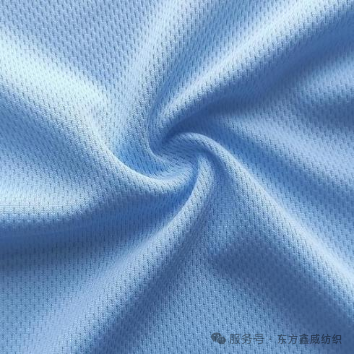
Parameter | Detail |
Style | EY-4 |
Composition | 100% Moisture-Wicking Polyester |
Weight × Width | 145gsm × 183cm |
The most classic sportswear mesh, named for its uniform bird-eye perforations. The wicking version upgrades standard polyester with modified cross-section fibers (cruciform, Y-shaped, or grooved) whose micro-capillary channels transport sweat several times faster.
Key Advantages:
3-second sweat diffusion
— capillary action spreads moisture instantly, no clinging
Bird-eye ventilation
— circular perforations create air channels for efficient heat dissipation
Permanent structure-based wicking
— 100 washes, zero performance decay
Best cost-performance
— the volume seller of the category
Best For: Running vests, gym vests, basketball vests, football training vests, quick-dry T-shirts, sports bra outer layers, team uniforms.
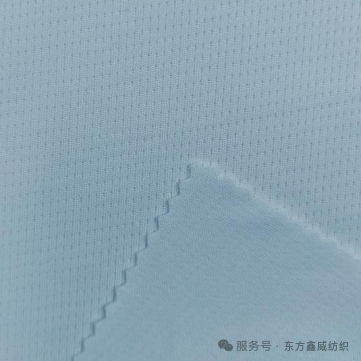
Parameter | Detail |
Style | EY-2-145 |
Composition | 100% Polyester |
Weight × Width | 145gsm × 183cm |
Unlike round bird-eye holes, vertical mesh features elongated longitudinal channels that accelerate directional sweat transport. A hydrophobic finish spreads moisture into a thin surface film, maximizing evaporation area.
Key Advantages:
Vertical wicking channels
— sweat flows downward quickly instead of pooling
High drying efficiency
— hydrophobic finish + large evaporation surface; dry within 1–2 hours of heavy sweating
Visually slimming
— vertical texture elongates the silhouette
Crisp, structured body
— mesh holds shape better than flat knits, resists wrinkles
Best For: Quick-dry sports vests, running vests, gym vests, basketball vests, training wear. A top pick for female activewear due to the slimming vertical pattern.
Parameter | Detail |
Style | M-D01 |
Composition | 100% Moisture-Wicking Polyester |
Weight × Width | 150gsm × 180cm |
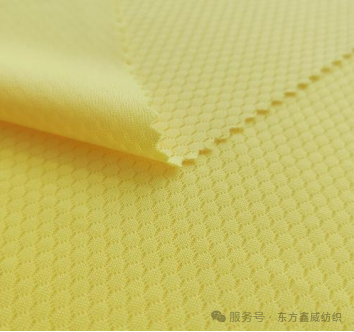
Honeycomb mesh borrows nature's most efficient structure — the hexagon. The raised-and-recessed honeycomb profile creates an air layer between fabric and skin, reducing contact area while increasing airflow.
Key Advantages:
Hexagonal 3D ventilation
— reduced skin contact, smoother air circulation
Moisture-wicking
— modified fibers rapidly diffuse and evaporate sweat
Premium visual appeal
— honeycomb texture reads as more designed than standard bird-eye
Lightweight with body
— 150gsm, thin yet structured, no collapse
Best For: Sports vests, running vests, gym T-shirts, ventilation panels, jacket linings, quick-dry Polos. Transitions from gym to street without looking out of place.
Parameter | Detail |
Style | M-D04 |
Composition | 100% Moisture-Wicking Polyester |
Weight × Width | 150gsm × 183cm |
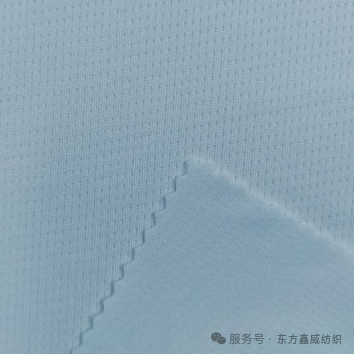
Check-pattern mesh brings retro sportswear aesthetics into a technical package. The geometric grid delivers both visual identity and real wicking performance.
Key Advantages:
Geometric check texture
— retro-sport design, high recognition
Moisture-wicking
— capillary transport keeps you dry, no cling
Breathable, not stuffy
— grid perforations create airflow channels
Classic, easy to style
— check motifs pair with joggers and jeans alike
Best For: Sports vests, running vests, gym T-shirts, retro tracksuit sets, ventilation panels. Ideal for younger consumers blending sport and fashion.
Parameter | Detail |
Style | DA010-2 |
Composition | 100% Polyester |
Weight × Width | 95gsm × 180cm |
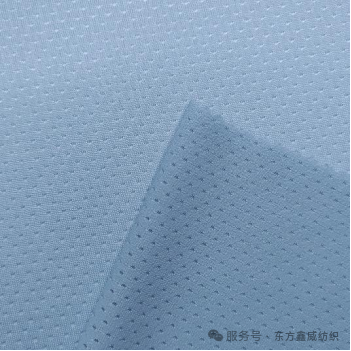
Named for its elongated butterfly-shaped perforations — among the most breathable of all mesh structures. At 95gsm, the fabric is nearly weightless, with 30–50% larger open area than standard bird-eye mesh.
Key Advantages:
95gsm ultra-light
— near-zero burden, extreme lightness
Butterfly-hole ventilation
— 1.5× the breathability of standard bird-eye
Rapid drying
— thin + breathable = extremely fast moisture evaporation
Distinctive texture
— butterfly pattern adds design identity
Best For: Summer ultra-light vests, running vests, ventilation panels, sports bra outer layers, sun-protective linings, yoga vests.
Buyer note: at this low GSM with large perforations, recommend pairing with a sports bra or dark shades to manage sheerness.
Parameter | Detail |
Style | XD35-1 |
Composition | 100% Polyester |
Weight × Width | 88gsm × 170cm |
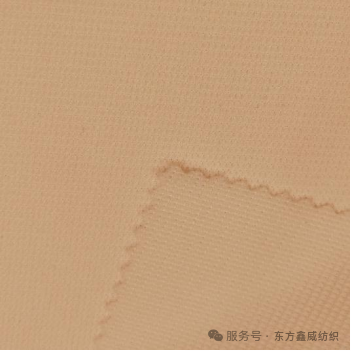
Waffle mesh takes its name from its raised square-grid texture — one of the lightest fabrics in the catalog at 88gsm. The raised-and-recessed profile creates an air layer that keeps the fabric off the skin.
Key Advantages:
88gsm extreme lightness
— lighter than most T-shirts, virtually imperceptible
Waffle 3D structure
— reduced skin contact, excellent airflow
Retro aesthetic
— a classic, fashion-forward texture
Fast drying
— thin + breathable = quick evaporation, no sweat cling
Best For: Ultra-light vests, summer running vests, yoga vests, ventilation panels, home sportswear, sun-protective layers. A niche-but-premium choice for heat-sensitive consumers.
Parameter | Detail |
Style | K0026 |
Composition | 92% Polyester + 8% Spandex |
Weight × Width | 170gsm × 168cm |
A cooling function built into a poly-spandex single jersey. Jade and mica nano-mineral powders embedded in the fiber conduct heat away instantly on contact — 2–3°C lower perceived temperature than standard fabric — while 8% Spandex delivers 4-way stretch.
Key Advantages:
Contact cooling
— Q-max value meets the national cooling standard (GB/T 35263, ≥ 0.15 W/cm²)
4-way stretch
— 8% Spandex moves with the body, no restriction
Quick-dry
— polyester base wicks sweat fast
Premium matte finish
— avoids the "plastic look" of cheap cooling fabrics
Best For: Cooling yoga vests, compression gym vests, sports bras, running compression tops, ice-silk base layers. The choice for "bare-skin + cooling" experiences.
Parameter | Detail |
Style | TD07 |
Composition | 100% Functional Polyester |
Weight × Width | 150gsm × 165cm |
The flagship "black technology" fabric: three functions integrated in one knit. Function agents are embedded at the fiber level during production — not surface coatings — so they persist through washing without interfering with each other.
Key Advantages:
3-in-1:
wicking + contact cooling + UPF 50+ in one garment
Fiber-level function
— effective after 50+ washes, no decay
UPF 50+
— blocks 98%+ of UV radiation for outdoor confidence
Contact cooling
— instant temperature drop on touch
Best For: Premium sports vests, outdoor running vests, sun-protective T-shirts, golf vests, cycling vests. One garment solves sweat, heat, and sun exposure simultaneously.
Fabric | Style | Composition | Core Function | Weight × Width |
Wicking Bird Eye Mesh | EY-4 | 100% Wicking Polyester | Moisture Wicking | 145gsm × 183cm |
Quick-Dry Vertical Mesh | EY-2-145 | 100% Polyester | Quick Dry | 145gsm × 183cm |
Wicking Honeycomb Mesh | M-D01 | 100% Wicking Polyester | Moisture Wicking | 150gsm × 180cm |
Wicking Check Mesh | M-D04 | 100% Wicking Polyester | Moisture Wicking | 150gsm × 183cm |
Butterfly Mesh | DA010-2 | 100% Polyester | Ultra-Light Breathability | 95gsm × 180cm |
Waffle Mesh | XD35-1 | 100% Polyester | Ultra-Light Breathability | 88gsm × 170cm |
Cooling Stretch | K0026 | 92% Poly + 8% Spandex | Cooling + 4-Way Stretch | 170gsm × 168cm |
Triple-Function | TD07 | 100% Functional Polyester | Wicking + Cooling + UPF 50+ | 150gsm × 165cm |
Q1: Is lower GSM always better for summer vests? Will it be too sheer?
A: No — balance lightness against coverage. 80–100gsm: ultimate lightness and breathability, but sheer — pair with a sports bra or dark colors. 120–150gsm: the sweet spot — light yet opaque, suits most sports. 150–170gsm: more substance, ideal for high-intensity wear and compression fits.
Sheerness tips: dark shades (black, navy, charcoal) cover better than light colors; tightly structured mesh covers better than large perforations; a sports bra layer is the safest option.
Q2: Mesh or plain knit — which is better for sports vests?
A: For sports, mesh wins decisively:
Attribute | Mesh | Plain Knit |
Breathability | 2–3× air circulation efficiency | Restricted airflow |
Drying Speed | Larger surface area, faster evaporation | Slower |
Anti-Cling | 3D structure reduces skin contact | Clings when sweaty |
Weight Feel | Fluffier, more airy at same GSM | Denser |
Plain knit's strengths — finer hand feel, snag resistance — suit compression styles. Rule: mesh for running/ball sports (loose fits); poly-spandex plain knit for yoga/gym (tight fits).
Q3: Does cooling fabric really lower temperature, or is it psychological?
A: Real — but distinguish the two technologies. Physical cooling (jade/mica/boron-nitride nano-minerals embedded in fiber): high thermal conductivity, instant heat removal on contact; Q-max ≥ 0.15 W/cm² per national standard (GB/T 35263); perceived temperature 2–3°C lower; survives 100 washes. Chemical cooling (menthol/xylitol surface agents that stimulate cold receptors): fades within 3–5 washes. Buyer rule: request the Q-max test report — let data, not claims, decide.
Q4: Spandex stretch or 100% polyester — how do I choose?
A: Match to fit and sport. Choose Spandex blends (5–15%) for compression vests, sports bras, yoga and gym wear — 4-way stretch, body-hugging, unrestricted movement. Choose 100% polyester for loose running vests, team uniforms, basketball vests — lighter, more breathable, faster drying, lower cost. Care note: Spandex ages under prolonged direct sun — dry in shade. Polyester resists wrinkles but can generate static — improved via finishing.
Q5: Is pilling on vest fabric normal? How do I judge if it's a quality issue?
A: All knitted fabrics pill to some degree. Normal pilling: light surface fuzz after the first 3–5 wears that stabilizes and stops increasing. Quality issue: heavy pilling that grows with every wear, affecting appearance and hand feel — usually poor fiber grade or inadequate finishing. Polyester's high tenacity means pills don't easily detach, so they look more visible than on cotton. Quality mills reduce pilling via singeing, shearing, and anti-pilling finishing. Buyer rule: request the pilling grade report — Grade 3+ (national standard) is the pass line.
Q6: Will UPF 50+ fabric feel hotter in summer? Can sun protection and breathability coexist?
A: Good sun-protection fabric does not feel hotter — the two coexist. Fiber-level UV protection (titanium dioxide/zinc oxide blockers added during spinning) blocks UV from inside the fiber without clogging pores — breathability unaffected. Coating-level protection clogs pores, reduces airflow, and stiffens the hand feel. Our UPF 50+ fabrics are fiber-level. Counterintuitive fact: a sun-protective vest can feel cooler than no vest — it blocks direct UV heating of the skin.
Q7: How can I quickly test a vest fabric at home?
A: Four simple tests, no equipment needed:
Test | Method | Pass Criterion |
Wicking | Drop water on the surface | Spreads into a patch within 3 seconds; beading = poor wicking |
Breathability | Hold fabric over your mouth, blow hard | Air passes almost freely; strong resistance = poor airflow |
Cooling | Place fabric on the back of your hand | Instant cool sensation on contact |
Stretch Recovery | Pull horizontally and vertically, release | Stretches easily, snaps back fast without distortion |
Q8: Can summer vest fabrics be customized with multiple functions?
A: Yes. East Xinwei supports the full stack — wicking, quick-dry, cooling, UPF 50+, anti-bacterial, water-repellent — plus popular combinations (wicking + quick-dry as the baseline, cooling + quick-dry for summer lines, UPF + anti-bacterial for outdoor, 3-in-1/4-in-1 for premium). Process: choose the fabric base (bird-eye/honeycomb/check/plain), set GSM and width, select the function stack, then sample to confirm performance and hand feel. Buyer advice: match function count to price positioning — a mass-market running vest needs only wicking + quick-dry; a premium outdoor line justifies 3-in-1 or 4-in-1.
Fujian East Xinwei Textile Technology Co., Ltd. operates an 83,000 m² production base in Sanming, Fujian, with 400+ circular knitting machines and 16 texturing lines. Our subsidiary, Fujian Naqi Textile, provides in-house dyeing and finishing with monthly capacity exceeding 3,000 tons.
Certifications: GRS, ISO 9001, OEKO-TEX Standard 100. Products exported to 50+ countries.
From 95gsm butterfly mesh to 170gsm cooling stretch, from classic bird-eye to retro waffle — every summer vest fabric has its ideal sport, fit, and consumer. The right choice turns summer training from a sweaty ordeal into a dry, light, comfortable experience.
At East Xinwei, we help brands match the right structure, weight, and function stack to their product positioning — and deliver it at scale, on time, with full certification traceability.
[Request samples and technical data sheets →]
Fujian East Xinwei Textile Technology Co., Ltd. Precision-Engineered Summer Performance Fabrics. GRS · ISO 9001 · OEKO-TEX Standard 100 Certified. Contact: Fuzhou Fangtuosi Textile Materials Ltd. — International Trade Division.
Our Lycra blend swimsuit fabric has chlorine resistance and UPF50+functionality for shape retention, ideal for competitive swimming or beach lounging. Engineered with flatlock seams to reduce chafing.
Polyester spandex fabric combines polyester's durability and moisture-wicking properties with spandex's elasticity (5–20% content) for stretchable, resilient textiles. Ideal for activewear, swimwear, and casual apparel, it offers wrinkle resistance, quick drying, and shape retention. The blend adapts to body curves, ensuring comfort and flexibility, while brushed or ribbed variations enhance warmth and softness. OEKO-TEX certified options prioritize safety, and its easy-care nature suits modern lifestyles
Spandex polyester mesh fabric is a high-performance textile combining polyester's durability with spandex's elasticity (typically 5–20% spandex). Its porous mesh structure enhances breathability and moisture-wicking, ideal for sportswear, activewear, and swimwear. The blend offers exceptional stretch (up to 500% elasticity) while maintaining shape recovery, ensuring comfort during dynamic movements. Lightweight yet durable, it resists wrinkles and abrasion, suited for yoga pants, compression gear, and outdoor apparel. Innovations include UV protection, antimicrobial treatments, and eco-friendly recycled variants. Widely used in Asia and Western markets, it balances functionality, modern aesthetics, and adaptability to diverse climates.
Industrial-grade interlock knit structure delivers 4x enhanced durability vs single jersey (ISO 13934-1 tested). Moisture-wicking finish reduces sweat retention by 38% with UV50+ protection. OEKO-TEX Standard 100 certified fabric withstands 200+ industrial washes while maintaining anti-pilling performance. Ideal for high-intensity training gear & team uniforms. Compatible with sublimation printing for sportswear branding.
GRS-certified 85% recycled polyester +15% spandex with UPF50+ protection. 4-way stretch maintains shape through 200+ saltwater washes. Chlorine-resistant finish reduces fiber degradation by 40% vs standard fabrics. OEKO-TEX certified sublimation printing . Ideal for surf rashguards & UV swimwear with skin-friendly brushed inner layer.
Jacquard-knit polyester fabric with integrated sports mesh panels for targeted airflow and rapid moisture dispersion. Lightweight, textured weave enhances breathability while maintaining durability for high-intensity training. Four-way stretch ensures unrestricted movement, and abrasion-resistant fibers resist pilling during repeated use. Quick-dry properties and smooth surface optimize comfort in prolonged wear. Suitable for performance sportswear requiring strategic ventilation, structural flexibility, and long-lasting resilience.
Nylon: Offers superior abrasion and chlorine resistance, making it a top choice for swimwear and high-wear environments.
Polyester: Excels in quick-dry and UV-protective properties, ideal for outdoor gear like running shirts and cycling apparel.
Recycled Blends: Both fibers incorporate recycled materials, maintaining high performance while reducing environmental impact.
Mesh fabrics, lightweight cotton blends, and performance synthetics like polyester or merino wool.
It repels water, which is one of the reasons it is favored for activewear and sportswear. It helps keep you dry by wicking sweat away from the skin and dries faster than most other fabrics.
PET melted at 290-300°C is extruded through spinnerets, cooled into filaments, then drawn 3-5x to align polymer chains for strength (4-6g/denier).
Rooted in industrial-trading integration, our culture thrives on precision and collaboration. Guided by "Quality First, Excellence Always", sales and merchandising teams operate in seamless synergy—each salesperson partners with a dedicated merchandiser to ensure end-to-end order accuracy, while monthly factory inspections embed accountability into every production step. Team-building activities foster deep trust and stability, reducing turnover costs and fueling innovation. Sustainability anchors our ethos: GRS and OEKO-TEX certifications drive eco-conscious production, aligning with global ESG demands. By merging artisanal rigor with agile workflows (72-hour prototyping), we deliver reliability from yarn to export, embodying a **"Green Thread Initiative"** that cuts waste by 15% since 2022
Re-confirmation before shipment. Inspect if the quality is up to standard before packing.Inspection items include dirt, split yarn, horizontal strip, vertical strip, blue dot stain, gram weight, width, color, hand feel etc.
Naqi dyeing factory was founded---Specializing in polyester/nylon fabric dyeing, the factory adopted early water recycling systems to reduce environmental impact, serving sportswear brands across Asia during China's textile boom.
Ten years of experience in the business, ranked No. 1 in terms of professional competence, and able to provide you with private customized solutions for your product direction.
Circular Weft Knitting: 400+ circular knitting machines weave yarns into greige fabric with precision, ensuring uniform texture.
Engineered with REPREVE recycled ocean plastics, this high-elasticity polyester fabric offers multidirectional stretch for unrestricted athletic movement. Textured knit structure ensures shape retention and resists deformation during dynamic sports. Quick-dry properties and breathable airflow support prolonged wear in high-intensity conditions. Chlorine/saltwater-resistant fibers maintain durability, while eco-conscious material aligns with sustainable apparel goals. Optimized for performance polo shirts requiring lightweight flexibility and reduced environmental footprint.
Engineered 100% polyester jersey fabric with advanced moisture management for rapid sweat dispersion and cooling during high-exertion activities. Lightweight, breathable knit structure promotes airflow while retaining shape and durability. Resists pilling and shrinkage through repeated washing. Suitable for outdoor sportswear requiring quick-dry performance and long-term wear resilience. OEKO-TEX certified for safe skin contact.
GRS-certified fabric made from post-consumer plastic waste. Permanent antibacterial treatment inhibits odor-causing bacteria. Pique knit structure enhances breathability and moisture management. Resists pilling and UV degradation through repeated washes. Suitable for performance polo shirts requiring hygiene and durability. Compatible with sublimation printing for custom designs.
Durable waterproof polyester knitted fabric with breathable membrane technology. Provides reliable water resistance while maintaining airflow for athletic comfort. Four-way stretch construction adapts to dynamic movements. Resistant to abrasion and maintains integrity through repetitive use. OEKO-TEX certified for safe skin contact. Suitable for outdoor sportswear requiring weather protection and flexibility.
Eco-friendly fabric made from 90% recycled polyester (GRS-certified) and 10% spandex for stretch. Moisture-wicking jersey knit provides cooling comfort and quick drying. UPF50+ sun protection resists UV degradation. Chlorine and saltwater-resistant for aquatic activities. Durable against abrasion, maintains shape through repeated use. Suitable for rash guards and sportswear requiring sustainability and performance.
Medium-weight cotton-spandex blend with brushed inner layer for thermal insulation and softness. French terry construction provides breathability and moisture absorption, while 4-way stretch ensures mobility. Ideal for winter hoodies, sweatshirts, and loungewear requiring warmth and flexibility. Resists pilling and maintains shape through repeated wear. OEKO-TEX certified for skin-safe applications.
Blended fabric combining Sorona® (partially bio-based) polyester for thermal retention with cotton for breathability. Double-knit polar fleece construction provides enhanced insulation, while brushed inner layer ensures softness and moisture management. Resistant to pilling and shrinkage, maintaining shape through repeated wear. Suitable for winter jackets and hoodies requiring lightweight warmth and durability. OEKO-TEX certified for safety standards.
Recycled fabrics align with circular fashion principles by extending material lifecycles. Brands like Adidas use ocean plastic in footwear, while companies like ECONYL repurpose nylon waste into luxury apparel.
Advanced knitting and fiber engineering ensure flexibility and longevity:
4D stretch fabrics with spandex blends provide unrestricted movement for activities like yoga or climbing.
Ripstop weavesand laminated layers (e.g., ocean-recycled nylon triple ripstop) resist tearing and abrasion in harsh environments.
Flatlock seams minimize chafing, whileUV-resistant coatingsprotect against sun damage during prolonged outdoor exposure.
Healthcare: Biosensing textiles with chipless sensing and biomedical monitoring(e.g., ECG, glucose detection).
Sportswear: Moisture-wicking, UV-resistant fabrics with 4D stretch and pressure mapping.
Fashion: Interactive garments with color-changing or luminescent fibers.
Industrial/Military: Aerospace-grade fibers and environment-responsive textiles for extreme conditions.
Breathable and hypoallergenic, ideal for sensitive skin .
High moisture absorption (up to 8–10% of its weight), keeping wearers cool and dry .
Soft texture but prone to wrinkling, shrinkage, and moderate durability compared to wool or synthetics
Pure cotton is strong and becomes tougher when wet, resisting wear and tear over time . Long-staple variants like Pima or Egyptian cotton offer superior softness and longevity .
Polyester provides high tensile strength and abrasion resistance, ensuring long-lasting wear even with frequent washing. The blend resists shrinking and wrinkling, reducing maintenance effort.
Polyester (80–95% of the blend) contributes high tensile strength, resisting abrasion, pilling, and UV degradation. Sportswear made from this blend retains structural integrity even after repeated washing and exposure to chlorine or sweat. For instance, polyester’s wrinkle-resistant properties ensure leggings and jerseys maintain their polished appearance over time. The combination of polyester’s rigidity and spandex’s elasticity creates fabrics that withstand rigorous athletic use without sagging or losing shape.
Nylon’s high tensile strength resists abrasion, chlorine, and UV exposure. Swimwear made from nylon spandex retains color vibrancy and structural integrity even after prolonged contact with saltwater or chlorinated pools. Its resistance to pilling ensures athleisure pieces like leggings withstand frequent washing and high-intensity workouts.
Yoga Pants and Leggings: The fabric’s elasticity (up to 700% stretch) allows unrestricted movement during high-intensity workouts, while nylon’s abrasion resistance ensures longevity.
Sports Bras and Compression Wear: Blends with 15–20% spandex offer muscle support and reduce chafing through seamless designs.
Cycling Shorts and Running Gear: Its lightweight nature and moisture-wicking properties keep athletes dry during prolonged activities.
Invented in France, the Jacquard loom replaced labor-intensive manual weaving, democratizing access to ornate textiles previously reserved for the elite.
Notably, China had earlier versions of complex weaving techniques (e.g., Han Dynasty silk brocades), but Jacquard’s innovation standardized mass production.
Hollow or Grooved Fibers: Fibers with cross-shaped, Y-shaped, or hexagonal cross-sectionsincrease surface area, accelerating moisture transport. Brands like Coolmax (INVISTA) and Aerocool(Hyosung) use such designs to enhance wicking .
Micro-Groove Technology: Fibers with surface grooves (e.g., Coolnylon) direct sweat outward via capillary channels, reducing drying time .
The fabric’slightweight and breathable construction allows unrestricted airflow, reducing heat buildup. Brands like Adidas and Under Armour integrate hybrid blends (e.g., 88% polyester + 12% spandex) to balance elasticity and ventilation. Military-grade applications, such as the U.S. Air Force’s updated PT uniforms, utilize Dry Fit-inspired materials with antibacterial treatments to prevent odor during extended wear
100% polyester mesh fabric engineered for rapid moisture dispersion and permanent UPF 50+ UV protection. Hexagonal knitting pattern enhances airflow and reduces fabric weight without compromising durability. Resistant to chlorine, saltwater, and repeated washing cycles. Smooth, low-friction surface minimizes skin irritation during high-intensity activities. Ideal for performance sportswear requiring breathability, sun protection, and quick-dry functionality.
Unlike sunscreen, UPF50 protection is permanent and wash-resistant, maintaining efficacy for 3-5 years with proper care.
The function fabric integrates breathable mesh panelsand moisture-wicking properties, ideal for sports like hiking or swimming.
Tightly woven fabrics minimize gaps between fibers, reducing UV penetration. For example, denim or high-density polyesterachieves UPF50+ by blocking over 98% of UV rays.
Specialized weaving techniques (e.g., 3D jacquard) improve fabric density while maintaining breathability.
Built-in Antimicrobial Fibers: Silver ions or triclosan are integrated during fiber synthesis (e.g., synthetic polymers like polyester), ensuring long-lasting efficacy (>50 washes).
Post-Treatment Finishing: Fabrics are coated with antimicrobial agents (e.g., chitosan, violacein) via dipping or spraying. However, this method may lose effectiveness after repeated washing.
Spinning Integration: Antibacterial additives (e.g., nano-silver, copper oxides, or triclosan) are embedded into synthetic fibers (polyester, nylon) during production.
Example: Modal marine cotton infused with crustacean-derived compounds achieves permanent antibacterial properties.
Advantage: Retains >99% efficacy even after 50+ washes.
Microporous membranes (e.g., Gore-Tex, eVent) allow sweat vapor to escape while blocking liquid water, maintaining thermal balance during high exertion.
Technologies like c_change adapt to body temperature, opening pores during activity and closing them in cold conditions.
Synthetic Blends: High-density nylon/polyester laminates (200–600gsm) offer tear resistance and UV protection, suitable for extreme conditions.
Natural-Synthetic Hybrids:
Waxed Cotton: Treated with paraffin/beeswax for vintage-style waterproofing.
Bamboo-PU Blends: Combine antimicrobial properties with eco-friendly coatings.
Recycled Materials:
Ocean Recycled Nylon: Reduces CO2 emissions by 91% compared to traditional nylon (e.g., DEEPBLU’s triple ripstop fabric).
Radiative Cooling:
Fabrics like POM nanofibers reflect >96% of solar radiation while emitting infrared heat through atmospheric transparency windows (8–13 μm), achieving sub-ambient cooling even in direct sunlight . Bioinspired coatings with CaCO₃/BaSO₄ microcrystals amplify solar reflection and infrared emission, reducing temperatures by up to 8°C compared to untreated fabrics .
Phase-Change Materials (PCMs):
Hybrid designs integrate graphene or wax-based PCMs to absorb and release heat dynamically, stabilizing skin temperature during temperature fluctuations .
Enable dynamic temperature regulation.
Cotton absorbs moisture efficiently, wicking sweat away from the skin and preventing odor buildup. Despite its lightweight feel, cotton fibers are strong and resilient, retaining shape and color through repeated washing. Blends with fluorine-free DWR coatings add water resistance without compromising eco-friendliness.
Biodegradability
Resource Efficiency
Certifications
Spandex adds 5-8x stretch for flexibility.
Stretch denim: Used in jeans for flexibility and shape retention, offering comfort without sacrificing style.
T-shirts and dresses: Combines softness with wrinkle resistance, ideal for everyday wear.
Lingerie and underwear: Hypoallergenic properties and gentle stretch ensure comfort for sensitive skin.
Industrial Uniforms: Wrinkle-resistant shirts, durable workwear.
Sportswear: Quick-drying jerseys, compression gear.
Formalwear: Structured dress shirts, suits (blended for stiffness).
Outdoor Apparel: Weather-resistant jackets, hiking pants.
Protective Clothing: Abrasion-resistant coveralls.
Bamboo’s hollow fiber structure creates micro-gaps for airflow, regulating temperature (keeps wearers 2°C cooler in summer and warmer in winter). Combined with cotton’s breathability, the fabric wicks moisture 3.5x faster than pure cotton, preventing dampness.
Natural "Bamboo Kun" inhibits bacteria and fungi growth, ideal for activewear and undergarments to maintain freshness.
Crafted from recycled materials, this eco-conscious fabric offers multidirectional stretch for unrestricted movement in water activities. The smooth interlocked knit ensures durability while resisting chlorine damage, ideal for swimsuits and beachwear. Quick-drying and lightweight, it maintains vibrant colors through repeated use. Soft against the skin and certified for safety, it combines sustainability with performance for active lifestyles.
Designed for high-energy sports, this lightweight fabric features a breathable birdseye mesh texture that enhances airflow during intense games. The moisture-wicking knit keeps athletes dry and cool, while the durable polyester structure resists snags and fading. Soft, quick-drying, and stretch-friendly, it ensures unrestricted movement for basketball or NFL jerseys. Available in eco-conscious recycled options, certified skin-safe for sensitive skin. Combines performance-driven design with everyday comfort for sportswear that endures rigorous use.
Blending cotton's breathability with modal’s silky softness, this fabric ensures lightweight comfort for polo shirts. The textured weave enhances airflow, keeping you cool during casual wear or light activities. Resistant to wrinkles and pilling, it maintains a polished look while staying gentle on sensitive skin. Available in eco-friendly recycled options, certified for safety and durability. Perfect for versatile styles that balance everyday elegance with effortless care.
Crafted for active lifestyles, this lightweight and breathable fabric blends polyester’s durability with spandex’s stretch to deliver superior comfort and freedom of movement. The smooth single jersey knit ensures a soft, second-skin feel, ideal for yoga bras, running tops, and gym wear. Featuring moisture-wicking properties, quick-dry performance, and UV resistance, it keeps athletes cool during intense workouts.
Ideal for sportswear and school uniforms, this lightweight knit fabric blends 92% polyester’s durability with 8% spandex’s stretch for unrestricted movement. Breathable and moisture-wicking, it ensures comfort during activities while resisting pilling and fading. OEKO-TEX® certified for skin safety, the fabric retains shape through repeated wear, making it perfect for tracksuits, training gear, and daily school apparel. The smooth, four-way stretch texture offers a tailored fit without compromising flexibility. Vertically integrated production guarantees colorfastness and consistent quality, delivering reliable performance for both athletic and educational settings.
Ideal for outdoor sports, this fabric blocks 98% of UV rays while keeping you cool with its breathable, sweat-wicking design. The polyester-spandex blend offers natural stretch for active movement and dries quickly. Soft, lightweight, and fade-resistant, it ensures comfort during workouts or casual wear. Available in eco-friendly recycled options, certified skin-safe and perfect for sportswear, T-shirts, or gear that prioritizes sun protection and lasting freshness.
Ideal for cyclists, this lightweight fabric blends nylon's durability with spandex stretch for flexible, long-lasting performance. The breathable knit wicks sweat and dries quickly, ensuring comfort during intense rides or workouts. Soft against the skin, it resists odors and fading while maintaining shape through repeated use. Available in eco-conscious recycled options, certified skin-safe for sensitive skin. Perfect for cycling gear, sportswear, or versatile apparel that demands breathability, mobility, and sustainable quality.
Perfect for cozy loungewear, this fabric blends cotton’s softness with spandex stretch for all-day comfort. The brushed fleece interior offers plush warmth, ideal for hoodies, joggers, or matching winter sets. Lightweight yet durable, it resists pilling and retains shape wash after wash. Breathable and skin-friendly, certified for safety, it’s versatile for casual outfits or relaxed athleisure. Available in eco-conscious options, balancing everyday style with lasting coziness.
Designed for everyday wear, this cotton-rich blend offers a smooth, cooling feel perfect for warm weather. The breathable knit wicks moisture naturally, keeping you dry and comfortable. Soft yet durable, it resists wrinkles and pilling, maintaining a crisp look after repeated washes. Available in eco-conscious recycled options, certified skin-safe for sensitive skin. Ideal for tees, loungewear, or casual styles that prioritize comfort and practicality. Balances lightweight ease with long-lasting quality.
Crafted for cycling enthusiasts, this fabric blends recycled polyester’s durability with spandex flexibility for effortless movement. The breathable knit wicks sweat to keep you cool during rides, while the soft texture ensures comfort against the skin. Fade-resistant and lightweight, it maintains its crisp white finish through repeated use. Available in eco-conscious options, certified skin-safe and perfect for high-performance jerseys that prioritize sustainability without compromising style or function.
Soft, smooth, and abrasion-resistant, nylon provides strength and longevity for swimwear, yoga wear, and high-performance activewear. Recycled nylon (e.g., ECONYL® from fishing nets) supports sustainable production while maintaining comfort and durability.
Spandex, also known as Lycra® or elastane, provides exceptional elasticity, allowing 4 way stretch for unrestricted movement. Our spandex polyester and nylon-spandex blends ensure flexibility and comfort in form-fitting activewear like leggings and gym shirts, while maintaining durability and shape retention.
Repreve is a branded recycled fiber made from post-consumer plastic bottles, offering performance and sustainability.
Our fabrics are certified by GRS, OEKO-TEX®, and ISO, with rigorous lab testing for durability, colorfastness, UV protection, and stretch, ensuring top-tier functional textiles.
Many functional fabrics are produced using sustainable practices. For instance, recycled polyester (rPET) and ocean-recycled nylon are commonly used to create eco-friendly functional textiles. These materials help reduce waste and the environmental impact of textile production.
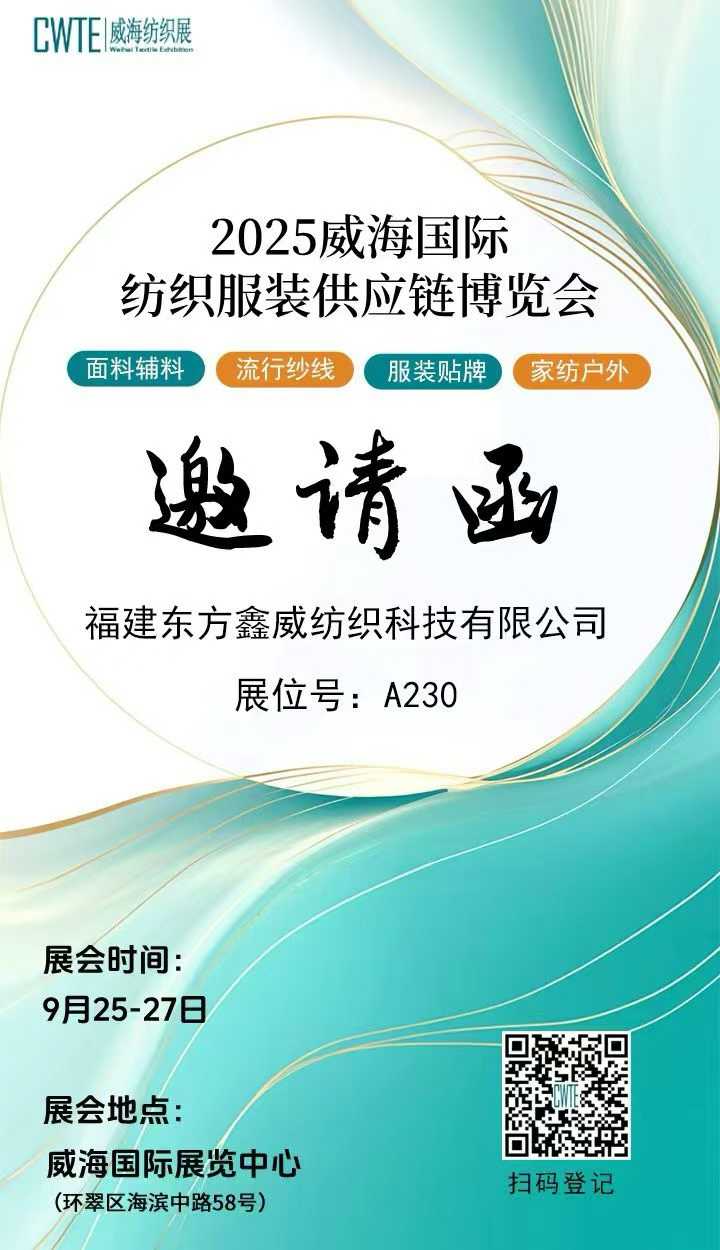
At the 2025 Weihai International Textile and Clothing Supply Chain Expo (September 25-27), our company showcases innovative textile solutions, including [Eco-friendly fabrics, Functional fabric, Spandex and Polyester fabric "]. Our team is on-site to discuss cutting-edge materials and supply chain collaborations, inviting partners to explore new opportunities at Booth [A230]. Visit us to experience the future of textiles firsthand!
.jpg "2025-weihai-international-textile_(1).jpg")
.jpg "2025-weihai-international-textile_(2).jpg")
.jpg "2025-weihai-international-textile_(3).jpg")
.jpg "2025-weihai-international-textile_(4).jpg")
.jpg "2025-weihai-international-textile_(5).jpg")
Breathability: Laser-cut ventilation zones and mesh panels enhance airflow, reducing heat buildup during poses like Downward Dog or Warrior II.
Compression & Support: High-spandex variants (up to 30%) provide muscle stabilization, while flatlock seams minimize chafing.
Eco-Conscious Options: Select fabrics integrate 30% recycled polyester or OEKO-TEX-certified dyes, aligning with global sustainability trends.
UPF50+ Sun Protection: UV-blocking treatments are integrated into fabric weaves, shielding skin from harmful rays during prolonged outdoor use.
Anti-Chlorine Technology: Proprietary coatings neutralize chlorine damage, extending fabric lifespan by 30% compared to standard swimwear.
Compression & Support: High-spandex variants (18-22%) provide muscle stabilization for athletic training, while seamless stitching reduces chafing.
Compression & Muscle Support: High-spandex variants (up to 30%) in leggings and sleeves enhance blood flow, reducing muscle fatigue during squats or deadlifts.
Seamless Construction: Flatlock stitching and laser-cut edges minimize chafing, while mesh panels under arms or along the spine improve airflow by 25%, critical for hot yoga or cycling classes.
Durability: Anti-pilling finishes and chlorine-resistant coatings ensure fabrics withstand frequent washing and exposure to gym equipment friction.
Jerseys & Jackets: Raglan sleeves and articulated seams accommodate cycling postures. Sublimation printing ensures fade-resistant, high-visibility patterns for safety in wooded trails.
Bib Shorts & Tights: Compression zones with flatlock seams reduce chafing, while gripper elastic hems stay secure during jumps. Reflective detailing (inspired by Proviz's REFLECT360) enhances low-light visibility.
Thermal Regulation: Laser-cut ventilation zones and mesh panels target high-sweat areas (underarms, back) to maintain core temperature stability.
Abrasion Resistance: Reinforced seams and double-needle stitching withstand frequent contact and washing cycles, extending garment lifespan.
Lightweight Construction: At ≤180gsm, the fabric reduces drag while retaining tensile strength, ideal for speed-focused players.
Thermal Regulation: Laser-cut ventilation zones in thick fabrics target high-sweat areas (lower back, underarms) to prevent overheating.
Abrasion Resistance: Reinforced seams and double-needle stitching in winter gear withstand friction from layering, while lightweight variants use flatlock seams to minimize chafing.
Moisture Management: Hydrophilic polyester fibers in summer fabrics absorb sweat 50% faster than cotton, accelerating evaporation for a dry feel.
Anti-Pilling & Chlorine Resistance: Polyester-based fabrics undergo anti-friction treatments to maintain a smooth texture, even after frequent washing. For golf apparel, anti-chlorine coatings protect against pool chemicals during post-game relaxation.
Breathable Structures: Inspired by honeycomb-knit piqué, our fabrics incorporate laser-cut ventilation zones under arms and along seams, improving airflow by 25% for heat dissipation.
Cotton-Rayon Blends: Blending 60% cotton with 40% rayon creates a silky drape and improved elasticity, mimicking luxury fabrics like silk while maintaining cotton’s breathability.
Tencel™ Cotton: Merging Tencel’s lyocell fibers (from sustainably harvested wood pulp) with cotton, this blend offers thermoregulation and a 50% reduction in water usage during production. Its smooth texture rivals premium linen.
Charcoal-Infused Cotton: Infused with activated bamboo charcoal, this fabric neutralizes odors and absorbs moisture 30% faster than standard cotton, suited for gym or travel apparel.
Moisture Management: Cotton’s hydrophilic properties absorb sweat efficiently, while terry loops accelerate evaporation.
Eco-Friendly Options: Fabrics incorporate 30% recycled cotton (GRS-certified) or OEKO-TEX Standard 100 dyes, reducing water and chemical usage.
Design Flexibility:
Hoodies: Raglan sleeves and adjustable drawstrings accommodate dynamic movements; kangaroo pockets with brushed linings add practicality.
Sweatpants: Elastic waistbands with silicone grippers and reinforced knees ensure durability for high-intensity activities.
Engineered for high-performance sportswear, this 4-way stretch nylon spandex interlock knit fabric delivers the ideal combination of compression, recovery, and breathability. Made from premium PA polyamide and elastane, the double-knit interlock construction ensures a smooth face on both sides — no curling, no transparency, just clean structure from yoga studio to swim deck.
Available in 200–350 gsm with a 58/60" width, this fabric supports everything from lightweight yoga tops to medium-weight leggings and sports bras. Custom dyeing from our in-house facility ensures exact color matching at any scale.
In the competitive sportswear market, fabric is the product. While most brands still rely on flat knits with surface printing for their quick-dry T-shirts, jacquard knit fabric is rapidly becoming the material of choice for premium activewear lines.
The difference is structural, not cosmetic. Jacquard patterns are woven into the fabric during knitting — not printed on top afterward. This means the texture, the ventilation zones, and the visual identity are all one inseparable system. For procurement managers and brand owners, this translates into three hard deliverables: permanent pattern integrity, measurable breathability gains, and a tactile premium that commands higher retail margins.
This guide covers everything a B2B buyer needs to evaluate jacquard knit fabrics for sportswear: the knit-vs-woven distinction, the performance mechanics, the fiber composition decision matrix, functional finishing compatibility, and the procurement specifics — MOQ, lead times, and custom development.
The first misconception to clear: sportswear jacquard is knitted, not woven. Woven jacquard — think brocade upholstery or damask curtains — is dense, structured, and traps heat. Knit jacquard, produced on computerized circular knitting machines, is lightweight, breathable, and stretches with the body.
For a sportswear buyer, this distinction is everything. You are not buying furnishing fabric adapted for clothing; you are buying a performance knit engineered with integrated texture.
Attribute | Printed Fabric | Jacquard Knit Fabric |
Pattern Formation | Surface coating applied after knitting | Yarn interlacing during knitting — pattern is the fabric structure |
Breathability | Ink/paste may clog fiber pores, reducing airflow | Raised-recessed structure creates micro-ventilation cavities |
Durability | Fades, cracks, peels after 20–50 washes | Pattern lasts the full lifecycle of the garment — never separates |
Hand Feel | Flat, uniform surface | Three-dimensional texture with tactile depth |
Brand Positioning | Mass-market, commodity-level | Premium, differentiated, higher perceived value |
Bottom line for buyers: Jacquard eliminates the single most common warranty claim on printed activewear — pattern degradation. This alone can justify the fabric upgrade in your cost model.
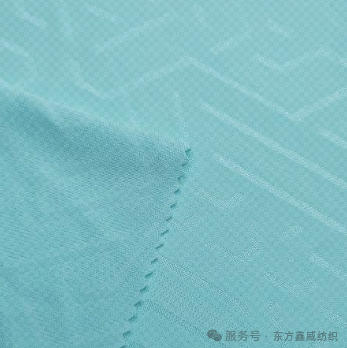
The raised-and-recessed surface of jacquard knit creates thousands of micro-air cavities between the fabric and the skin. Unlike a flat knit that sits flush against the body, jacquard holds the fabric slightly off the skin — even when the wearer is sweating heavily.
Measurable impact: Air permeability tests on our 150gsm jacquard knit show 30–50% higher airflow than a flat single jersey at the same weight. For brands marketing to runners, gym-goers, and outdoor athletes, this is a quantifiable performance claim.
Jacquard texture grooves function as built-in capillary channels. Sweat is guided along the textured pathways and spread across a larger surface area for faster evaporation. This is a physical mechanism — not a chemical coating.
Why this matters for procurement: Chemical moisture-wicking finishes degrade with washing. Structural moisture channeling is permanent. Independent lab tests on our jacquard knit show water droplet spread time under 3 seconds after 50 home laundry cycles — zero performance decay.
Jacquard knit delivers cooling through two independent pathways:
Cooling Layer | Mechanism | Durability |
Structural Cooling | Reduced skin contact area + air circulation through micro-cavities | Permanent — built into the knit structure |
Fiber-Level Cooling (optional) | Cooling-filament yarn or finishing treatment achieving Q-max >= 0.15 W/cm2 | Yarn-based is permanent; finish-based requires care |
Together, these can lower perceived skin temperature by 2–3 degrees C versus a standard flat knit of the same GSM. For brands selling into tropical markets or summer collections, this dual mechanism is a powerful differentiator.
The three-dimensional surface means jacquard knit contacts the skin at points, not planes. Even when saturated with sweat, the fabric does not plaster itself to the body. This eliminates the "wet T-shirt" effect that plagues flat knits — a critical comfort factor for consumer repeat purchase.
Not all jacquard knits are interchangeable. The base fiber determines hand feel, stretch recovery, drying speed, and price positioning. Below is the procurement-grade comparison:
Attribute | 100% Polyester Jacquard | Nylon-Spandex Jacquard | Cotton-Poly-Spandex Jacquard |
Hand Feel | Crisp, structured, dry touch | Silky-smooth, second-skin softness | Cotton-like comfort with technical backbone |
Stretch Recovery | Good (mechanical stretch) | Excellent (15–27% Spandex, 4–6x elongation) | Moderate (3–5% Spandex) |
Quick-Dry Speed | Fastest — ideal for high-sweat sports | Fast — slight edge in moisture absorption | Moderate — cotton content slows drying |
Durability | Highest abrasion resistance, machine-wash stable | High — softer resilience | Good — cotton content may show wear earlier |
Price Positioning | Most cost-effective — ideal for volume runs | Premium tier — higher per-meter cost | Mid-to-premium — depends on cotton quality |
Best For | Team uniforms, running tees, mass-market activewear | Yoga/compression wear, luxury athleisure, sports bras | Casual-athletic crossover, golf polos, lifestyle activewear |
East Xinwei Reference | J-SPS367, J-SPS568, SPS-234, J-SPS610 | SNS-236 (73% Nylon / 27% Spandex) | JC-JAXH-188 (58% Cotton / 39% Poly / 3% Spandex) |
Procurement tip: Start with your brand's price-tier and end-use. Volume-driven team-wear brands should anchor on 100% polyester jacquard. Premium DTC yoga brands should evaluate nylon-spandex jacquard for its hand-feel differentiation. Lifestyle brands seeking a cotton-like touch with technical performance should test the cotton-poly-spandex blend.
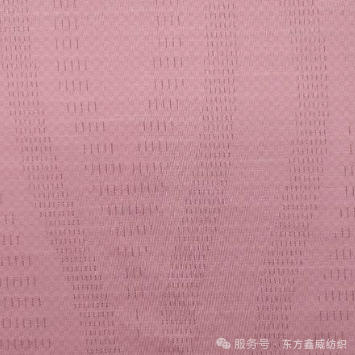
All fabrics below are produced on computerized circular knitting machines with electronic needle selection. Custom patterns, colorways, and functional finishes are available on request.
Style No. | Composition | GSM | Width | Positioning |
J-SPS367 | 100% Polyester | 160–170 | 160cm | Classic all-rounder — best cost-performance ratio |
J-SPS568 | 100% Polyester | 150–160 | 165cm | Ultralight summer variant — ideal for running vests |
SPS-234 | 100% Polyester | 150 | 183cm | Extra-wide width — maximizes cutting efficiency |
J-SPS365 | 100% Polyester | 155–165 | 165cm | Mid-weight — four-season versatility |
J-SPS610 | 100% Polyester | 210 | 192cm | Heavyweight — structured drape for premium tees and polos |
SNS-236 | 73% Nylon / 27% Spandex | 220 | 155cm | High-compression — luxury hand feel for yoga and shapewear |
JC-JAXH-188 | 58% Cotton / 39% Poly / 3% Spandex | 210 | 140cm | Cotton-touch hybrid — casual-to-active crossover |
A frequent buyer concern: does jacquard texture interfere with functional finishing? The answer is no — jacquard knit is fully compatible with the following treatments, and the textured structure often amplifies the finish's effectiveness.
Finish | Compatibility with Jacquard | Performance Note |
Moisture Wicking | Fully compatible | Grooved texture accelerates lateral spread — faster wicking than flat knit |
Cooling Touch | Fully compatible | Q-max >= 0.15 W/cm2 achievable. Structural cooling + finish delivers combined effect |
UPF 50+ UV Protection | Fully compatible | Textured surface increases UV scattering — marginally better protection than flat knit |
Anti-Bacterial / Ag+ | Fully compatible | No interference from jacquard structure; AAA-grade achievable |
Brushed / Peached | Compatible on reverse side | Recommended for autumn/winter tracksuit variants only |
Key procurement insight: Structural moisture channeling (from the jacquard texture) is permanent. Chemical finishes can be layered on top for enhanced performance. Buyers should specify which properties are must-haves at the RFQ stage so we optimize the base knit + finish combination accordingly.
Q1: Is jacquard knit heavier and hotter than flat knit?
A: No. This is the most common buyer misconception. Jacquard knit construction reduces yarn consumption in the raised zones, so a 150gsm jacquard is actually lighter and more breathable than a 150gsm flat knit. The micro-cavity structure increases airflow by 30–50% at the same weight. Summer-weight jacquard (150–160gsm) is our top-selling category for tropical markets.
Q2: Will the pattern fade, crack, or peel over time?
A: Never. The pattern is the fabric structure — not a surface coating. Unless the fabric itself is physically torn, the pattern remains intact. This is a fundamentally different durability profile from printed textiles, where ink degradation is inevitable after repeated washing.
Q3: Can I order custom jacquard patterns for my brand?
A: Yes. We accept custom pattern briefs — from subtle geometric textures to brand-signature all-over designs. The process: pattern design and sampling (typically 2–3 weeks), lab dip approval, then bulk production. MOQ for custom patterns is 1,000 kg per design. For existing in-stock patterns, standard dyeing MOQ applies: 500 kg per color.
Q4: What are standard lead times?
A: In-stock greige + standard dyeing: 15–20 days. Custom pattern development: add 2–3 weeks for sampling and approval. Functional finishing: add 3–5 days. We support partial shipment for large orders.
Q5: Does Spandex-blend jacquard lose elasticity after washing?
A: Not with proper material selection. Our jacquard knits with Spandex use premium elastane filament and optimized heat-setting. After 50 standard wash cycles, elastic recovery remains above 90%. We recommend cold-water wash and shade-drying to maximize Spandex service life.
Q6: Which fiber composition should I choose?
A: Refer to the Decision Matrix in Section 3. Quick summary: 100% Polyester for volume, speed-to-market, and team-wear. Nylon-Spandex for premium yoga/compression positioning. Cotton-Poly-Spandex for lifestyle-crossover brands that want cotton-like hand feel with technical performance.
Q7: Can jacquard knit handle screen printing, heat transfer, and embroidery for brand logos?
A: Yes — but technique must match elasticity. For 100% polyester jacquard (low mechanical stretch): standard screen printing and embroidery work well. For nylon-spandex jacquard (high stretch): use elastic ink or high-stretch heat-transfer film to prevent cracking. Embroidery is safe across all variants. Request our decoration compatibility sheet when placing orders.
Fujian East Xinwei Textile Technology Co., Ltd. operates a fully integrated production base in Sanming, Fujian Province, spanning 83,000 square meters with 400+ circular knitting machines — including dedicated computerized jacquard-knit lines. Our subsidiary, Fujian Naqi Textile, handles in-house dyeing and finishing with a monthly capacity exceeding 3,000 tons.
Certifications: GRS (Global Recycled Standard), ISO 9001, OEKO-TEX Standard 100.
Export coverage: Products shipped to 50+ countries, with established supply chains across Asia, North America, and South America.
Fuzhou Fangtuosi Textile Materials Ltd. manages international trade operations — from sample dispatch to bulk logistics.
In a market flooded with printed polyester basics, jacquard knit fabric is a structural upgrade that your customers can see and feel. It is not a marketing story layered on top of a commodity textile — it is a fundamentally different material with verifiable advantages in breathability, durability, and perceived quality.
At East Xinwei, we do not just sell jacquard fabric by the roll. We help brands select the right fiber base, the right functional finish stack, and the right pattern identity — then deliver it on time, at scale, with full certification traceability.
[Request jacquard fabric samples and technical data sheets →]
Fujian East Xinwei Textile Technology Co., Ltd. Precision-Engineered Jacquard Knit Fabrics for Premium Sportswear. GRS · ISO 9001 · OEKO-TEX Standard 100 Certified. Contact: Fuzhou Fangtuosi Textile Materials Ltd. — International Trade Division.
Nylon spandex fabric combines nylon's durability and abrasion resistance with spandex's exceptional elasticity (typically 5–20% content), offering 500–700% stretchability for body-conforming comfort. Ideal for activewear, swimwear, and outdoor gear, it ensures 4-way stretch, quick-drying performance, and shape retention. Advanced blends (e.g., 77% nylon + 23% spandex) feature double-sided elasticity, moisture-wicking properties, and anti-bacterial treatments for hygiene. Lightweight and wrinkle-resistant, it supports seamless designs in yoga pants, cycling shorts, and compression wear. OEKO-TEX certified options prioritize safety, while recycled nylon innovations enhance sustainability
Performance-Driven Gym Wear Fabrics: Polyester-Ammonia, Nylon-Ammonia & Milk Silk Blends
As a fabric manufacturer specializing in polyester-ammonia, nylon-ammonia, and milk silk blends, our gym wear textiles are engineered to meet the rigorous demands of indoor fitness apparel, combining breathability, compression, and style for workouts ranging from HIIT to yoga.
GRS-certified bird eye mesh/honeycomb polyester for breathable football jerseys; recycled interlock & nylon-spandex yoga fabrics (10,000+ stretch cycles); Oeko-Tex® blend/model cottons with moisture-wicking tech. Engineered for elite performance across swimwear, athleisure, and competitive sports.
Cotton spandex single jersey fabric is a lightweight, breathable knit composed of 95% cotton and 5% spandex. Its 4-way stretch ensures flexibility and shape retention, ideal for activewear, T-shirts, and underwear. The single jersey structure features a smooth face and textured back, offering softness and durability. Moisture-wicking and hypoallergenic, it provides comfort in warm climates while resisting wrinkles and pilling. Common in seamless designs, it adapts to body contours without chafing. Eco-friendly variants may include recycled fibers or OEKO-TEX certifications. Machine-washable at 30°C, it maintains elasticity and color vibrancy over time
Sustainable fabric blending recycled polyester (post-consumer sources) with organic cotton for reduced environmental impact. Soft hand feel and breathability cater to everyday comfort, while polyester enhances durability and shrinkage resistance. OEKO-TEX certified for skin safety and free from harmful substances. Resists pilling and maintains color vibrancy through repeated laundering. Ideal for eco-conscious casual wear prioritizing comfort, longevity, and low-resource textile production.
Double-brushed polar fleece with 4-way stretch maintains shape through 50+ cold washes. EN 14704 tested elasticity(85% recovery) ensures mobility in winter sports. OEKO-TEX certified anti-pilling inner layer traps 30% more heat vs standard fleece. Ideal for extreme-weather hoodies/ski jackets. Custom sublimation printing available.
Blended fabric combining nylon's lightweight durability with spandex elasticity for multidirectional stretch and compression during yoga. Smooth, non-abrasive surface ensures skin comfort and freedom of movement, while moisture-wicking properties enhance breathability. Resists pilling and deformation, retaining shape through repeated wear and washing. OEKO-TEX certified for skin safety. Designed for yoga leggings requiring flexibility, contouring fit, and long-lasting performance in dynamic poses.
Jacquard-knit fabric combining polyester's durability with spandex elasticity for multidirectional stretch and shape retention during dynamic movements. Textured weave enhances breathability and visual appeal without compromising flexibility. Resists pilling and deformation through repeated wear and washing. Smooth, moisture-wicking surface ensures comfort during prolonged activity. Suitable for yoga leggings and sportswear requiring adaptable fit, structural resilience, and understated design versatility.
Nylon: Provides a softer touch and robust durability but absorbs water and comes at a higher cost when recycled.
Recycled Polyester: Cost-effective and scalable for large-scale production, though breathability may require spandex blending for enhancement.
Lycra, spandex, or elastane blended with other fibers like polyester or nylon.
Low Maintenance: It resists wrinkles, fading, and shrinking, so clothes made from polyester require less ironing and maintenance. Because it dries quickly, it's also mildew-resistant to a certain exten.
Filaments pass through high-speed air jets or false-twist machines to create crimped texture, enhancing elasticity (common for sportswear yarns).
Partnership with Nike---As Nike's official sportswear fabric supplier, this collaboration focused on moisture-wicking polyester jerseys and sublimation-printed activewear, aligning with Nike's 2014-2021 China athletic gear strategy.
Greige Fabric Storage: Fabric is stored in climate-controlled warehouses (40,000㎡ capacity) to maintain quality before dyeing.
GRS-certified recycled polyester fabric engineered for rapid moisture dispersion and breathability in high-intensity sports. Interlock-knit structure balances lightweight flexibility with abrasion resistance, maintaining shape during dynamic movements. Chlorine/saltwater-resistant fibers ensure durability in harsh conditions. Optimized for soccer/cycling jerseys requiring quick-dry performance, eco-conscious materials, and long-term wear resilience without compromising athletic mobility.
100% polyester mesh fabric engineered for rapid moisture dispersion and permanent UPF 50+ UV protection. Hexagonal knitting pattern enhances airflow and reduces fabric weight without compromising durability. Resistant to chlorine, saltwater, and repeated washing cycles. Smooth, low-friction surface minimizes skin irritation during high-intensity activities. Ideal for performance sportswear requiring breathability, sun protection, and quick-dry functionality.
Polyester-spandex blend fabric with permanent UPF 50+ UV protection, verified via ASTM D6544 testing. Four-way stretch enhances mobility for dynamic movements, while breathable knit structure supports airflow during extended wear. Chlorine/saltwater-resistant fibers ensure durability in marine environments. Retains elasticity and sun-blocking properties after repeated washes. Ideal for high-exposure fishing apparel requiring lightweight flexibility and reliable UV defense.
Durable polyester fabric with permanent UPF 50+ sun protection. Moisture-wicking technology enhances cooling during high-intensity activities. Sublimation-compatible for vibrant, fade-resistant designs. Resistant to abrasion and maintains structural integrity through repeated use. Ideal for cycling jerseys and sportswear requiring UV defense and breathability.
CVC-blended fabric balances cotton's natural breathability with polyester's moisture-wicking efficiency in a lightweight jersey knit. Optimized for athletic use, the interlock structure enhances airflow while minimizing friction during movement. Resists shrinkage and deformation through repeated laundering. OEKO-TEX certified for skin-safe wear. Suitable for high-intensity workouts requiring quick-dry functionality and lasting fabric integrity.
Governments and corporations are driving adoption through regulations. The EU’s Sustainable and Circular Textiles Strategy mandates 100% recyclable textiles by 2030, while China aims to recycle 30% of textile waste by 2030. Certifications like GRS and OEKO-TEX® ensure transparency and ethical practices.
Function fabrics prioritize eco-conscious production:
Recycled materials like Econyl® (from fishing nets) and rPET (plastic bottles) reduce reliance on virgin resources and lower carbon footprints.
Fluorine-free waterproofingand low-energy manufacturing processes align with certifications like GRS (Global Recycled Standard).
Bamboo-polyester blendsoffer biodegradable alternatives with natural antibacterial properties.
Self-Powered Systems: Body-coupled fibers generate energy from movement, while photothermal MXene coatings enable adaptive heating.
Dynamic Adaptability: 4D-printed textiles with shape-memory polymers (SMPs) for programmable deformation.
Multifunctional Sensing: Layered architectures (e.g., CNT/MXene hybrids) detect strain, pressure, and gases simultaneously.
Widely used in clothing (e.g., shirts, jeans, underwear), home textiles (bedding, towels), and industrial products .
Blended with polyester or spandex to enhance durability, stretch, or wrinkle resistance
Sustainability:
Biodegradable and renewable, with organic cotton reducing synthetic pesticide use .
Advances like CRISPR/Cas genome editing aim to improve crop resilience and fiber quality
As a biodegradable, renewable fiber, cotton (especially organic) has a lower environmental impact than synthetics. Organic cotton avoids synthetic pesticides, aligning with eco-conscious trends .
Polyester’s moisture-wicking properties keep the body dry during physical activities, while the dense knit structure of fabrics like jersey enhances breathability.
Polyester’s hydrophobic fibers wick moisture away from the skin to the fabric surface, enabling rapid evaporation and keeping wearers dry during workouts. While spandex itself lacks breathability, innovative weaves (e.g., brushed or mesh panels) enhance airflow in polyester-spandex blends. This balance prevents sweat buildup, a common issue in pure cotton fabrics, making the blend ideal for high-intensity activities.
Nylon’s hydrophobic fibers wick moisture away from the skin, while the fabric’s knit structure promotes rapid evaporation. This keeps wearers dry during swimming or workouts, unlike cotton, which retains moisture. Advanced finishes, such as matte tricot or brushed surfaces, enhance comfort and reduce chafing in form-fitting designs
Used in leotards, dancewear, and costumes, nylon spandex provides a sleek, flexible fit that withstands rigorous movements. Its matte tricot finish and vibrant color retention make it popular in stage costumes and figure-hugging outfits.
Fibers: Made from natural (silk, cotton, wool) or synthetic (polyester) fibers.
Durability: High tensile strength, resistance to abrasion, and color retention due to the weaving process.
Texture: Often features a matte tricot finish or brushed surfaces for softness.
Fabrics combine hydrophilic (water-attracting)inner layers andhydrophobic (water-repelling)outer layers. The inner layer absorbs sweat, while the outer layer disperses it for quick evaporation. SUNGOD’s Inner Dry Technology exemplifies this, preventing reverse moisture penetration even when external water contacts the fabric .
Dry Fit fabrics resist wear, pilling, and UV degradation, even after repeated washes. Innovations like TPU coatingsor hybrid weaves (e.g., polyester-spandex blends) enhance durability for outdoor activities, while maintaining flexibility. For instance, Feimei Knitting’s Zurich Dry Fit (250GSM) is engineered for high-intensity training and retains shape under stress.
Leading brands (e.g., Patagonia, UV Skinz) use UPF50+ as a benchmark for quality, backed by third-party certifications.
Outdoor professionals, including military personnel, rely on UPF50 gear for long-term sun exposure safety.
UV-absorbing dyes and finishes are applied to fabrics to convert UV radiation into harmless heat.
Darker colors (e.g., navy blue, black) enhance UV absorption, while lighter shades rely on chemical additives for equivalent protection.
Antibacterial efficacy is tested under AATCC 100(U.S.) and ISO 20743 (international) standards, requiring ≥99.9% bacterial reduction or a log value ≥2.2.
For example, SCJ-963-treated fabrics retain >99.95% antibacterial activity after 100 washes.
Inherent Properties: Fibers like bamboo, hemp, and mint contain bioactive compounds (e.g., bamboo kun, mint terpenes) that naturally inhibit bacteria.
Example: Mint fiber achieves a 99% antibacterial rate and releases cooling, fragrant compounds.
Limitation: Less durable than synthetic options; efficacy diminishes after repeated washing.
Windproof properties due to tightly woven or laminated structures, reducing wind chill.
UV-resistant coatings (e.g., TPU fabrics) protect against sun damage.
Fluorine-Free Treatments:
Maxtrytex Mavis: Utilizes eco-friendly coatings without harmful fluorides, ensuring safety for sensitive users.
Bio-Based Membranes: eVent BIO uses plant-derived materials (e.g., castor beans) to lower carbon footprints.
Circular Practices: Recycled TPU replaces PVC in coatings, aligning with global sustainability standards.
Microporous Structures:
Fabrics like CoolMax use grooved microfibers to wick sweat 5× faster than cotton, accelerating evaporation and preventing moisture buildup .
Asymmetric Fiber Designs:
Bamboo yarn or polyester blends create directional moisture transport, moving sweat away from the skin to the fabric’s outer surface for rapid drying (e.g., meta-fabrics with bamboo-silicone layers) .
Hydrophobic/hydrophilic yarns prevent sweat adhesion.
As a biodegradable, renewable resource, cotton aligns with eco-conscious trends. Organic cotton farming reduces water usage by 82% and avoids synthetic pesticides. Brands like IKEA and XuanYang Textile prioritize recycled cotton and OEKO-TEX® certifications, ensuring chemical safety and ethical production.
Moisture Management
Durability
Cotton ensures natural airflow and skin comfort.
Compression garments: Supports post-surgery recovery or athletic recovery by improving blood circulation.
Bandages and braces: Elasticity aids in securing medical wraps while maintaining breathability.
Antibacterial fabrics: Blends with Lyocell or treated fibers for hospital linens and antimicrobial wear.
CVCprioritizes breathabilityand natural comfortfor sensitive or low-intensity uses.
TC emphasizes durabilityand easy maintenancefor high-stress environments.
For specific certifications or standards (e.g., flame resistance), refer to composition labels or testing protocols
Bamboo’s natural antimicrobial agent, “Bamboo Kun”, persists post-processing, inhibiting odor-causing bacteria and fungi. This complements cotton’s hypoallergenic traits, ensuring freshness even during prolonged wear.
Bamboo’s hollow fibers absorb moisture 3.5x faster than cotton, regulating body temperature (2°C cooler in summer) and wicking sweat efficiently.
Seven years of business experience in responding quickly to customer needs and solving customer problems accurately.
Crafted for sun protection, this fabric offers UPF50+ defense while blending recycled polyester’s durability with spandex stretch. Lightweight and quick-drying, it’s ideal for swimwear, rash guards, or activewear in water sports. The smooth knit ensures comfort against the skin, resisting chlorine and fading. Eco-conscious yet high-performance, certified skin-safe for sensitive users. Perfect for sustainable designs that demand UV protection, flexibility, and lasting vibrancy.
Ideal for basketball athletes, this double-layer fabric balances breathability and durability for high-intensity performance. The interlocking knit structure resists snags while maintaining a smooth, lightweight feel. Solid-dyed colors stay vibrant through repeated wear and washing. Moisture-wicking and quick-drying, it keeps you cool during games or training. Soft yet resilient, it stretches naturally for unrestricted movement. Certified skin-safe and available in eco-friendly recycled options, perfect for jerseys that prioritize comfort, style, and sustainability.
Designed for dynamic movement, this ultra-soft, four-way stretch fabric blends nylon’s smooth durability with spandex’s flexibility for a supportive, second-skin fit. Breathable and moisture-wicking, it ensures comfort during high-intensity workouts while resisting odor and pilling. OEKO-TEX® certified for skin safety and crafted with eco-conscious processes, this fabric retains its shape through repeated wear. Perfect for seamless yoga leggings and performance bras, it combines athletic precision with everyday comfort.
Designed for versatility, this interlock fabric blends polyester’s durability with spandex’s four-way stretch, offering flexibility for activewear, sportswear, and student uniforms. Breathable and moisture-wicking, it ensures comfort during workouts or daily wear while resisting pilling and fading. OEKO-TEX® certified for skin safety, the smooth, medium-weight texture retains shape through repeated use. Ideal for tracksuits, training gear, and school apparel, its interlocked knit structure provides a polished, tailored look. Vertically integrated production guarantees colorfastness and consistent quality, delivering reliable performance for both athletic and educational needs.
Designed for active lifestyles, this lightweight nylon fabric blocks 98% of UV rays with its UPF50+ protection. The breathable waffle-textured knit enhances airflow, wicking sweat to keep you cool during workouts or outdoor activities. Soft, quick-drying, and odor-resistant, it maintains shape and color vibrancy through repeated use. Ideal for gym wear, sports shirts, or casual apparel that demands sun safety, durability, and all-day comfort.
Designed for sun safety, this fabric blocks 98% of UV rays while keeping athletes cool with breathable, sweat-wicking performance. The polyester-spandex blend offers natural stretch for unrestricted cycling or outdoor workouts. Lightweight and quick-drying, it resists fading and maintains shape during intense activity. Available in eco-friendly recycled options, certified skin-safe and ideal for sun-protective jerseys, running gear, or versatile athletic wear. Combines durability with all-day comfort under harsh sunlight.
Perfect for relaxed styles, this fabric blends polyester’s durability with cotton’s softness for everyday comfort. The brushed inner layer wicks moisture, ideal for hoodies, joggers, or casual loungewear. Subtle stripes add timeless appeal to streetwear or athleisure. Lightweight, breathable, and resistant to pilling, it stays cozy through seasons. Available in eco-conscious recycled options, certified skin-safe for sensitive skin. Combines effortless style with lasting comfort.
Designed for everyday wear, this cotton-rich blend offers a smooth, cooling feel perfect for warm weather. The breathable knit wicks moisture naturally, keeping you dry and comfortable. Soft yet durable, it resists wrinkles and pilling, maintaining a crisp look after repeated washes. Available in eco-conscious recycled options, certified skin-safe for sensitive skin. Ideal for tees, loungewear, or casual styles that prioritize comfort and practicality. Balances lightweight ease with long-lasting quality.
Spandex delivers exceptional elasticity and recovery, often blended with polyester or nylon to create 2 way or 4 way stretch fabrics. It ensures freedom of movement and a snug, body-hugging fit, making it ideal for leggings fabric, compression wear, and yoga apparel.
Our fabrics feature advanced technologies like moisture-wicking, 4-way stretch, UV protection (UPF50+), and antibacterial finishes. For example, our polyester-spandex jerseys with laser-cut ventilation and Coolmax® technology offer rapid drying and breathability, while nylon-spandex blends provide chlorine resistance for swimwear, tested for 200+ hours of pool exposure.
Yes, we offer recycled nylon fabrics suitable for swimwear, sportswear, and outdoor gear.
Receive custom fabric samples within 72 hours, enabling faster product development and market readiness for your athletic and technical apparel.
Selecting the appropriate functional fabric depends on the specific requirements of your product. Consider factors like the desired functionality (e.g., moisture-wicking, UV protection), the intended use (e.g., sports, outdoor activities), and the environmental conditions the fabric will be exposed to. Consulting with a fabric supplier can provide valuable insights tailored to your needs.
Our fabrics accommodate diverse styles:
Yoga Pants: High-waisted designs with tummy-control panels and reinforced gussets for durability.
Tank Tops: Breathable racerback cuts with moisture-wicking linings, compatible with sublimation printing for vibrant patterns.
Yoga Sets: Coordinated leggings and bras using matching blends for aesthetic harmony and functional synergy.
Our collection spans performance-driven styles (e.g., racerback one-pieces, jammers) and fashion-forward options (cutouts, retro high-waisted designs). Key features include:
Reinforced Seams: Flatlock stitching in stress areas (armholes, waistbands) for longevity.
Adjustable Components: Removable padding, convertible straps, and tummy-control panels cater to diverse body types.
Tops & Sports Bras: Racerback designs with moisture-wicking linings and adjustable straps cater to high-impact activities. Sublimation printing enables vibrant patterns for athleisure versatility.
Bottoms & Shorts: High-waisted leggings with tummy-control panels and gripper hems stay secure during inversions, while breathable shorts feature ergonomic gussets for unrestricted motion.
Our fabrics meet OEKO-TEX Standard 100 and integrate 30% recycled polyester (GRS-certified) to align with eco-conscious trends. Chlorine-resistant finishes extend garment lifespan, reducing waste from frequent washes.
OEM Services: Customizable elements include team logos, player names/numbers, and color schemes via digital heat transfer or embroidery.
Advanced Printing Techniques:
Dye-Sublimation: For vibrant, all-over prints resistant to cracking.
Silk-Screen Printing: Durable localized graphics for sponsor logos.
Winter Styles: High-neck jackets with adjustable hoods and thumbhole cuffs for wind protection; brushed inner layers for added warmth.
Summer Styles: Sleeveless tops with racerback cuts and mesh panels; breathable shorts with ergonomic gussets for unrestricted strides.
Casual Styles: Subtle textures (e.g., brushed finishes) and matte colors cater to everyday wear, pairing seamlessly with jeans or chinos.
Performance-Driven Golf Designs: Moisture-wicking linings, reinforced seams, and ergonomic cuts align with athletic needs. Sublimation printing ensures fade-resistant logos and patterns, ideal for branded team uniforms.
Our production adheres to Global Recycled Standard (GRS) for recycled cotton blends and Cradle-to-Cradle certification for circularity. Organic cotton variants support regenerative farming, while Tencel™ uses closed-loop processes to recycle 99% of solvents.
Athleisure Brands: Customizable designs with sublimation printing for logos or gradient patterns, catering to yoga, gym, or streetwear markets.
Retail Partnerships: White-label solutions for eco-conscious lines emphasizing organic cotton or recycled blends.
In just 43 seconds, experience the integrated excellence of Fujian East Xinwei Textile Technology.
As a leading vertically integrated manufacturer, we control the entire process from spinning and knitting to dyeing and finishing. Our 78,000-square-meter dyeing facility, with 12 production lines, delivers over 4,000 tons monthly. Simultaneously, our 83,000-square-meter knitting plant, equipped with 400+ circular machines, produces 15,000 tons of grey fabric each month.
Operating under GRS, OEKO-TEX, and ISO certified systems, we ensure premium, traceable quality. We specialize in eco-performance fabrics—from recycled polyester to nylon blends—for yoga, cycling, and team sports, backed by a rapid 72-hour prototyping service.
Serving global brands in over 30 countries, with core exports to Asia and North America, we live by “Quality First, Pursuing Excellence.” From yarn to finished fabric, we are your end-to-end innovation partner.
#VerticalIntegration #PerformanceFabrics #GRSCertified #SustainableTextiles #Sportswear #Manufacturing #Yoga #Cycling
Ready to innovate with a reliable partner? Contact us to start your next project.
In the world of performance apparel, Spandex (elastane / Lycra) is the invisible engine behind every stretch, every recovery, and every unrestricted movement. Adding just 5% to 25% Spandex transforms an ordinary textile into a 4-way stretch fabric — one that stretches with the body, snaps back instantly, and never feels restrictive.
From compression leggings to professional football jerseys, from quick-dry training tees to high-support sports bras, Spandex is the common denominator across virtually every high-performance garment.
Fujian East Xinwei Textile Technology has built a comprehensive Spandex-blend fabric matrix within its Sportswear Fabric collection — spanning mesh, pique, jersey, rib, and tracksuit textures — with elasticity ratios ranging from 4% to 31%. This guide handpicks six standout Spandex-blend fabrics, covering everything from material properties and garment applications to the quality questions brand buyers care about most.
Style No. | Composition | Weight × Width |
Micro Cool | 92% Polyester + 8% Spandex | 125gsm × 160cm |
Core Features:
Feature | What It Means for Your Brand |
Contact Cooling Technology | Fibers are treated with a cooling finish — skin temperature drops 1–2°C on contact, delivering an instant refreshing sensation for summer workouts. |
Mesh Breathability + Controlled Stretch | 8% Spandex provides moderate 4-way elasticity for unrestricted movement without losing structure. The mesh construction ensures continuous airflow. |
Ultra-Light 125g | One of the lightest Spandex blends in our catalog — near-zero burden, ideal for high-intensity cardio. |
Moisture-Wicking Base | Polyester substrate with grooved fiber channels rapidly diffuses and evaporates sweat, keeping the fabric surface dry mid-workout. |
Recommended Garments: Summer quick-dry T-shirts, running vests, gym short-sleeves, yoga cover-ups.
Ideal For: Peak-summer training, hot yoga, tropical climate activewear, brands targeting heat-sensitive consumers.
Style No. | Composition | Weight × Width |
WK0007 | 85% Nylon + 15% Spandex | 160gsm × 160cm |
K0789 / K0800 | 75% Nylon + 25% Spandex | 210–215gsm × 165cm |
Z-NL54045 | 69% Nylon + 31% Lycra | 260gsm × 133cm |
Core Features:
Feature | What It Means for Your Brand |
Extreme Stretch & Recovery | With 15%–31% Spandex, these fabrics stretch to 4–6× their original length and snap back instantly — zero sagging, zero bagging. |
"Bare-Skin" Sensation | Nylon filament double-knit construction delivers an ultra-smooth, second-skin hand feel. High compression without constriction — the gold standard for premium yoga leggings. |
Premium Matte Finish | Low-luster surface eliminates cheap shine — ideal for elevated athleisure positioning. |
Gradient Weight Options | 160g for lightweight spring/summer wear; 260g for秋冬 or high-compression shapewear requiring stronger support. |
Recommended Garments: Yoga leggings, gym tights, sports bras, cycling shorts, sculpting bodysuits, swim cover-ups.
Ideal For: Premium yoga and Pilates brands, high-compression activewear lines, luxury athleisure.
Style No. | Composition | Weight × Width |
J-SPS594 | 89% Polyester + 11% Spandex | 165–175gsm × 150cm |
SPS598 | 97% Polyester + 3% Spandex | 195gsm × 175cm |
J-SPS495 | 33% Sorona + 33% ATY + 19.7% Polyester + 14.3% Spandex | 155gsm × 142cm |
Core Features:
Feature | What It Means for Your Brand |
Pique Texture + Stretch Upgrade | Classic pique granularity with added Spandex — retains the crisp, structured Polo silhouette while enabling unrestricted arm and torso movement. |
No Post-Sweat Cling | The raised-and-recessed pique surface creates point-contact with skin — fabric won't plaster itself to the body when sweating. |
Multi-Elasticity Gradient | 3% micro-stretch for formal occasions; 11% standard stretch for business-casual crossover; 14.3% Sorona blend for softer elasticity and premium hand feel. |
Lasting Shape Retention | Spandex recovery keeps collars and plackets sharp through repeated wear and washing — no sagging, no deformation. |
Recommended Garments: Premium sports Polo shirts, golf wear, tennis wear, business-casual sports T-shirts.
Ideal For: Golf and tennis brands, corporate uniform programs, premium casual-athletic crossover lines.
Style No. | Composition | Weight × Width |
3033C | 92% Polyester + 8% Spandex | 220gsm × 183cm |
8190B | 92% Polyester + 8% Spandex | 250gsm × 183cm |
BJ-Scuba300 | 94% Polyester + 6% Spandex | 310gsm × 155cm |
Core Features:
Feature | What It Means for Your Brand |
Substantial Body + Elasticity | Mid-to-heavy 220–310g weight delivers drape and structure — hoodies and joggers hold their silhouette without stiffness. |
8% Spandex — The Golden Ratio | Enough stretch for unrestricted athletic movement, yet firm enough to prevent the "collapsed" look of overly soft fabrics. The classic tracksuit formula. |
Extra-Wide 183cm Width | Full-width cutting for plus-size sets — reduces side-seam joins for cleaner construction and greater comfort. |
Scuba Air-Layer Texture | The 310g variant uses a triple-layer sandwich structure: smooth on both faces, fluffy in the middle — insulation without bulk. The top choice for秋冬 tracksuits. |
Recommended Garments: Sports hoodie-and-jogger sets, casual jackets, cuffed pants, baseball jackets, team training uniforms.
Ideal For: Athleisure brands, team-wear programs, fall and winter collections, streetwear-inspired active lines.
Style No. | Composition | Weight × Width |
WPS0008 | 88% Polyester + 12% Spandex | 135gsm × 160cm |
SPS229 | 88% Polyester + 12% Spandex | 160gsm × 160cm |
KA-3 | 95% Polyester + 5% Spandex | 200gsm × 160cm |
Core Features:
Feature | What It Means for Your Brand |
Breathability + Stretch — No Trade-Off | Mesh perforations deliver maximum airflow; Spandex supplies 4-way stretch. The definitive choice for garment ventilation zones. |
Multi-Spec Gradient | 135g ultra-light for summer贴身 wear; 160g mid-weight for year-round use; 200g heavier variant for support-critical zones. |
Skin-Friendly Compression | High-stretch mesh hugs body contours without leaving red pressure marks. Perforation edges are specially finished for all-day comfort — no chafing. |
Flexible Application | Use as a full garment (sports bras, vests) or as localized ventilation panels — underarms, back yokes, side-leg inserts. |
Recommended Garments: Sports bras, gym vests, basketball short side panels, yoga legging inserts, sun-protective garment ventilation zones.
Ideal For: High-intensity brands, layering systems, multi-panel garment construction.
Style No. | Composition | Weight × Width |
DS2001 | 96% Polyester + 4% Spandex | 180gsm × 160cm |
G011 | 90% Polyester + 10% Spandex | 150gsm × 165cm |
Core Features:
Feature | What It Means for Your Brand |
Distinctive Butterfly Perforation | Unlike standard hexagonal or circular meshes, the butterfly-shaped eyelets are visually distinctive — garments carry built-in design identity. |
Controlled Stretch, Structured Look | 4%–10% Spandex provides elasticity while preserving the 3D integrity of the mesh pattern — no distortion under tension. |
Rich Visual Depth | The unique hole arrangement creates dynamic light-and-shadow interplay — striking as a standalone piece, even more layered when combined. |
Differentiation-First Choice | The definitive fabric for brands that refuse basic sportswear — a tool for building visual differentiation in crowded markets. |
Recommended Garments: Designer sports vests, gym cover-ups, street-style sports T-shirts, dancewear, brand limited-edition pieces.
Ideal For: Designer activewear labels, boutique fitness brands, capsule collections, fashion-sport crossover lines.
Q1: Is a higher Spandex percentage always better?
A: No. The optimal Spandex ratio depends entirely on the garment's intended use:
Spandex % | Elasticity Level | Best For |
3%–8% | Low Stretch | Polo shirts, tracksuits — preserves structured silhouette |
8%–15% | Medium Stretch | Quick-dry T-shirts, general gym wear — balances comfort and support |
15%–25% | High Stretch | Yoga leggings, sports bras — maximum body-hugging compression |
25%+ | Ultra-High Stretch | Professional shapewear, medical compression — specialized applications |
Choosing the right ratio matters far more than chasing a higher number. We recommend the optimal blend based on your specific garment application.
Q2: Will Spandex-blend fabrics lose elasticity after repeated washing?
A: Not with quality Spandex and proper engineering. We use premium-grade elastane filament combined with optimized knitting and heat-setting processes:
After 50 standard home laundry cycles, elastic recovery remains above 90%.
Pre-shrinkage heat-setting ensures dimensional stability — no significant shrinkage on first wash.
Care tip: Cold water wash, avoid direct sunlight, never soak in hot water — these habits meaningfully extend Spandex lifespan.
Q3: Does adding Spandex make the fabric less breathable?
A: No. Breathability is determined by fabric structure, not Spandex content.
Spandex is incorporated as filament yarn blended into the fabric — typically no more than 25% of total composition — and does not clog the textile's pores. Our Spandex-blend fabrics maintain excellent breathability:
Mesh variants (Elastic Mesh, Butterfly Mesh, Micro Cool Mesh) deliver airflow comparable to non-stretch mesh.
Jersey/Pique variants receive moisture-wicking finishing — sweat transport is unaffected.
What actually causes stuffiness is GSM and density, not the presence of Spandex.
Q4: Nylon-Spandex vs. Polyester-Spandex — how do I choose?
A: Each base fiber has distinct advantages. Choose based on your brand positioning:
Attribute | Polyester-Spandex | Nylon-Spandex |
Hand Feel | Crisp, structured | Silky-smooth, skin-like |
Luster | Matte to semi-bright options | Premium matte |
Durability | High abrasion resistance, cost-effective | Softer resilience, finer elasticity |
Quick-Dry | Superior | Good moisture absorption, slightly slower drying |
Price | More cost-effective | Higher-end positioning |
Typical Use | Running tees, training wear, tracksuits | Yoga leggings, sports bras, premium gym wear |
Quick rule: Choose Polyester-Spandex for value and fast drying. Choose Nylon-Spandex for that luxurious second-skin feel and premium brand positioning.
Q5: What functional finishes are compatible with Spandex-blend fabrics?
A: The majority of functional finishes are fully compatible:
Finish | Technology |
Moisture Wicking | Enhanced sweat transport for drier workouts |
Anti-Bacterial / Anti-Odor | Silver ion (Ag+) or bamboo charcoal — odor-free post-exercise |
UPF 50+ UV Protection | UV blockage ≥ 98% for outdoor sports |
Cooling Touch | Contact cool sensation — instant temperature drop for summer |
Brushed / Peached | Sueded surface forautumn/winter warmth (ideal for tracksuit fabrics) |
Custom combinations can be developed to your brand's product positioning. We offer end-to-end fabric + finishing solutions.
Q6: Can elastic fabrics handle printing, heat transfers, and embroidery?
A: Yes — but the technique must match the elasticity level:
Spandex Ratio | Recommended Decoration Method |
< 8% (Low Stretch) | Standard printing, heat transfer, embroidery — all stable |
8%–15% (Medium Stretch) | Use elastic ink printing or high-stretch heat transfer film to prevent cracking under tension |
> 15% (High Stretch) | Prioritize digital printing or embroidery. Avoid standard heat transfers — they may detach when stretched |
We partner with proven finishing facilities to offer full fabric + decoration solutions.
Q7: What are the MOQ and lead time for Spandex-blend fabrics?
A:
MOQ: 500 kg per color for dyeing orders. Below 500 kg, a small-vat surcharge applies.
Standard Lead Time: 15–20 days (including dyeing and heat-setting). Add 3–5 days for functional finishing.
Sampling: A4 swatches or meter samples available for quality verification before bulk production.
Custom Development: Special GSM, special elasticity ratios — we develop to your specification.
Fujian East Xinwei Textile Technology Co., Ltd. is headquartered in Sanming, Fujian Province, operating from an 83,000 m² production base equipped with 12 texturing lines and 400+ circular knitting machines. Our subsidiary, Fujian Naqi Textile, serves as a dedicated dyeing and finishing plant with a monthly capacity exceeding 3,000 tons.
From spinning and knitting to dyeing and finishing — every stage is under our direct control.
Fuzhou Fangtuosi Textile Materials Ltd. manages international trade operations. Our products reach 50+ countries and regions worldwide, with deep market penetration across Asia and North America.
Spandex is not a one-size-fits-all ingredient — it's a precision tool. The difference between 4% and 31% Spandex is the difference between a crisp Polo collar and a compressive yoga legging that moves like skin. At East Xinwei, we don't just sell Spandex-blend fabrics — we help brands find the exact elasticity profile their product demands.
[Explore our full Sportswear Fabric range →]
| [Request samples and technical data sheets →]
Fujian East Xinwei Textile Technology Co., Ltd. Precision-Engineered Spandex-Blend Performance Fabrics. GRS · ISO 9001 · OEKO-TEX Standard 100 Certified.
Intricate patterns woven directly into the fabric since 1804. Durable, reversible, and luxurious — from heritage brocades to modern high-performance textiles.
East Xinwei — Your Trusted Jacquard Fabric Supplier
Vertically integrated | Eco-friendly | GRS & OEKO-TEX Certified
Premium jacquard fabrics for fashion, sportswear & home décor. Rapid prototyping in 72 hours.
Polyester-Ammonia & Nylon-Ammonia Cycling Wear Fabrics for Mountain Trail Riding
As a fabric manufacturer specializing in polyester-spandex and nylon-spandex blends, our cycling apparel textiles are engineered to meet the rigorous demands of mountain trail riding, combining durability, flexibility, and weather resistance. These fabrics cater to both competitive off-road cyclists and recreational riders, offering solutions for high-intensity climbs, technical descents, and variable weather conditions.
Blending cotton's natural softness with modal's silky smoothness, this jersey fabric delivers exceptional breathability and moisture-wicking comfort for everyday wear. Perfect for casual tees and underwear, the lightweight, four-way stretch knit ensures a flattering, non-restrictive fit while resisting shrinkage and pilling. Hypoallergenic and skin-friendly, its airy structure keeps wearers cool in warm climates. Ethically crafted with OEKO-TEX® certified materials, the fabric retains its buttery-soft texture through repeated washes. Ideal for eco-conscious apparel brands seeking durable, luxurious basics that balance comfort and sustainability.
Engineered with 3D vertical mesh channels for 50% enhanced airflow (EN ISO 9237 tested), this fabric dries 3x faster than standard knits (AATCC 79). 4-way stretch retains 90% elasticity after 5,000+ cycles (EN 14704), ideal for running gear & cycling jerseys. OEKO-TEX certified UV50+ protection and anti-pilling finish ensure durability. Bulk production in 15 days via 40-ton monthly capacity.
Lightweight blend of polyester and spandex with micro-cool mesh construction for targeted ventilation and heat dispersion during high-intensity activities. Smooth, elastic knit ensures multidirectional stretch and freedom of movement, while resisting pilling and deformation. Quick-dry properties and abrasion-resistant fibers maintain structural integrity through repeated use. Ideal for performance sportswear requiring breathable comfort, adaptive flexibility, and long-term durability in demanding athletic conditions.
Blended fabric combining nylon/polyamide's abrasion resistance with spandex for multidirectional stretch, engineered for demanding work environments. Jacquard-knit structure reinforces durability while maintaining lightweight flexibility. Resists deformation, pilling, and chemical exposure, ensuring longevity in industrial or active settings. Breathable, quick-drying properties enhance comfort during prolonged wear. Suitable for ergonomic workwear requiring unrestricted movement, professional aesthetics, and long-term performance. OEKO-TEX certified for safety.
Textured jacquard-knit polyester fabric designed for enhanced airflow and multidirectional stretch in high-intensity sports. Lightweight structure balances breathability with abrasion resistance, ideal for dynamic movements in basketball and soccer. Colorfast fibers resist fading from UV exposure and frequent washing. Smooth, low-friction surface minimizes skin irritation during prolonged wear. Suitable for performance jerseys requiring durable, moisture-wicking materials with customizable design versatility.
Nylon and polyester are both durable, but look for fabrics that are specifically treated to resist pilling, tearing, and fading.
Why Polyester Fabric is Cost-Effective
Polyester’s cost-efficiency stems from petrochemical-derived raw materials (PTA/MEG) with stable pricing, high-volume production efficiency (1 ton of polyester yarn costs ~15% less than nylon.), and recyclability (Existing PET bottle recycling streams cut sourcing costs by ~20%.). Its durability lowers garment replacement rates, while easy blending (e.g., with spandex) enhances functionality without major cost hikes.
Yarns are woven (plain/dobby) or knitted (single jersey/pique) on 32-inch circular machines (400+ units mentioned) for breathability/stretch.
Fangtuosi (Trade company) was founed---This trading arm integrated Naqi's dyeing facilities with Sanming knitting mills to offer vertical solutions (GRS-certified recycled yarn to finished garments), targeting EU/US eco-conscious brands.
Outstanding patience and considerate service, if you have any questions please call her!
Lab Color Matching: Customized dye formulas are developed using spectrophotometers to meet client-specific Pantone standards.
Interlock-knit fabric combining GRS-certified recycled polyester with spandex for elasticity and reduced environmental impact. Durable construction resists pilling and deformation during high-intensity activities, while interlock weave enhances breathability and moisture management. Chlorine/saltwater-resistant fibers ensure longevity in active environments. OEKO-TEX certified dyes and processes guarantee skin-safe wear. Designed for performance sportswear prioritizing sustainability without compromising stretch resilience or structural integrity.
Breathable polyester-spandex blend with permanent UPF50+ sun protection. Moisture-wicking jersey knit ensures quick drying during activity. Four-way stretch maintains elasticity for dynamic movements. Resists chlorine, saltwater, and UV degradation. OEKO-TEX certified for skin safety. Ideal for performance sports shirts requiring durability and sun protection.
CVC-blended fabric prioritizes cotton's natural comfort with polyester's resilience in a lightweight jersey knit. Engineered for breathability and quick-dry performance during high-intensity activities. Smooth, low-friction surface minimizes skin irritation, while reinforced knit structure resists deformation. OEKO-TEX certified for safe contact with sensitive skin. Optimized for sportswear requiring lasting shape retention and everyday wear adaptability.
Eco-conscious shoppers prioritize sustainability: mentions of “eco-friendly materials” surged post-pandemic. Brands leveraging recycled fabrics (e.g., Patagonia, H&M’s Conscious Collection) meet this demand while enhancing brand loyalty. For instance, FRONTIER’s recycled swimwear demonstrates how performance and sustainability coexist.
Integration of technology transforms fabrics into interactive systems:
Body-coupled fibersgenerate energy from movement, powering wearable sensors for real-time health monitoring (e.g., heart rate, glucose levels).
Color-changing or luminescent textilesadapt to environmental conditions, enhancing visibility in low-light settings.
Self-powered heating fabricswith MXene photothermal coatings maintain warmth in extreme cold, as seen in smart ski jackets.
Recycled Materials: rPET, Econyl® nylon from ocean waste.
Low-Carbon Production: Energy-efficient processes (e.g., ILs for nanocellulose dissolution) and GRS-certifiedmanufacturing.
Includes organic cotton(eco-friendly cultivation), Pima/Egyptian cotton (longer, softer fibers), and blends like cotton-polyester(easy-care) or cotton-spandex(stretch).
While cotton excels in comfort and eco-friendliness, its drawbacks include slower drying times and susceptibility to pilling . Innovations in textile science continue to refine its performance for modern demands.
Cotton adapts to various weaves (e.g., denim, jersey) and blends (e.g., cotton-spandex for stretch), catering to diverse needs from casual tees to formal shirts
Suitable for diverse applications:
Sportswear: Yoga pants, leggings, and cycling shorts (spandex ensures flexibility).
Casual wear: T-shirts, dresses, and outerwear (polyester offers color retention and easy care).
Underwear: Soft elasticity for comfort.
Softness: Advanced finishes like brushing or calendaring create a smooth, skin-friendly texture, crucial for sports bras and base layers.
Color Retention: Polyester holds dyes effectively, allowing vibrant prints and patterns that resist fading from sunlight or frequent washing.
Seamless Construction: The blend’s stretchability supports seamless knitting techniques, reducing chafing and improving comfort in form-fitting designs.
Nylon spandex is 30% lighter than traditional fabrics like polyester, reducing drag in swimwear. Its inherent chlorine resistance (enhanced by treatments like PBT coating) prevents degradation in pool environments, extending garment lifespan. For instance, swimsuits with 76% recycled nylon + 6% spandex blend sustainability with performance
Hiking and Trail Clothing: Ripstop nylon-spandex blends offer tear resistance for jackets and pants in rugged environments.
UV-Protective Apparel: Treated fabrics with nano-SiO₂ coatings provide sun protection for outdoor enthusiasts.
Backpacks and Tents: Lightweight yet durable nylon-spandex variants are used in gear requiring both flexibility and strength.
Thanks to its combination of stretch, breathability, durability, and distinctive woven patterns, jacquard fabric is widely used in activewear and performance apparel. It is also a popular choice among brands and sportswear fabric wholesale buyers seeking functional fabrics with a premium look and feel.
Product Category | Features | Example |
Yoga/Running Gear | Brushed jacquard for softness, 4-way stretch | New Balance Q Speed Tank |
Outdoor Apparel | Uv-resistant weaves.TPU-coated layers | Weatherproof hiking jackets |
Compression Wear | High-spandex blends for muscle support | Seamless jacquard leggings |
| Swimwear | Chlorine-resistant jacquard with quick-dry | Recycled polyester swimsuits |
Shape-Memory Polymers: These polymers adapt to environmental humidity, opening pores when moisture levels rise to boost breathability .
Nanotechnology: Microporous coatings (e.g., nano-SiO₂) enhance moisture transfer. For instance, Anta’s "Speed King" T-shirts use microporous polyester fibers developed by Sinopec’s Yizheng Chemical Fiber .
Brands leverage digital jacquard looms and heat-transfer vinyl (HTV) to imprint intricate designs without compromising fabric integrity. The integration of smart textiles, such as conductive threads for motion tracking, aligns with trends in wearable tech. Future advancements may include biodegradable Dry Fit variants, like Anta’s PBAT/PVA fibers, to meet sustainability demands
Brands like Tasc Performanceblend UPF50 fabrics with organic cotton or bamboo viscose, balancing eco-friendliness and performance.
Innovations such as recycled polyesterand biodegradable fibers align with global sustainability goals.
UPF50 fabrics undergo rigorous testing under AATCC 183 and AS/NZS 4399 standards to ensure they block ≥98% of UVA/UVB rays.
Lab simulations replicate extreme conditions (e.g., wet fabric) to verify durability
Healthcare: Surgical gowns, masks, and wound dressings (e.g., MRSA-resistant violacein-dyed cotton).
Sportswear: Odor-resistant socks and moisture-wicking activewear.
Consumer Goods: Antimicrobial bedding, towels, and air filters
Nanostructured Surfaces: Graphene or MXene (Ti₃C₂Tₓ) disrupt bacterial membranes via sharp edges or electrical conductivity.
Photocatalytic Materials: TiO₂-coated fabrics generate free radicals under light to degrade pathogens.
High-denier nylon or polyester fabrics resist abrasion and tearing, ideal for rugged outdoor use.
Lightweight laminates (e.g., 2.5-layer Gore-Tex) reduce bulk without compromising performance.
Pre-Treatment: Clean fabrics with pH-neutral detergents to ensure optimal coating adhesion.
Layering Techniques:
3-Layer Construction: Combines outer fabric, membrane, and inner lining for durability (e.g., Gore-Tex Pro®).
2.5-Layer Designs: Reduces weight by bonding a half-layer lining (e.g., Gore-Tex Paclite®).
Seam Sealing: Critical for preventing leaks in extreme environments.
Loose-Fit Designs:
Black, loose-fitting fabrics (e.g., Bedouin robes) create a "chimney effect," where heated air between the fabric and skin rises, promoting airflow and cooling—proven to match or outperform white tight-fitting alternatives .
Textured Fabrics:
Seersucker or piqué weaves lift fabric away from the skin, reducing contact and enhancing airflow .
PP/POE@ZnO fabrics for outdoor workwear.
From casual T-shirts and breathable underwear to luxury bedding and medical textiles, cotton adapts to diverse needs. Its ability to blend with materials like bamboo or recycled polyester expands functionality—e.g., moisture-wicking athletic wear or stain-resistant table linens.
Consumer Preference
Versatility
Used in jeans, activewear, T-shirts, and stretch denim.
Motion-sensing textiles: MXene-coated cotton/spandex yarns monitor body movements (e.g., walking, jumping) for fitness tracking.
Humidity sensors: Detects sweat levels in athletic wear using MXene’s conductivity.
Thermoregulatory clothing: Blends with phase-change microcapsules (PCM) for adaptive temperature control.
Smooth, rounded bamboo fibers minimize skin irritation, suitable for sensitive skin and baby clothing.
Designed for aquatic adventures, this flexible fabric combines nylon's durability with spandex's stretch for perfect body adaptation. Its subtle matte texture ensures a stylish finish, while chlorine resistance and quick-drying capabilities suit frequent water exposure. Lightweight yet strong, it moves seamlessly with surfers and swimmers, maintaining shape after repeated use. Breathable and moisture-managing, it offers comfort for active beachwear. Available in eco-conscious recycled options, ideal for high-performance swimsuits, bikinis, and sun-ready athletic apparel. Balces practicality with sleek aesthetics.
Crafted for soccer athletes, this breathable fabric features a unique honeycomb mesh texture that enhances airflow during intense matches. The lightweight polyester structure wicks moisture to keep players cool and dry, while resisting snags and fading. Soft, quick-drying, and stretch-friendly, it ensures comfort during high-energy play. Available in eco-conscious recycled options and certified skin-safe, ideal for durable, high-performance soccer jerseys that prioritize sustainability and athletic agility.
Crafted for yoga and high-intensity workouts, this interlock fabric features a 78/22 polyester-spandex blend with double-sided peaching for a buttery-soft feel. Its four-way stretch ensures unrestricted movement while maintaining shape retention during dynamic exercises. Breathable and lightweight, the fabric offers moisture-wicking performance and a smooth, compressive fit ideal for leggings, sports bras, and training gear. OEKO-TEX® certified for skin safety, it resists pilling and fading for lasting durability. The deep black shade stays vibrant through washes, backed by vertical production for color consistency. Perfect for sleek, functional activewear that seamlessly blends performance with everyday comfort.
Crafted for school uniforms and sportswear, this breathable polyester-spandex blend offers four-way stretch for unrestricted movement in track jackets, pants, and tops. Lightweight yet durable, the fabric wicks moisture to keep wearers comfortable during activities while resisting pilling and fading. OEKO-TEX® certified for skin safety, it retains shape through repeated wear and washes, ensuring longevity for daily use. Ideal for athletic and educational settings, the smooth interlock knit provides a polished look with functional flexibility. Vertically integrated production guarantees colorfastness and eco-conscious quality, delivering reliable performance for both sports and school apparel.
Ideal for high-intensity workouts, this breathable fabric blends stretch comfort with a unique eyelet design for maximum airflow. The lightweight knit wicks sweat efficiently, keeping you cool and dry during exercise. Soft against the skin, it resists odors and fading while maintaining shape through repeated wear. Available in eco-friendly recycled options, certified for skin safety. Perfect for gym wear, sports bras, or versatile activewear that prioritizes breathability, mobility, and sustainable durability.
Crafted for premium comfort, this fabric blends Tencel’s silky softness with plant-based fibers for lightweight, breathable wear. Naturally moisture-wicking and quick-drying, it keeps you cool during lounging or casual outings. The smooth texture resists wrinkles, while eco-conscious materials ensure skin-friendly safety. Perfect for high-quality tees, loungewear, or relaxed daily outfits, offering lasting comfort and subtle sheen. Available in sustainable options, balancing everyday elegance with effortless care.
For eco-conscious brands, we offer organic cotton, bamboo, and hemp blends. These fibers provide natural softness, breathability, and sustainable performance, making them suitable for casual activewear and light sportswear.
Yes. Spandex polyester blends are ideal for activewear because they combine stretch, durability, and moisture-wicking properties, allowing for comfort and full range of motion during exercise.
Absolutely. We provide custom weights, colors, and blends with rapid prototyping in 72 hours.
All fabrics undergo rigorous testing for chlorine resistance (for blended-fiber longevity) and UPF30+ UV protection, ensuring compliance with international sportswear standards. Dimensional stability is maintained even after 50+ industrial washes, with color retention rated at 4-5range.
Eco-Friendly Options: 30% of fabrics use GRS-certified recycled nylon or OEKO-TEX Standard 100 materials, minimizing environmental impact.
Quality Assurance: All products meet ISO 9001 standards for colorfastness, tensile strength, and chlorine resistance.
Our fabrics comply with OEKO-TEX Standard 100 and integrate 30% recycled polyester (GRS-certified). Milk silk variants use biodegradable fibers, aligning with eco-conscious trends.
Professional Teams: Customizable designs with team logos and gradient compression zones for competitive edge.
Outdoor Retailers: Versatile styles for gravel riders and bike packers, emphasizing lightweight durability (≤200gsm).
OEM Partnerships: Bulk orders (MOQ: 100m) with rapid prototyping (7-10 days), catering to brands targeting Asia’s booming cycling market.
By merging trail-specific engineering with scalable production, our polyester spandex and nylon spandex fabrics empower brands to deliver high-performance cycling wear that thrives in rugged environments. For swatches or technical specifications, contact our team to explore tailored solutions.
Eco-Certifications: Select fabrics meet GRS (Global Recycled Standard) and OEKO-TEX Standard 100, ensuring safe, recycled content (up to 30% post-consumer polyester).
Quality Assurance: ISO 9001-certified production lines guarantee colorfastness (4-5级) and dimensional stability after 50+ washes.
All fabrics meet OEKO-TEX Standard 100 and incorporate 30% recycled polyester (GRS-certified). Dyeing processes use eco-friendly pigments to reduce water consumption by 40%.
Our fabrics adhere to OEKO-TEX Standard 100 and GRS certifications, with 30% recycled polyester options available. Dyeing processes utilize eco-friendly AVITERASE® pigments to minimize water and energy consumption.
Classic T-Shirts: 100% cotton fabrics (24s-40s yarn) with tubular knit construction ensure minimal shrinkage and colorfastness after 50+ washes.
Fashion-Forward Styles: Rayon-cotton blends enable burnout effects or digital prints, while Tencel-cotton offers a luxe matte finish for elevated loungewear.
Athleisure: Bamboo-cotton’s 4-way stretch and anti-microbial properties make it suitable for performance tees and yoga apparel.
Our production adheres to OEKO-TEX Standard 100 and supports initiatives like the "+Cotton Project", promoting sustainable farming practices in Latin America. Chlorine-free treatments extend garment lifespans, aligning with circular fashion trends.
By merging traditional craftsmanship with modern textile engineering, our cotton terry and brushed fleece fabrics empower brands to create versatile, high-quality apparel that resonates with today’s eco-aware consumers. For samples or bulk orders (MOQ: 100m), contact us to explore tailored solutions.
At Fujian East Xinwei Textile, innovation is built into every stage of production. As a national-level green factory, we've seamlessly integrated spinning, weaving, and dyeing under one roof—creating a truly vertical manufacturing ecosystem designed for agility, quality, and sustainability.
Spanning 83,000 square meters, our circular knitting facility houses over 400 large-diameter looms, supported by 16 specialized finishing lines. In our 78,000-square-meter dyeing plant, seven advanced production lines deliver over 4,000 tons of output monthly, all while operating under internationally recognized GRS, OEKO-TEX, and ISO certifications.
From automated calendering with real-time density tracking to imported washing machines that ensure consistency in stretch fabrics, every process is optimized. Our carding and mercerizing units adapt to diverse fiber textures, while final inspections and automated packing systems reinforce our “Quality First, Continuous Improvement” philosophy.
This is more than manufacturing—it's precision engineered for performance. We partner with brands to deliver traceable, eco-conscious fabrics, backed by end-to-end control from yarn to finished textile.
#VerticalManufacturing #GreenFactory #TextileInnovation #SustainableProduction #GRSCertified #MadeInChina #FabricProduction
As global brands pivot toward sustainable sourcing, recycled polyester (RPET) has become the gold standard in activewear textiles. Made from reclaimed plastic bottles and post-industrial waste, every ton of recycled polyester used saves approximately 6 tons of CO2 emissions and 7 tons of petroleum resources.
Fujian East Xinwei Textile Technology Co., Ltd. stands among the leading eco-friendly fabric suppliers worldwide. Holding GRS (Global Recycled Standard), ISO 9001, and OEKO-TEX Standard 100 certifications, our recycled performance fabrics not only protect the environment—they match or exceed the quality of virgin alternatives in every measurable dimension.
Engineered specifically for high-compression activewear, our dedicated recycled series combines high-tenacity recycled polyester fibers with a premium Spandex blend. The result: exceptional 4-way stretch, superior recovery, and a luxuriously soft hand feel.
Style No. | Composition | Weight | Width |
E0222 | 83% Recycled Polyester + 17% Spandex | 210gsm | 150cm |
J-HRM01 | 81% Recycled Polyester + 19% Spandex | 230gsm | 150cm |
HRM02 | 78% Recycled Polyester + 22% Spandex | 250gsm | 150cm |
E0185 | 83% Recycled Polyester + 17% Spandex | 260gsm | 155cm |
HRM03 | 81% Recycled Polyester + 19% Spandex | 265gsm | 150cm |
HRM05 | 81% Recycled Polyester + 19% Spandex | 285gsm | 150cm |
We also offer complementary lines including Recycled Poly-Spandex Single Jersey (RS1101, RXK8004, RDA7540) and Recycled Nylon-Spandex (R-DN02, SNS0335, SNS2273), ensuring full coverage across diverse sportswear applications.
Independent lab testing confirms that our recycled legging fabrics maintain over 95% of their original shape after 5,000 elongation-recovery cycles. This means no sagging, no bagging, and consistent compression wash after wash.
Pro Tip for Brands:
Lower GSM (210-230): Best for summer activewear and low-intensity yoga. Lightweight and ultra-breathable.
Higher GSM (250-285): Ideal for high-impact sports bras and compression leggings. Superior muscle support and opacity.
Higher Spandex ratio (19-22%): Maximum elasticity and shape retention. Recommended for full-coverage sports bras and sculpting leggings.
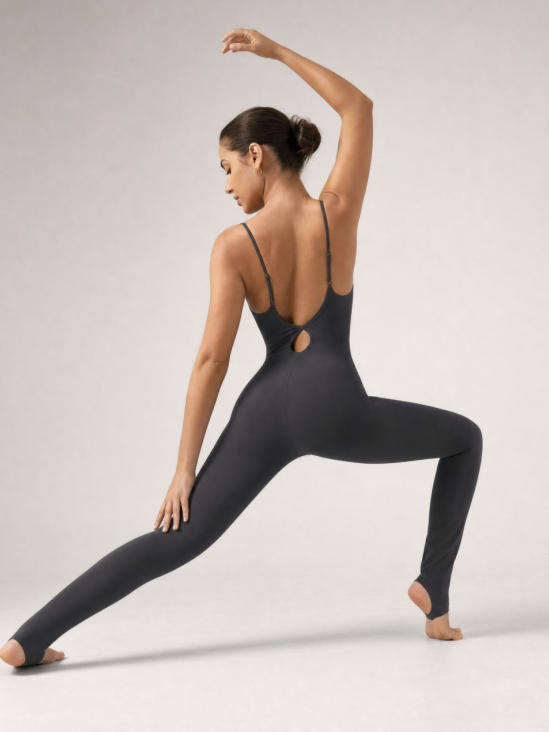
Recommended Fabrics: E0222, J-HRM01, HRM02
For Yoga & Pilates: The high-stretch composition allows unrestricted movement while maintaining gentle compression.
For Gym Training: The heavier weights provide muscle stabilization to reduce micro-tears and fatigue.
For Running & Outdoor: Moisture-wicking finish ensures a dry, friction-free experience.
For Casual Wear: A premium matte finish with elegant drape transitions seamlessly from studio to street.
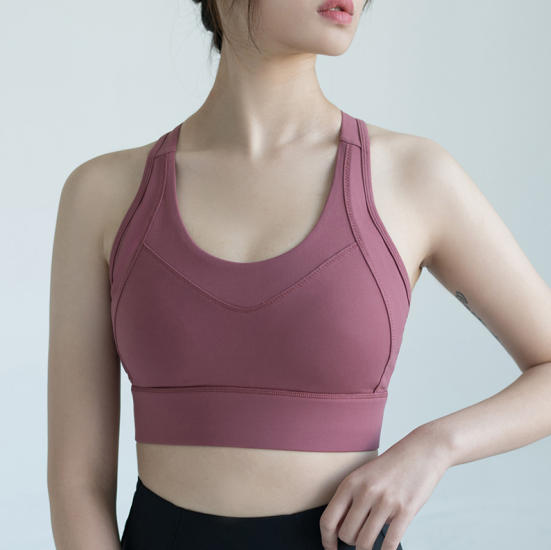
Recommended Fabrics: E0185, HRM03, HRM05
For High-Intensity Training: Maximum support to minimize chest movement during running, HIIT, and court sports.
For Medium-Intensity Activity: Balanced elasticity for yoga, Pilates, and strength sessions.
For Everyday Comfort: Soft against the skin with a wire-free, all-day wear design.
Q1: Is recycled fabric quality comparable to virgin polyester?
A: Yes—and in some metrics, better. Our recycled fibers undergo rigorous refinement that ensures fiber strength, denier uniformity, and tensile performance equal to virgin polyester. All batches are certified under ISO 9001 and undergo comprehensive lab testing for tearing strength, color fastness, and shrinkage before shipment.
Q2: Will the leggings stretch out and lose shape over time?
A: No. Our 17-22% Spandex content, combined with precision knitting, achieves exceptional recovery. After a 5,000-cycle stretch test, the fabric retains over 95% of its original form. Your customers will feel the same compression on day 100 as on day one.
Q3: Is the fabric breathable enough for heavy workouts?
A: Absolutely. Our specialized knit structure combined with inherent moisture-wicking capillary action rapidly draws sweat away from the skin. For brands requiring enhanced performance, we offer optional functional finishes including Anti-Bacterial, Cooling Sensation, and UPF 50+ Sun Protection.
Q4: What certifications prove the environmental credentials?
A: We are fully GRS-certified and provide a Transaction Certificate (TC) with every recycled order, ensuring traceability from raw waste to finished roll. Our fabrics are also OEKO-TEX Standard 100 certified—guaranteed free from harmful substances and safe for direct skin contact.
Q5: Can you match custom Pantone colors?
A: Yes. With our in-house dyeing subsidiary (Fujian Naqi Textile Technology), boasting a monthly capacity of over 4,000 tons, we offer thousands of color options and full Pantone matching. Our proprietary "One-Wash" Level 4+ color fastness technology ensures vibrant, fade-resistant hues even for the most saturated custom shades.
Q6: What are the MOQ and lead time?
A: We support flexible trial orders. As a vertically integrated manufacturer—covering spinning, knitting, dyeing, and finishing in-house—our streamlined supply chain ensures competitive lead times and on-time delivery.
Vertically Integrated Factory Spanning over 160,000 m² with 400+ circular knitting machines and a monthly dyeing capacity exceeding 3,000 tons, we control every stage from yarn to finished fabric.
Triple International Certification GRS for recycled traceability, ISO 9001 for quality management, and OEKO-TEX Standard 100 for ecological safety.
Global Export Track Record Our fabrics reach 50+ countries and regions worldwide, trusted by leading international brands across Asia and South America.
Full Customization From fiber composition and GSM weight to functional finishing, our R&D team is ready to develop exclusive fabrics tailored to your brand.
Recycled fabrics are no longer a compromise—they are an upgrade. Fujian East Xinwei Textile Technology delivers performance yoga and sports bra textiles that combine technical excellence with genuine sustainability.
Every roll of our eco-friendly fabric is a step toward a cleaner planet and a stronger brand.
Ready to experience the difference? [Contact us today for samples and a customized quote.
As a fabric manufacturer and semi-finished garment supplier, our 100% polyester football/soccer jerseys prioritize performance, durability, and customization flexibility, catering to professional teams, clubs, and retail brands.
Engineered for breathability, this lightweight polyester bird eye mesh fabric features micro-eyelet texture to enhance airflow in sportswear and athletic T-shirts. The stretchable, open-knit structure ensures quick-dry performance and a featherlight feel during high-intensity activities. Ideal for modern athletic designs, it combines durability with a subtle sheen for stylish sportswear. OEKO-TEX® certified for skin safety, the fabric resists snagging while maintaining shape. Perfect for performance tees and training tops, its integrated manufacturing process guarantees color consistency and eco-conscious quality.
Jacquard-knit polyester fabric with integrated sports mesh panels for targeted airflow and rapid moisture dispersion. Lightweight, textured weave enhances breathability while maintaining durability for high-intensity training. Four-way stretch ensures unrestricted movement, and abrasion-resistant fibers resist pilling during repeated use. Quick-dry properties and smooth surface optimize comfort in prolonged wear. Suitable for performance sportswear requiring strategic ventilation, structural flexibility, and long-lasting resilience.
EN 14704 tested 4-way stretch with 92% elastic recovery after 50+ industrial washes. Micro-porous weave reduces surface temperature by 3°C during activity (ASTM D1518 verified). OEKO-TEX certified anti-pilling finish maintains appearance through 200+ cycles. Ideal for daily sports uniforms & training gear with UV50+ protection. Custom school logos/colors accepted.
Blended fabric combining nylon's abrasion resistance with spandex elasticity in a yarn-dyed jacquard knit for fade-resistant patterns. Lightweight construction ensures breathability and quick drying during athletic use. Jacquard texture adds dimensional durability while retaining stretch flexibility for dynamic movements. Resists pilling and deformation, maintaining professional aesthetics for team uniforms. Suitable for high-performance sportswear requiring design longevity, moisture management, and unrestricted mobility.
Cationic-dyed polyester fabric ensures vibrant color retention and resistance to fading, paired with jacquard-knit textures for dynamic visual appeal. Lightweight, breathable structure supports moisture management during high-intensity play. Four-way stretch enhances mobility, while abrasion-resistant fibers withstand rigorous movement and repeated washing. Ideal for football jerseys requiring bold designs, durability, and athletic performance. OEKO-TEX certified for skin-safe wear.
Specialized performance fabrics with UV-protective treatments (UPF-rated fabrics), such as polyester, nylon, and certain blends.
Polyester can be blended with other fibers like cotton, wool, or elastane, giving it a range of properties depending on the intended use to create hybrid materials with the best features of each fiber.
Jet dyeing with disperse dyes (130°C for colorfastness), followed by anti-pilling/UV-resistant coatings (OEKO-TEX certified chemicals).
New knitting factory in Sanming was founded---Equipped with 400+ circular knitting machines, the factory achieved 15000-ton/month capacity for seamless athletic wear, supporting Fujian's textile cluster modernization.
Positive work attitude, after-sales service is very secure, so that customers can rest assured that orders
Dyeing Vat Process: 12 dyeing lines achieve ≤0.8% color deviation with OEKO-TEX certified chemicals for eco-compliance.
Our award-winning fabric combines 70% nylon and 30% spandex, engineered for superior softness, abrasion resistance, and antibacterial performance—key traits for sportswear, intimate apparel, and athleisure. The integration of eco-friendly fluorine-free waterproofing technology reduces environmental impact while enhancing durability, aligning with global sustainability trends.
Fabric engineered with recycled polyester (GRS-certified post-consumer sources) for reduced environmental impact. Chlorine-resistant fibers maintain elasticity and colorfastness in pool/saltwater environments. UPF 50+ protection integrated at fiber level, paired with a quick-drying, abrasion-resistant knit. Four-way stretch ensures mobility, while OEKO-TEX certified dyes guarantee skin safety. Designed for sustainable swimwear combining eco-conscious materials with performance durability.
Recent advances in recycling technologies address previous limitations, improving durability, elasticity, colorfastness, and finishing options. Innovative solutions such as chemical recycling, fiber blending, and performance coatings allow recycled fabrics to meet the rigorous demands of global apparel production.
Tailored solutions address niche demands:
Antimicrobial treatments (e.g., SuperSilva™ with silver ions) combat odor-causing bacteria in high-sweat scenarios.
Waterproof-breathable membranes (e.g., e-PTFE microporous films) block rain while allowing vapor escape, critical for mountaineering.
Compression technologyimproves blood flow and reduces muscle vibration, boosting endurance in athletes
Standardization: Lack of unified protocols for durability and data security.
User Acceptance: Balancing comfort with technical complexity, especially for aging populations.
AI-Driven Evolution: Integration with machine learning for predictive health analytics and IoT-enabled smart environments.
Polyester is affordable, and even small spandex additions (e.g., 5%) significantly improve functionality without drastically increasing costs.
Traditional polyester relies on petrochemicals, but recycled polyester (rPET) from plastic bottles and bio-based spandex are emerging to reduce environmental impact. Certifications like OEKO-TEX and GRS ensure safer, eco-friendly production processes.
Vibrant Color Retention: Nylon holds dyes exceptionally well, resisting fading from sunlight or repeated washing.
Textured Finishes: Options like ribbed or double-knit surfaces add visual interest and tactile softness
Compression Socks and Bandages: The fabric’s elasticity aids in improving blood circulation and supporting injured muscles.
Orthopedic Braces: Combines comfort with structural support for medical applications.
Digital looms now replace punch cards, enabling intricate, customizable designs with computer programming.
Sustainability: Brands use recycled nylon, organic cotton, and eco-friendly dyes to reduce environmental impact.
Microwave-Convection (MWC) Drying: Effective for removing free water from fabrics, MWC ensures uniform drying with minimal shrinkage, outperforming traditional hot-air methods .
Heat-Pump Dryers: Optimize energy efficiency by balancing drum rotation speed and airflow, preserving fabric integrity .
Global demand for performance wear drives brands to adopt Dry Fit as a competitive differentiator. Israeli manufacturer Polaris prioritizes Dry Fit for military gear due to its moisture-wicking reliability, while retailers like New Balance emphasize recycled polyesterversions to appeal to eco-conscious consumers
UPF50 clothing reduces cumulative UV damage, lowering risks of skin cancer and photoaging.
Recommended for high-risk groups (e.g., children, outdoor workers) due to its reliable, chemical-free protection.
Hybrid Fabrication: Combines fiber modification and post-treatment. For example, copper-based metal-organic frameworks (MOFs) are integrated with graphene oxide to enhance stability and dispersion on cotton.
Result: Sustained copper ion release ensures long-term antibacterial action.
Softshell fabrics with stretch properties (e.g., Storm Cotton) combine mobility with urban-friendly designs.
Luxury adaptations (e.g., Loro Piana’s Storm System) integrate waterproofing into wool or cashmere for refined outerwear.
Waterproof Standards: ISO 810 (hydrostatic pressure >20,000 mm).
Environmental Compliance: Bluesign® or OEKO-TEX® ensures chemical safety and low-carbon production.
Natural Fibers:
Linen and cotton allow unrestricted airflow and absorb moisture without trapping heat, ideal for dry climates . Bamboo-PU blends add antimicrobial properties while maintaining breathability .
Eco-Friendly Treatments:
Fluorine-free DWR (Durable Water Repellent) coatings and recycled polymers (e.g., TPU) reduce environmental impact without compromising cooling performance .
Breathable designs for extreme heat.
Over 70% of shoppers actively seek 100% cotton for its perceived quality and sustainability. Its timeless appeal bridges generations, with innovations like graphene-infused cotton for thermoregulation ensuring relevance in modern performance wear.
Environmental Footprint
Technological Integration
Resists wrinkles and retains shape after washing.
Automotive interiors: Elastic upholstery fabrics for car seats and headrests.
Protective workwear: Reinforced blends for gloves or safety suits requiring stretch and durability.
Home textiles: Stretchable bed linens and sofa covers that resist pilling.
| Criteria | CVC (≥60% Cotton) | TC(≥60% Polyester) |
| Primary Fiber | Cotton (≥60%) | Polyester (260%) |
| Key Properties | Soft, breathable, hypoallergenic Moderate wrinkle resistance Higher moisture absorption | Wrinkle-resistant, durable Quick-drying. stiff texture Poor moisture absorption |
Strengths | Natural comfort, skin-friendly Better heat retention | Shape retention, low shrinkage Cost-effective, easy maintenance |
| Weaknesses | Prone to shrinkage/pilling Requires ironing | Static buildup, attracts dust Less breathable |
Common Uses | Casualwear (T-shirts, jeans) Medical textiles | Uniforms, workwear Industrial fabrics |
Dyeing & Color | Natural dyes, muted tones Moderate colorfastness | Bright, vibrant colors Superior color retention |
Static Charge | Low (cotton-dominant) | High (polyester-dominant) |
Burn Test | Charred residue (cotton-like) | Melts with black smoke (plastic-like) |
| Price | Higher (due to cotton content) | Lower(synthetic dominance) |
Blocks 99% of harmful UV rays, while cotton-bamboo blends enhance fabric strength and longevity.
Designed for water enthusiasts, this lightweight mesh fabric offers breathable comfort and lasting durability. The polyester-spandex blend resists pool chemicals while wicking moisture, keeping wearers cool during surfing or swimming. Its stretchy mesh structure ensures unrestricted movement, adapting to active beachwear and swimsuits. Soft against the skin with quick-drying properties, it maintains vibrant colors through repeated use. Available in eco-friendly recycled options, ideal for high-performance swimwear and casual water sports apparel. Combines practicality with all-day comfort.
100% polyester cube mesh fabric is a lightweight, breathable textile featuring a three-dimensional cube-like woven structure, combining durability with enhanced airflow. Ideal for sportswear and activewear, it offers moisture-wicking, quick-drying properties, and UV resistance for outdoor performance. The geometric cube pattern adds texture while maintaining flexibility and stretch, ensuring comfort during dynamic movements. Its abrasion-resistant surface resists pilling and retains shape after repeated washes. Suitable for jerseys, linings, and athleisure, it can incorporate recycled polyester (rPET) for sustainability. The semi-rigid yet soft texture allows creative applications in technical apparel or decorative panels, balancing functionality with aesthetic versatility. Machine-washable and colorfast, it prioritizes low-maintenance practicality.
Crafted for yoga and activewear, this interlock knit fabric combines 78% polyester and 22% spandex for a luxuriously soft, four-way stretch that moves seamlessly with your body. Lightweight yet durable, it offers breathable comfort, moisture-wicking performance, and superior shape retention during high-intensity workouts. OEKO-TEX® certified for skin safety and made with eco-conscious processes, the fabric resists pilling and fading for long-lasting wear. Ideal for yoga leggings and compression wear, its smooth, interlocked structure ensures a flattering, second-skin fit. Vertically integrated production guarantees consistent quality and vibrant color options.
Perfect for active lifestyles, this stretchy fabric blends lightweight comfort with breathable flexibility for workouts, running, or casual wear. The soft, moisture-wicking knit keeps you dry while resisting odors and fading. Rich, long-lasting colors add vibrancy to sportswear designs. Available in eco-friendly recycled options, certified skin-safe for sensitive skin. Ideal for athletic apparel that balances everyday comfort, durability, and sustainable performance.
Ideal for daily comfort, this fabric blends cotton’s softness with Sorona’s moisture-wicking technology to stay cool and dry. The ribbed texture enhances breathability, perfect for tees or casual loungewear. Gentle on the skin, it resists shrinking and pilling, maintaining a smooth finish wash after wash. Available in eco-friendly options, it combines sustainability with durability for versatile, all-season wear. Lightweight and easy-care, designed for effortless style and lasting comfort.
Mesh is a highly breathable fabric often used in jerseys and training apparel. Its open structure enhances air circulation, making it perfect for high-intensity sports where ventilation is critical.
Athleisure Brands: Customizable fabrics for seamless integration into yoga-to-streetwear collections.
By merging technical precision with scalable production, we empower clients to create yoga apparel that balances performance, comfort, and sustainability. For swatches or tailored solutions, contact our team to explore how our Polyester spandex and Nylon spandex fabrics can elevate your product line.
By merging athletic-grade technical specs (e.g., hydrodynamic drag reduction) with luxury details like velvet trims and Art Deco patterns, our swimwear bridges functionality and resort-ready aesthetics. Whether for competitive swimming, surfing, or poolside lounging, each piece adheres to our "Adaptive Excellence" philosophy—empowering wearers to perform and shine.
Our jerseys serve:
Professional Teams: Customized designs for league matches.
Youth Academies: Sizes ranging from 120cm (children) to 5XL (adults).
Retail Brands: White-label options for e-commerce platforms.
By merging technical precision with scalable production, we empower clients to balance athletic performance and branding needs seamlessly. For tailored solutions or fabric swatches, contact our OEM team to discuss project specifications.
Professional Athletes: Customizable compression zones and sublimated team logos for competitive wear.
Outdoor Enthusiasts: Reflective detailing on winter gear for low-light visibility; UPF coatings for trail runners.
By merging advanced textile engineering with eco-conscious practices, our running apparel fabrics empower brands to deliver season-adaptive, high-performance solutions. For swatches or OEM partnerships, contact us to explore tailored innovations.
Leisurewear: Lightweight, anti-wrinkle polo shirts for urban commuting or casual gatherings.
Golf Apparel: High-performance designs with compression zones and UV protection for tournaments.
By merging technical precision with aesthetic flexibility, our polo shirt fabrics empower brands to cater to both fashion-conscious consumers and athletic enthusiasts. For swatches or OEM inquiries, contact us to explore tailored solutions.
Eco-Conscious Brands: GOTS-certified organic cotton aligns with brands targeting carbon-neutral collections.
Fast Fashion: Cotton-polyester blends (65/35) reduce costs while maintaining durability for high-volume orders.
Luxury Labels: Tencel-cotton and bamboo blends cater to premium lines emphasizing silky textures and ethical sourcing.
By integrating advanced fiber technology with eco-responsible practices, our cotton fabric portfolio empowers brands to create versatile, high-quality casualwear that balances consumer demand for comfort, style, and sustainability. For swatces or bulk orders (MOQ: 100m), contact us to explore tailored solutions.
In the global wave of sustainable development, "Green Fashion" has evolved from a concept to a market reality. Recycled fabrics are at the heart of this transformation, reshaping the future of the textile industry.
Fujian East Xinwei Textile Technology has been at the forefront of sustainable innovation for years. With international certifications including GRS (Global Recycled Standard) and OEKO-TEX Standard 100, our full range of recycled products meets rigorous global environmental standards. We provide professional, reliable, and high-performance sustainable textile solutions for global brands.
Recycled fabric, often referred to as eco-friendly fabric or RPET (Recycled Polyethylene Terephthalate), is made from recycled materials such as used plastic bottles, waste textiles, or industrial polyester scraps. These materials undergo crushing, pelletizing, and spinning processes to become new fibers, which are then knitted or woven into high-quality textiles.
For every ton of recycled polyester fiber used, we can:
Save approximately 6 tons of petroleum resources.
Reduce 3.2 tons of CO2 emissions.
Equivalent to the annual carbon sequestration of 170 trees.
1. Post-Consumer PET Bottles: Cleaned, crushed, and melted into fibers.
2. Textile Waste: Repurposing old garments or fabric scraps.
3. Industrial Waste: Recycling polyester or nylon scraps from manufacturing.
Our product line covers high-performance activewear, casual wear, and home textiles, meeting diverse global sourcing needs.

Blending high-quality recycled fibers with Spandex, these fabrics offer superior elasticity and a soft hand feel.
Best For: Yoga wear, gym leggings, sports bras, swimwear lining.
Key Specs:
Style No. | Composition | Weight & Width |
RS1101 | 92% Recycled Polyester + 8% Spandex | 140gsm * 160cm |
RXK8004 | 92% Recycled Polyester + 8% Spandex | 170gsm * 165cm |
RDA7540 | 85% Recycled Polyester + 15% Spandex | 190gsm * 150cm |
RDA004 | 86% Recycled Polyester + 14% Spandex | 220gsm * 152cm |
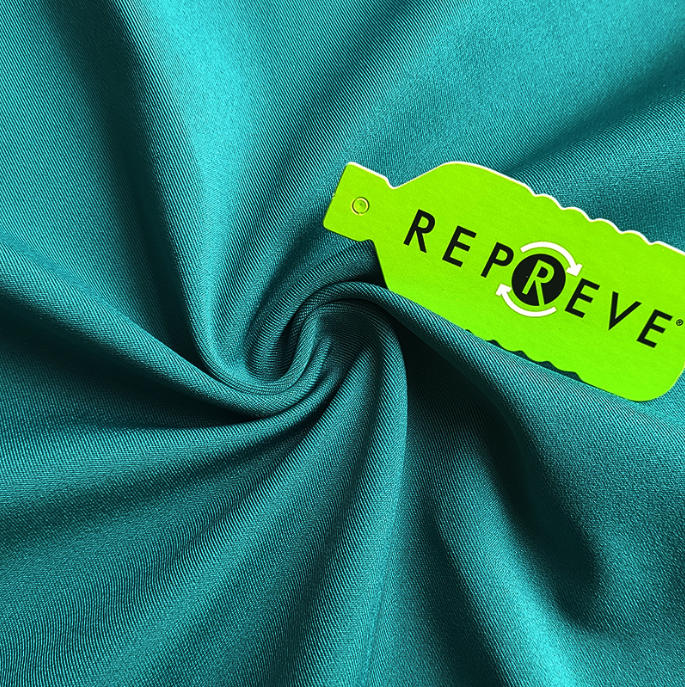
Engineered for high-intensity training, offering excellent recovery and support.
Key Specs:
Style No. | Composition | Weight & Width |
E0222 | 83% Recycled Polyester + 17% Spandex | 210gsm * 150cm |
HRM02 | 78% Recycled Polyester + 22% Spandex | 250gsm * 150cm |
HRM05 | 81% Recycled Polyester + 19% Spandex | 285gsm * 150cm |
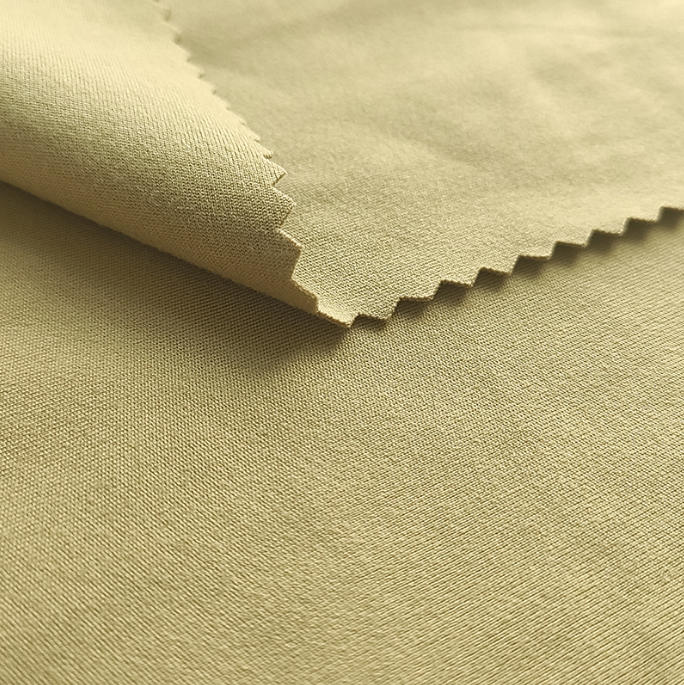
Smooth on both sides with great wrinkle resistance.
Best For: Performance T-shirts, Polo shirts, hoodies, casual sets.
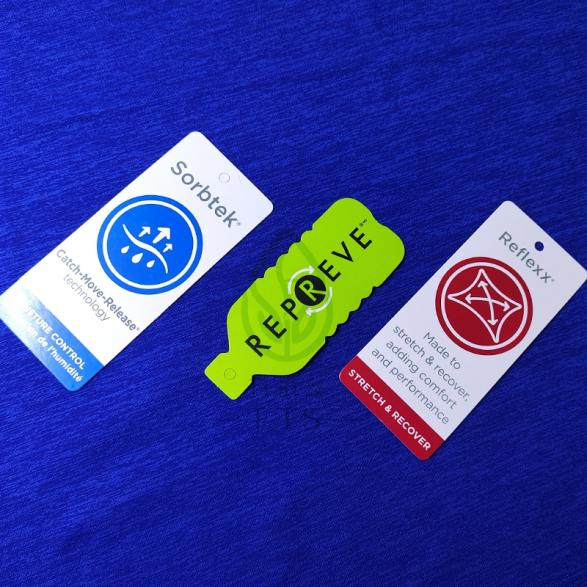
Advanced breathable structures for rapid moisture management.
Best For: Basketball jerseys, cycling wear, fishing shirts, and summer activewear.
Q1: Is the quality of recycled fabric equal to virgin fabric?
A: Yes. High-quality recycled polyester matches virgin polyester in strength, abrasion resistance, and color fastness. At East Xinwei, we use premium recycled chips and advanced spinning tech to ensure our fibers are uniform and durable.
Q2: What certifications do your sustainable fabrics have?
A: Our products are certified by:
GRS (Global Recycled Standard): Verifies recycled content and social/environmental production practices.
OEKO-TEX Standard 100: Ensures the fabric is free from harmful substances and safe for skin contact.
Q3: Can recycled fabrics be treated with functional finishes?
A: Absolutely. We can apply various finishes including Moisture Wicking, UPF 50+ UV Protection, Anti-Bacterial/Anti-Odor, Cooling effect, and Water Repellency.
Q4: What is the price difference between recycled and virgin fabric?
A: Currently, eco-friendly fabrics typically cost 10%-20% more due to recycling costs. However, they provide significant brand value, higher marketing appeal, and satisfy the growing consumer demand for sustainable products.
Q5: Can you provide Transaction Certificates (TC)?
A: Yes. For all GRS-certified orders, we provide full traceability and can issue a Transaction Certificate (TC) to prove the authenticity and origin of the recycled materials.
Sustainable fashion is not just a trend—it is a necessity. Choosing sustainable fabrics is a commitment to the planet and a powerful way to differentiate your brand.
At Fujian East Xinwei Textile Technology, we are dedicated to providing high-quality, cost-effective recycled fabric solutions. From raw material selection to our proprietary "One-Wash" dyeing technology (ensuring Level 4+ color fastness), we guarantee excellence in every yard.
Contact us today for samples and professional consultation. Let’s protect the earth with the power of textiles.
Fujian East Xinwei Textile Technology Co., Ltd. Expert in High-Performance Functional Fabrics & Sustainable Solutions. [Inquiry Now] | [Browse Catalog]
Crafted for eco-driven athletes, this fabric blends Repreve® recycled polyester with spandex for sun-ready durability in swimwear, yoga gear, and leggings. The chlorine-resistant, UPF-enhanced knit offers four-way stretch and quick-dry performance, ideal for both water and land activities. OEKO-TEX® certified and GRS-compliant, its lightweight compression supports high-intensity movement while resisting pilling and fading. Sustainably processed with vertical integration, it ensures color vibrancy and shape retention for versatile activewear. Perfect for seamless designs that prioritize planet-friendly innovation without compromising on comfort or style.
Blended fabric combining polyester's durability with spandex elasticity in a knit jersey base, integrated with butterfly mesh panels for targeted ventilation. Lightweight structure promotes airflow and rapid moisture dispersion during intense activity. Ergonomic stretch supports dynamic movements while resisting pilling and deformation. Chlorine/saltwater-resistant fibers ensure longevity in active environments. OEKO-TEX certified for skin safety. Suitable for sportswear requiring breathability, strategic cooling zones, and long-term wear resilience.
Blended fabric combining nylon's lightweight durability with spandex elasticity in a smooth single jersey knit. High-stretch construction supports dynamic movements while retaining shape through repeated wear. Breathable structure enhances airflow during intense activity, and abrasion-resistant fibers resist pilling. Quick-drying properties and chlorine resistance ensure longevity in active environments. Ideal for sportswear prioritizing flexibility, comfort, and long-term performance. OEKO-TEX certified for safe skin contact.
functional fabric with antimicrobial treatments, or synthetic blends treated with odor-resistant finishes.
Post-consumer waste is shredded → depolymerized into BHET → re-polymerized (closed-loop for GRS certification).
In 2021, the company wascertified as a National High-Tech Enterprise for meeting criteria like R&D investment ratios, intellectual property ownership, and tech talent density, while also being recognized as a Tech SME Giant for achieving 20%+ annual growth, industry-leading innovation, and advanced R&D systems
High-Stability Setting: Stabilize fabric dimensions and enhance functional properties (e.g., UV resistance) through controlled heat.
The “Five Small” competition, focused on grassroots innovations (small improvements, inventions, creations, designs, and suggestions), empowers enterprises to refine production processes and foster skill development. By winning this prestigious award, we demonstrate our ability to merge R&D expertise with industrial scalability, ensuring cost-effective, high-performance fabrics for brands worldwide.
Blended fabric merging recycled polyester (post-consumer PET sources) with bamboo-derived viscose for reduced environmental impact. Bamboo fibers provide natural antibacterial properties and biodegradability, while recycled polyester ensures durability and reduced resource consumption. OEKO-TEX certified for safety, with a soft hand feel and breathable knit structure. Suitable for eco-conscious apparel brands prioritizing circular textile economy and low-carbon production.
For Activewear: Choose blends with 5–10% spandex for optimal stretch and recovery (e.g., yoga pants).
For Daily Use: Opt for brushed or ribbed finishes to enhance softness and warmth in loungewear.
Sustainability Focus: Seek GRS-certified recycled polyester or plant-derived spandex alternatives.
High-Impact Gear: Leggings, cycling shorts, and sports bras (20% spandex for maximum stretch).
Swimwear: Chlorine-resistant knits with quick-drying properties.
Casual Activewear: Joggers and hoodies with brushed finishes for warmth and softness
Brands are adopting recycled nylon (e.g., from ocean plastics) and bio-based spandex to reduce environmental impact. Certifications like OEKO-TEX and GRS ensure safer chemical standards and eco-conscious production.
Form-Fitting Dresses and Jerseys: The blend’s stretch and wrinkle resistance make it ideal for bodycon dresses and athletic-inspired streetwear.
Undergarments: Soft, breathable variants are used in lingerie and shapewear for comfort and durability
Recycled Materials: Brands like New Balance use100% recycled polyester in quick-drying apparel, reducing environmental impact .
Biodegradable Fibers: Innovations like PBAT/PVA composite fibers(Anta) combine quick-drying properties with biodegradability .
Recyclable materials like TPU replace PVC to reduce environmental impact.
Bio-based membranes (e.g., eVent BIO) align with eco-conscious manufacturing trends.
Nikwax TX.Direct® Spray: Restores DWR (Durable Water Repellency) without heat, extending garment lifespan.
Wash Care: Use mild detergents and avoid fabric softeners to preserve waterproof coatings.
Fabrics meeting OEKO-TEX® or Bluesign® standards ensure chemical safety and thermal efficiency, critical for prolonged wear in extreme conditions
Fluorinated resins enhance cooling durability.
Wicks sweat while maintaining soft texture.
Decomposes naturally within 180 days without microplastic pollution, aligning with circular fashion principles.
Crafted for swimwear and casual wear, this nylon-spandex blend resists pool chemicals while offering natural stretch. The smooth, breathable fabric dries quickly and retains shape through swimming or surfing. Soft against the skin with fade-resistant colors, it’s ideal for bikinis and beach tees. Available in eco-conscious recycled options, meeting global safety standards. Perfectly balances durability and comfort for sun-to-sea activities.
100% polyester mini eyelet mesh fabric is a lightweight, breathable textile characterized by tiny, uniform mesh apertures for enhanced airflow. Its knit structure combines durability with flexibility, ideal for sportswear, athletic linings, and casual apparel. The fabric wicks moisture efficiently, dries quickly, and resists wrinkles and abrasion, maintaining shape and color vibrancy after repeated washes. UV-resistant and machine-washable, it supports functional treatments like antimicrobial coatings or recycled polyester (rPET) for sustainability. The mini eyelet design balances stretch and compression, ensuring comfort in dynamic movements. Suitable for diverse climates, it merges technical performance with low-maintenance practicality.
Crafted for eco-conscious performance, this GRS-certified fabric utilizes REPREVE® recycled polyester to deliver durability and a soft, stretchable texture perfect for leggings and activewear. Its four-way stretch ensures freedom of movement, while moisture-wicking properties keep you dry during workouts. OEKO-TEX® certified for skin safety, the fabric resists pilling and retains shape through repeated use. Ideal for yoga pants, sports bras, and gym wear, it combines sustainability with high-performance functionality. Vertically integrated production ensures colorfastness and eco-friendly processing from yarn to finish.
Engineered for active lifestyles, this fabric blends nylon's durability with spandex flexibility for full-range movement in cycling, gym workouts, or casual wear. The textured knit design enhances breathability while wicking moisture to keep you cool. Soft, fade-resistant, and quick-drying, it maintains shape through intense activity. Available in eco-conscious recycled options, certified skin-safe and perfect for sportswear, tees, or jerseys that balance performance with stylish, everyday comfort.
Crafted for everyday comfort, this fabric combines modal’s silky softness with spandex stretch for a smooth, breathable feel. The lightweight knit resists wrinkles and holds its shape, ideal for casual tees or relaxed-fit tops. Gentle on sensitive skin, it wicks moisture naturally and stays cool in warm weather. Available in eco-conscious recycled options, certified for safety and durability. Perfect for effortless styles that prioritize comfort and sustainable versatility.
When evaluating suppliers of recycle fabric, how do you move beyond marketing claims to verify true sustainability? This video provides a transparent look inside our production, demonstrating what sets a vertically integrated wholesale eco-friendly fabric factory apart.
True sustainability requires systemic control. As one of wholesale eco friendly fabric manufacturers, we manage the chain from GRS-certified recycled materials to finished fabric. This integration ensures traceability and consistency in every batch of rept fabric, a level of transparency fragmented supply chains cannot guarantee.
A common compromise with recycle fabric is diminished quality. Through our sustainable engineering process, we ensure that our sportswear cloth material maintains exceptional durability, colorfastness, and a comfortable hand-feel while reducing environmental impact. The result is high-performance rPET fabric that meets the rigorous demands of modern athletic and activewear applications.
Follow the journey of post-consumer materials through our advanced washing, extrusion, and spinning processes. This closed-loop approach minimizes waste and energy use, defining our sustainable manufacturing ethos. For brands, this means a lower carbon footprint and a verifiable story for your end-consumer.
We conclude with a practical framework for assessing any recycle fabric supplier. Look beyond certificates to production integration, request third-party LCA data, and test for technical performance. These factors determine long-term value and supply chain reliability.
We provide complete transparency for qualifying partners. Contact us to request a traceability dossier, third-party test reports, and swatches of our rept fabric for your own evaluation.
As a fabric manufacturer specializing in polyester-ammonia and health-enhancing blends, our running apparel textiles are engineered to cater to both thick winter gear and lightweight summer wear, balancing thermal regulation, durability, and athletic performance.
Engineered for modern activewear, this lightweight mini eyelet mesh fabric combines breathability with a sleek aesthetic. The ultra-fine perforations enhance airflow, making it ideal for yoga tops, running sleeves, and layered sportswear designs. Crafted from durable polyester, the fabric retains its deep black hue through washes while resisting snags and fading. OEKO-TEX® certified for skin-friendly safety, its stretchable structure ensures comfort during dynamic movements. Perfect for fashion-forward athletic apparel, it balances functionality with a subtle textured finish. Vertically integrated manufacturing guarantees color consistency and eco-conscious production processes.
Polyester, nylon, and other moisture-wicking synthetics tend to dry faster than natural fibers.
Vertical control from recycled flakes to finished fabric (72-hour lead time);
12 dyeing lines with ≤0.8% color deviation (ISO 9001);
Custom functional finishes (e.g., moisture-wicking, chlorine resistance) tailored to sportswear brands.
we were selected as one of the key enterprises in manufacturing industry in Sanming City, and in the latter year, we passed ISO9001 Quality Management System, GRS Global Regeneration Certification and Innovative Small and Medium Enterprises Recognition, and were awarded AAA credit rating. ISO14001 Environmental Management System Certification, and we have successfully created a national-level green factory.
Final Inspection: Automated sensors and visual checks detect defects (e.g., pilling, color shifts) to ensure 99.98% compliance.
Polyester-spandex blends (typically 80–95% polyester + 5–20% spandex) have become a cornerstone of activewear production due to their unique synergy of performance, durability, and cost-efficiency. Here’s an in-depth analysis of their suitability:
Polyester-spandex fabric excels in sportswear by merging stretch, durability, and moisture control. While challenges like breathability and sustainability persist, advancements in textile engineering and eco-friendly practices continue to refine its role in performance apparel. For athletes and manufacturers, prioritizing high-quality blends and certifications ensures optimal functionality and reduced environmental footprint
Nylon spandex fabric (typically 80–85% nylon + 15–20% spandex) has become a gold standard for swimwear and athleisure due to its unmatched combination of stretch, durability, and functional versatility. Here’s a detailed breakdown of its performance advantages:
Feature | Jacquard Fabric | Printed Fabric |
Pattern Durability | Woven-in, fade-resistant | Prone to fading over time |
Texture | Raised, tactile designs | Flat surface |
| Versatility | Reversible and season-adaptable | Limited by print technique |
In summary, Jacquard fabric combines artistry, durability, and adaptability, making it a staple in luxury fashion, interior design, and functional textiles. Its evolution from 19th-century innovation to modern sustainable practices underscores its timeless appeal
Meets international standards (e.g., ISO 810, AATCC 100) for waterproofness and breathability, ensuring reliability.
Triboelectric Nanogenerators (TENG): Waterproof fabrics integrated with energy-harvesting tech for self-powered sensors (e.g., WPF-MTENG).
Graphene-Enhanced Textiles: Improve thermal regulation and antibacterial properties while maintaining waterproofness.
PFAS-free with cooling nanoparticles.
These innovations blend advanced materials and sustainable tech for performance-driven apparel. For details, refer to cited sources.
Avoid hot water to prevent shrinkage/pilling.
Bamboo processing emits 1/3 the CO2 of synthetic fibers, with 98% chemical recovery rates in eco-certified production.
Ideal for sun-intensive activities, this fabric provides UPF50+ protection while ensuring all-direction flexibility. The nylon-spandex blend combines a soft matte finish with chlorine resistance, perfect for swimwear and surfing gear. Its interlock knit structure offers durability and shape retention, adapting to vigorous movements without losing form. Quick-drying and lightweight, it ensures comfort during water sports or casual wear. Available in eco-friendly recycled options, meeting global safety standards for skin-friendly athletic apparel. Balances sun protection with everyday versatility.
Engineered for precision movement, this jacquard-knit fabric combines polyamide nylon’s durability with spandex’s four-way stretch for a sculpting, second-skin fit. The breathable structure wicks moisture and resists odor, ideal for high-intensity yoga and gym sessions. OEKO-TEX® certified for skin safety, it maintains shape through repeated wear while offering subtle compression. Intricate jacquard patterns add style without sacrificing flexibility, perfect for leggings and performance wear. Crafted with eco-conscious processes and vertical production control, it ensures colorfastness and long-lasting quality.
Ideal for cyclists, this lightweight fabric blends nylon's durability with spandex stretch for flexible, long-lasting performance. The breathable knit wicks sweat and dries quickly, ensuring comfort during intense rides or workouts. Soft against the skin, it resists odors and fading while maintaining shape through repeated use. Available in eco-conscious recycled options, certified skin-safe for sensitive skin. Perfect for cycling gear, sportswear, or versatile apparel that demands breathability, mobility, and sustainable quality.
Marine recycled yarn is a new type of environmental protection material. Compared with the original recycled yarn, the source of Marine recycled yarn is different. Marine recycled yarn is a new type of fiber recycled from recycled Marine waste, such as waste fishing nets, boats, etc., after special treatment.At present, Marine recycled yarn is mainly recycled polyester yarn, so Marine recycled fabric is a new type of recycled polyester fabric.
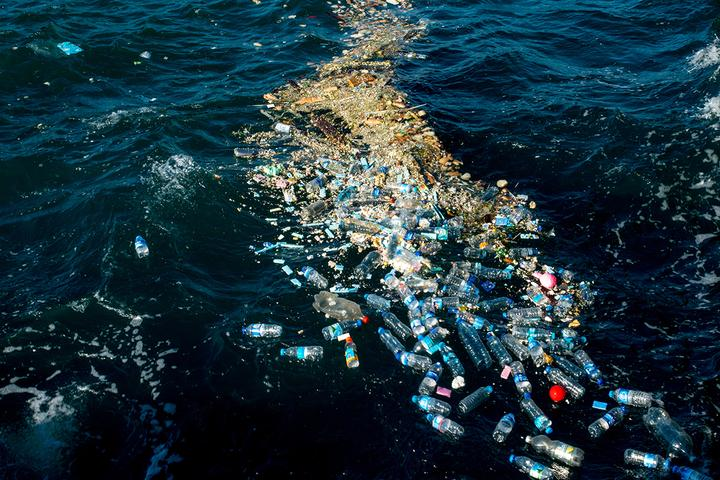
Marine litter refers to persistent, man-made or processed solid waste in the Marine and coastal environment. Some of this Marine debris is trapped on the coast by the tide, while others float on the surface or sink to the bottom. The amount of Marine debris in the Pacific Ocean alone has reached more than 3 million square kilometers, an area larger than India. The harm of these Marine debris is not only affecting and threatening the natural ecological environment or the growth and survival of wildlife, but also human beings themselves.
Because Marine recycled polyester is recycled from Marine waste, it has high environmental protection. The promotion and use of this material will help reduce Marine litter and protect the Marine ecological environment. In contrast, the production process of traditional polyester can have a certain impact on the environment. Therefore, in terms of environmental protection, Marine recycled polyester has obvious advantages.
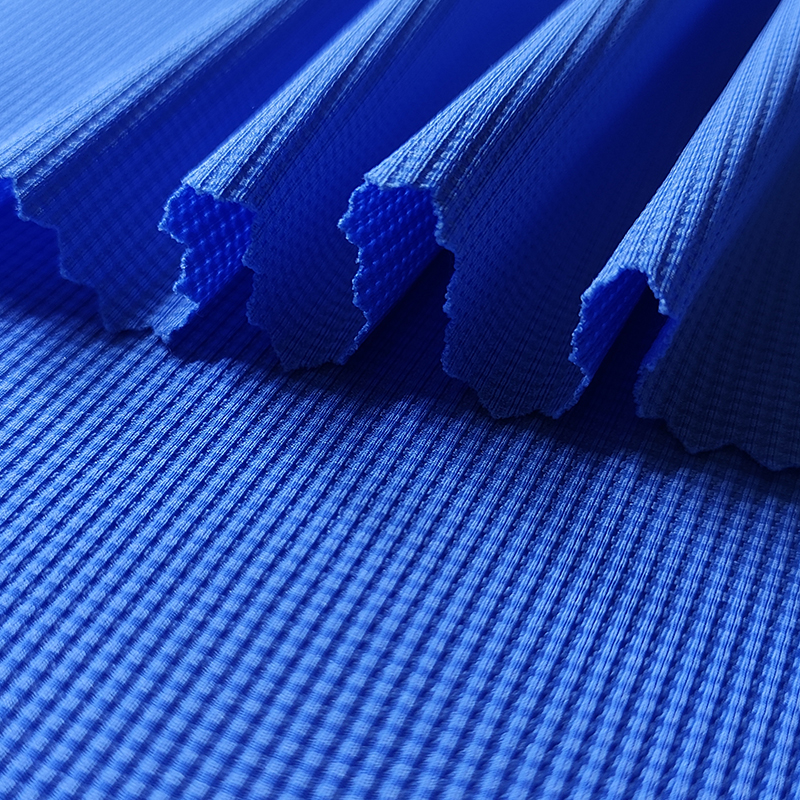
At the same time, compared with traditional polyester fibers, Marine recycled polyester adopts a special regeneration process, and its fiber structure may be more compact, thus improving the strength and wear resistance of the fiber. In addition, Marine recycled polyester also has good moisture absorption and air permeability, making the textile more comfortable and durable.
Traditional polyester is widely used in clothing, household goods, industrial supplies and other fields. Marine recycled polyester, due to its unique environmental protection and excellent performance, is gradually taking a place in the textile market. Especially in the increasing awareness of environmental protection, more and more consumers tend to choose products made of environmentally friendly materials, so Marine recycled polyester has broad market prospects.Because of the emergence of new environmentally friendly materials, we also keep up with the trend. At present, our company's recent new products are several kinds of Marine recycled fabrics, whose raw materials are yarns produced by repreve, and we also have their company's product tags.If you are interested in this, you are also welcome to come to consult, We are also committed to environmental protection, I hope we can make a small contribution to environmental protection.
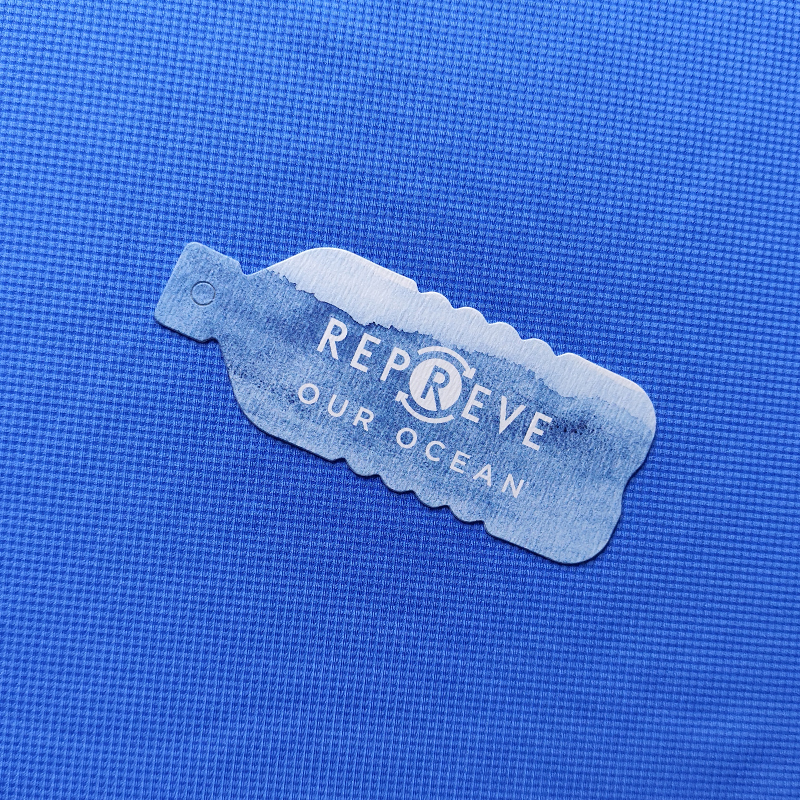
In summary, there are significant differences between Marine recycled polyester and traditional polyester in raw material sources, environmental protection, performance and application fields. As people's attention to environmental issues continues to increase, Marine recycled polyester, which is both environmentally friendly and high-performance materials, will be more and more favored by the market.
This high-performance fabric combines 100% polyester with engineered jacquard mesh to optimize athletic performance. Its moisture-wicking structure rapidly pulls sweat to the surface for quick evaporation, while strategic mesh zones enhance breathability during intense sports like basketball or soccer. The jacquard weave adds durability and targeted stretch for dynamic movements, and its abrasion-resistant fibers withstand frequent friction. UV-resistant and machine-washable, it maintains color vibrancy and shape over time.
Choosing the right material is critical for performance, comfort, and durability in sportswear. At East Xinwei Textile, we offer a wide range of high-quality fibers and blends, each designed to meet the demands of different sports and activewear applications:
Recycled fabric is an eco-friendly fabric made by reprocessing waste materials such as PET bottles, old garments, and industrial fibers. It reduces reliance on virgin resources, cuts CO₂ emissions (saving up to 4.2 tons per ton of RPET), and minimizes landfill waste.
Common types: RPET fabric, Repreve fibers, recycled nylon fabric, biodegradable blends.
Key benefits: sustainability, circular fashion, reduced carbon footprint.
Applications: activewear, cycling gear, uniforms, eco-bags.
When evaluating a knitting fabric or sportswear fabric supplier, brands conduct side-by-side comparisons. The decisive factor often isn't the initial quote, but predictable, vibrant color. This 15-second video demonstrates the consistent, vivid quality that sets our production apart.
Inconsistent dye lots lead to delayed shipments, rejected batches, and compromised collections. For brands producing coordinated apparel lines across separate printed factory and sublimation factory partners, color matching becomes a costly challenge.
Unlike suppliers that outsource key production stages, we manage fabric production, dyeing, and printing under one roof. This gives us greater control over color accuracy, quality consistency, and lead times. The result is sportswear cloth material that matches your approved standard—batch after batch.
Vertical Integration: From yarn sourcing through knitting, dyeing, and finishing, we eliminate variables introduced by multi-factory production chains.
Digital Precision: Our color matching and batch monitoring systems ensure reproducibility.
Fiber-Specific Expertise: We optimize processes for performance materials, ensuring color fastness and vibrancy in activewear.
You secure reliable timelines, eliminate quality disputes, and reduce material waste. This operational reliability, combined with our competitive pricing, delivers true cost efficiency. The result is premium knitting fabric with consistent color, without the premium cost.
For brands comparing sportswear fabric suppliers, we provide A/B comparison swatches upon request. Experience the color consistency that makes us a benchmark for global brands.
Contact us to submit your color standard for a match.
Polyester & Custom-Blended Polo Shirt Fabrics for Leisure & Golf Apparel
As a fabric manufacturer specializing in 100% polyester and custom-engineered blends (e.g., cotton-polyester or polyester-nylon-ammonia mixes), our polo shirt textiles are designed to meet the demands of both casual wear and high-performance golf apparel. Leveraging advanced weaving techniques and functional treatments, these fabrics combine durability, comfort, and style for modern consumers.
100% polyester rib fabric is a textured, stretchable knit featuring raised vertical ribs, ideal for collars, cuffs, and activewear due to its durable elasticity and shape retention. Known for wrinkle resistance, quick drying, and colorfastness, it offers lightweight comfort with a soft yet resilient feel. The ribbed structure enhances breathability and flexibility, making it suitable for sportswear, underwear, and casual apparel. Advanced variants may incorporate recycled polyester or functional treatments like UV resistance and flame retardancy. Machine-washable and low-maintenance, it balances performance and practicality for everyday and athletic use.
Recycled polyester (rPET), organic cotton, and fabrics made from renewable resources like bamboo or hemp.
The project "Development and Industrialization of Nylon and Ammonia Functional Fabrics" won the First Prize of "Five Little Things" Innovation Competition for One Million Employees in Fujian Province in 2024. Advancing Fujian's textile innovation through industrial collaboration
Auto Packing: Robotic systems package finished fabrics with barcode labeling for traceability and rapid logistics.
Polyester-spandex blends are a cornerstone of modern sportswear due to their unique synergy of elasticity, durability, and functional performance. Here’s an in-depth analysis of their role in activewear:
Nylon spandex fabric (typically 80–85% nylon + 15–20% spandex) is a versatile material prized for its durability, elasticity, and functional adaptability, making it a staple in multiple industries. Below are its primary applications:
Dry Fit fabric has revolutionized performance apparel by merging advanced material science with user-centric design. From sportswear to outdoor gear, these innovations prioritize comfort, durability, and sustainability. Here’s why it remains indispensable for brands targeting athletes and active lifestyles:
Includes OEKO-TEX® certified or recycled blends
Nylon Spandex, with its exceptional stretch and durability, is a fabric celebrated for its versatility. Whether you own activewear, swimwear, dance costumes, or everyday clothing made from Nylon Spandex, proper care is essential to ensure these garments maintain their flexibility and style. In this article, we'll discuss how to care for Nylon Spandex garments, keeping them in top condition for years to come.
The first step in caring for any garment, including nylon spandex fabric, is to read the care label. The label provides specific instructions on how to clean and maintain the item. It's essential to follow these guidelines as they are tailored to the particular fabric blend and garment type.
For most Nylon Spandex garments, hand washing in cold water is the preferred method of cleaning. Use a mild detergent designed for delicates or activewear. Avoid harsh detergents, as they can damage the elasticity of the fabric.
If you're in a hurry or have many similar garments to wash, you can use a gentle machine wash setting with cold water. Be sure to place your Nylon Spandex garments in a lingerie bag to protect them from friction and stretching during the wash cycle.
Never use hot water or expose Nylon Spandex garments to high heat. Heat can damage the spandex fibers, causing the fabric to lose its stretch. Stick to cold water for washing and rinse thoroughly to remove all detergent.
Fabric softeners may leave residues that can affect the fabric's elasticity and moisture-wicking properties. It's best to skip fabric softeners when caring for Nylon Spandex garments.
The most crucial aspect of drying Nylon Spandex garments is to air dry them. Avoid using a dryer or direct sunlight, as excessive heat can harm the spandex fibers. Lay your garments flat on a clean towel to dry, ensuring they maintain their shape and elasticity.
When storing your Nylon Spandex garments, fold them neatly rather than hanging them. Hanging can lead to stretching and distortion of the fabric. Store them in a cool, dry place away from direct sunlight to prevent fading and damage.
When wearing Nylon Spandex, be cautious of rough surfaces that could snag or damage the fabric. This is especially important for activewear, as abrasion can impact the garment's longevity.
If you wear Nylon Spandex activewear frequently, it's a good idea to rotate between different pieces to give them time to recover their shape between uses. This can extend their lifespan.
Crafted for dynamic water sports, this breathable fabric combines stretch flexibility with lasting comfort. The polyester-spandex blend ensures quick-drying performance and vibrant, fade-resistant prints, ideal for sublimation designs. Lightweight yet durable, it adapts to surfing, swimming, or casual wear while maintaining shape. Skin-friendly with moisture-wicking properties, it meets international safety standards. Available in eco-conscious recycled options, perfect for high-performance swimwear and active beach apparel. Balances freedom of movement with everyday versatility.
Nylon Spandex Lycra Dri-FIT Fabric combines nylon’s durability and abrasion resistance with spandex’s high elasticity (up to 500% stretch), ideal for form-fitting swimwear and activewear. The blend ensures two-way stretch, shape retention, and quick-drying properties, enhanced by Dri-FIT-like moisture-wicking technology to keep wearers dry during intense activities. Its lightweight, breathable structure supports dynamic movements while resisting wrinkles, chlorine, and UV degradation. Commonly used in performance swimsuits, athleisure, and compression gear, the fabric balances comfortable compression with a smooth, soft texture. Eco-friendly variants may integrate recycled nylon or OEKO-TEX-certified fibers for sustainable production. Machine-washable and colorfast, it merges athletic functionality with everyday practicality.
Designed for cyclists, this breathable mesh fabric combines stretch flexibility with a lightweight, cooling feel. The textured Jacquard design enhances airflow during intense rides while wicking moisture to keep you dry. Customizable patterns add style without sacrificing durability. Soft against the skin and quick-drying, it resists fading and maintains shape over time. Ideal for high-performance cycling jerseys or versatile activewear that demands both comfort and innovative design.
Sportswear fabric is the unsung hero of athletic performance. Designed to withstand the rigors of intense physical activity, sports jersey fabric is engineered with precision, blending innovation with functionality to meet the diverse needs of athletes across various disciplines.
From moisture-wicking properties that keep sweat at bay to breathable materials that enhance airflow, sportswear fabric is meticulously crafted to regulate temperature and keep athletes cool and dry. Stretchable and durable, it provides the flexibility needed for unrestricted movement, allowing athletes to push boundaries without feeling constrained.
The sports fabrics on the sportswear market that qualify as athletic apparel are showing as below:
1. Polyester
2. Nylon
3. Spandex (Lycra)
4. Merino Wool
5. Bamboo
6. Cotton
7. Polypropylene
And among most fabric suppliers, the following are most commonly used
●Polyester
●Nylon
●Spandex (Lycra)
●Bamboo
●Cotton
How much of the sports fabric supplier’s market share the fabric represents depends on the overall market demand for sportswear. All of these fabrics meet the basic performance requirements of sportswear, while the cost is more cost-effective compared to other premium fabrics.
The following is a general differentiation of these fabrics
1. Polyester
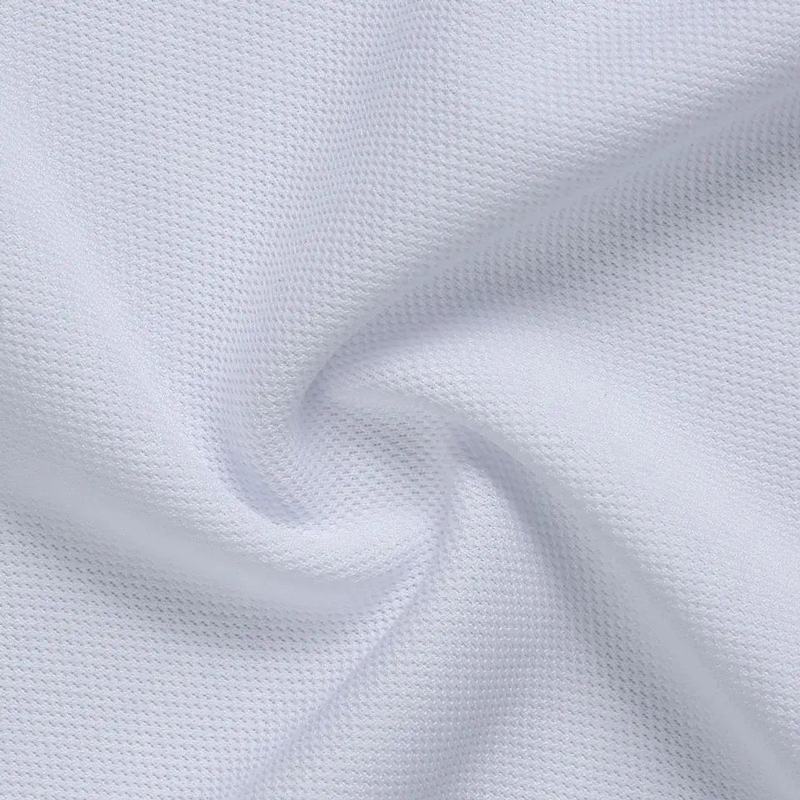
100% Polyester fabric is a synthetic material that is commonly used in sportswear due to its excellent properties that make it well-suited for athletic activities. One of the most commonly used is bird eye mesh fabric. Here are some key characteristics and benefits of polyester fabric in sportswear.
●Moisture-wicking
●Quick-drying
●Durability
●Lightweight
●Breathability
●UV protection
●Color retention
2. Nylon
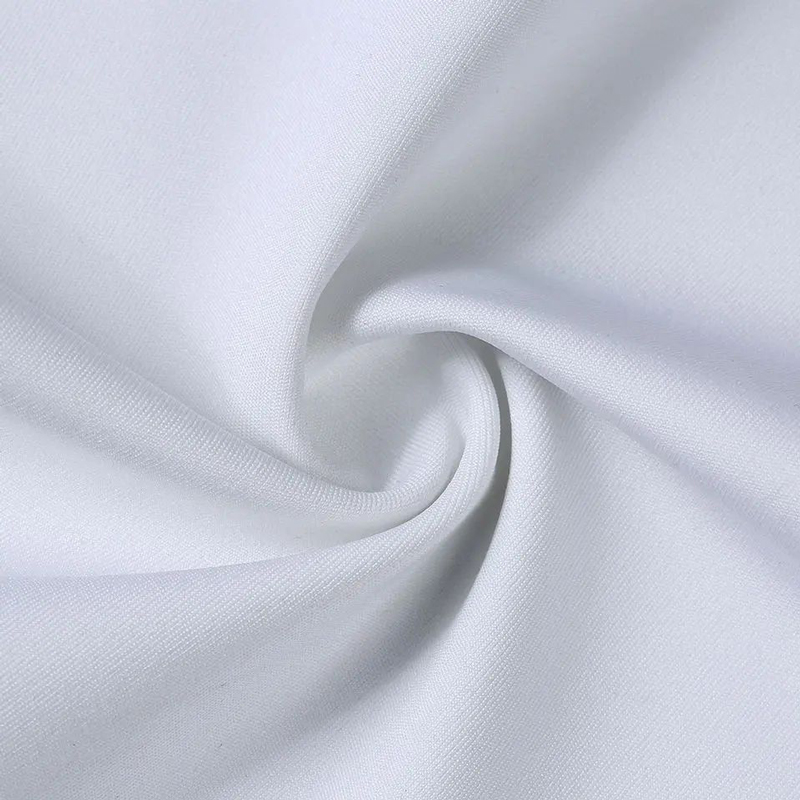
Nylon, which equal to Polymer fabrics, another synthetic fabric commonly used in sportswear.
It is known for its strength and durability, making it ideal for high-performance athletic gear. Nylon (Nylon spandex) is a synthetic polymer known for its strength, elasticity, and durability, commonly used in fabric production. Here are some key points about nylon fabric:
●Durability
●Elasticity
●Lightweight
●Moisture Resistance
Care Instructions
Washing: Nylon sportswear fabric Should be washed in cold water with a mild detergent to preserve elasticity. Avoid fabric softeners.
3. Spandex (Lycra)
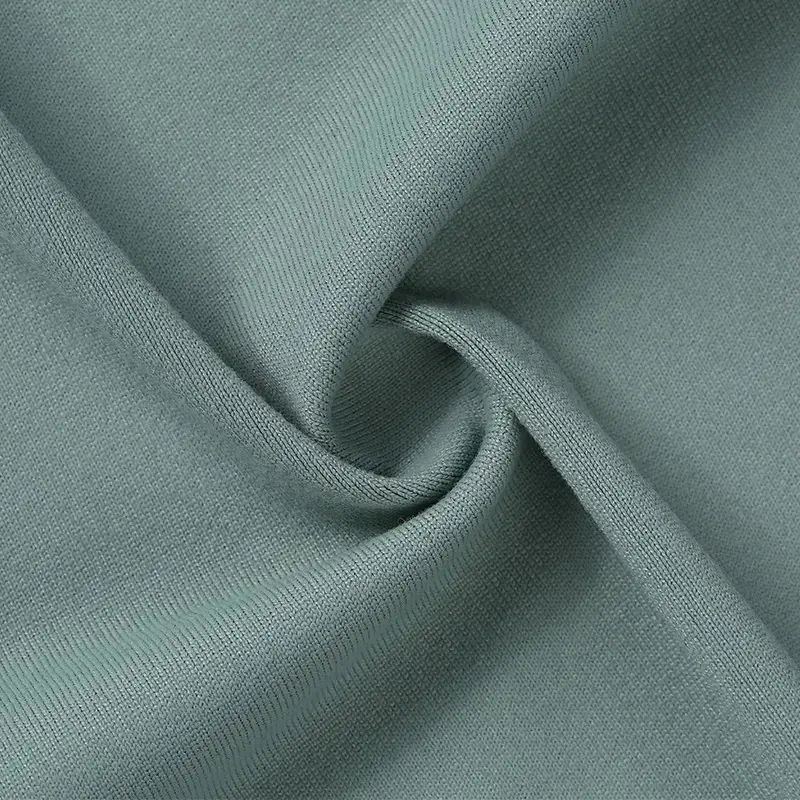
Spandex, also known as Lycra or elastane, is a stretchy fabric known for its exceptional elasticity that provides excellent flexibility and range of motion. It is often blended with other fabrics to give sportswear a snug and comfortable fit. Spandex fabric is a game-changer in the textile industry due to its unique properties that combine comfort, durability, and flexibility, making it an essential component in a wide range of garments.
Here are the key aspects of spandex fabric:
●Elasticity: Can stretch up to five times its original length, providing superior elasticity. But avoid loss of elasticity due to high temperatures.
●Recovery
●Lightweight
●Moisture Wicking
●Smooth and Soft: Provides a smooth, soft texture that is comfortable against the skin.
Care Instructions
Should be washed in cold water with a mild detergent to preserve elasticity. Avoid fabric softeners.
4. Bamboo
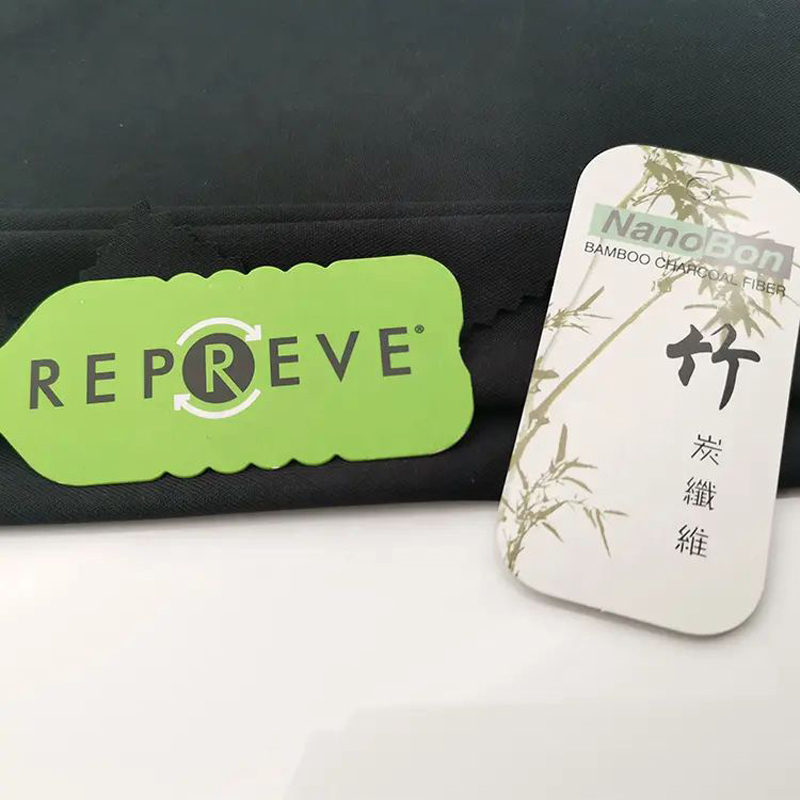
Bamboo fabric is a natural material that is soft, breathable, and moisture-wicking. It is eco-friendly and offers natural UV protection, making it a popular choice for sportswear.
Bamboo fabric, made from the fibers of the bamboo plant, is gaining popularity due to its eco-friendly properties and versatility. Here are the key aspects of bamboo fabric:
Composition and Properties.
●Natural Fiber:
●Softness
●Breathability
●Moisture-Wicking
●Antibacterial
●Hypoallergenic
●Biodegradable
●Care Instructions
Attention
Typically machine washable on a gentle cycle with mild detergent. Avoid using bleach.
5. Cotton
While not as commonly used in high-performance sportswear, cotton is still used in some athletic clothing for its comfort and breathability. However, cotton tends to absorb moisture and can become heavy and uncomfortable during intense physical activity.
Cotton fabric is one of the most widely used and versatile textiles globally, known for its comfort, breathability, and natural origin. Here are the key points about cotton fabric
●Natural Fiber
●Softness
●Breathability
●Moisture Absorption
●Hypoallergenic
●Durability
●Biodegradable
Care Instructions
Washing: Machine washable in warm or cold water. Pre-shrunk cotton items have less risk of shrinking.
Cotton fabric’s natural comfort, versatility, and durability make it a staple in the textile industry. Its wide range of applications, from everyday clothing to specialized medical textiles, highlights its importance and adaptability. Choosing organic cotton can further enhance its eco-friendly benefits, making it a responsible choice for environmentally conscious consumers.
6. Polypropylene
Polypropylene is a moisture-wicking fabric that is lightweight and breathable. It is often used in base layers for sports that require intense physical activity.
It is also known for its various functional properties and is widely used in numerous applications. Here are the key aspects of polypropylene fabric:
●Lightweight
●Durability
●Moisture Resistance
●Chemical Resistance
●Breathability
●Non-toxic and Hypoallergenic: Safe for use in medical and hygiene products, which is the characteristic that distinguishes it from other fabrics.
Care Instructions
Can generally be machine washed with cold water; avoid high-heat drying.
Our recycled fabrics are certified to meet global sustainability standards: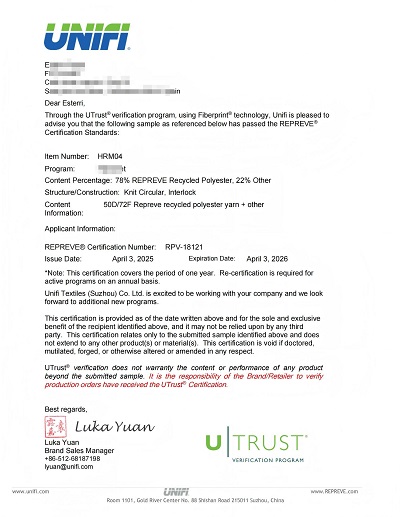
GRS (Global Recycled Standard)
Verifies the recycled content of our fabrics and ensures responsible social and environmental practices throughout the supply chain.
OEKO-TEX® Standard 100
Guarantees that all fabrics are free from harmful chemicals, safe for human use, and environmentally friendly.
ISO 9001 & ISO 14001
Certifies our quality management and environmental management systems, ensuring consistent quality and eco-conscious production.
Full traceability from raw recycled material to finished fabric
Vertically Integrated Production: Full control from spinning to dyeing for consistent quality and competitive pricing.
High Capacity: As a professional clothing fabric factory, we deliver over 19,000 tons monthly output to meet large-scale sportswear fabric wholesale demands.
Rapid Prototyping: 72-hour turnaround for custom samples.
Certifications: GRS, OEKO-TEX®, ISO – ensuring safe, sustainable sports cloth material.
Custom Solutions: Tailored spandex fabric, stretch fabric, and blends for your brand's needs.
Premium Cotton Fabric Portfolio for Casual Apparel
As a fabric manufacturer our diverse range — including 100% cotton, organic cotton, bamboo-cotton, cotton blends, and Tencel™ cotton — is engineered to deliver unmatched comfort, sustainability, and style for casual wear like T-shirts, polo shirts, and long-sleeve tops.
Warehouse & Dispatch: GRS-certified成品仓 integrates ERP for real-time inventory tracking and global shipment preparation.
Recycled fabric is pivotal to sustainable fashion’s future due to its transformative environmental, economic, and social benefits. Here’s why:
Property | Benefit |
4-Way Stretch | Adapts to multidirectional movements (e.g.. yoga, swimming) |
Moisture Wicking | Keeps skin dry by rapidly evaporating sweat |
Chlorine Resistance | Withstands pool chemicals,extending swimwear lifespan |
Lightweight | Reduces drag in swimwear and enhances comfort in activewear |
| Color Retention | Maintains vibrancy despite UV exposure and frequent washing |
Explore the richness of honeycomb, a structured fabric offering a unique texture to your creations. Dive into our captivating guide to discover the features, uses and sewing tips to get the most out of this fascinating textile.
Honeycomb fabric is a type of fabric that takes its name from its characteristic texture reminiscent of the cells of a bee hive. It is composed of small hexagonal patterns in relief which create a honeycomb-shaped structure. This fabric is often used in making linens, clothing and accessories due to its light weight, breathability and ability to absorb moisture. Honeycomb offers a unique texture and adds a touch of sophistication to many creations.
The exact origin of honeycomb is uncertain, but it is widely associated with traditional weaving techniques, particularly in regions such as ancient Egypt and India. In these cultures, the honeycomb pattern was often used to create light, airy fabrics that provided excellent thermal insulation.
Over the centuries, the honeycomb pattern has spread around the world and gained popularity for its distinct texture and aesthetic appearance. Today it is found in a variety of fabrics such as cotton, linen and fiber blends, offering a range of possibilities for fashion designers and interior designers.
The honeycomb pattern continues to be appreciated for its raised structure which adds an interesting dimension to textiles. Its use can vary, from light and comfortable clothing to blankets and decorative accessories.
The history of the honeycomb is a testament to its timeless appeal and role in the evolution of fashion and design. Today, it continues to be a popular option for those looking for a unique texture and a touch of elegance in their creations.
Making honeycomb is a complex process that involves specific weaving techniques. Whether for clothing, accessories or interior decoration, honeycomb offers a unique appearance and pleasant texture, making it a popular choice for designers and textile enthusiasts. This distinctive pattern is created using a specialized loom, often called a honeycomb loom.
To create the honeycomb pattern, multiple warp threads are woven with weft threads to create a honeycomb structure. The warp threads are generally tighter and closer together, while the weft threads are looser and spaced apart, giving that characteristic honeycomb appearance.
The honeycomb weaving process can vary depending on the traditional or modern techniques used, as well as the type of fibers used. Cotton is often favored for its softness and ability to create lightweight, breathable fabrics.
Once the honeycomb weaving is completed, the fabric may be subjected to additional treatments such as washing, ironing or surface treatment to improve its texture or properties.
The manufacture of the honeycomb requires great precision and mastery of the loom. It is through this careful process that we obtain this distinctive raised pattern which adds an interesting dimension to textiles.
In the world of textiles, the honeycomb pattern is famous for its captivating texture that catches the eye and provides a pleasant tactile sensation. The small raised cells create a fascinating geometric pattern which gives a unique visual dimension to the fabrics. Whether for clothing, accessories or decorative items, the honeycomb pattern brings a touch of originality and sophistication.
Another notable advantage of the honeycomb pattern is its exceptional lightness. The ventilated cells allow air to circulate freely, providing a pleasant feeling of freshness. This fabric is ideal for summer clothing, bedding and lightweight accessories. You will be able to enjoy optimal comfort while maintaining an elegant and airy look.
Versatility is a major advantage of the honeycomb pattern. It adapts to different types of fibers, whether cotton, linen or even synthetic fibers, offering a multitude of options depending on your preferences and needs. You can use it to create casual or sophisticated clothing, chic interior decoration items or trendy accessories.
In summary, the honeycomb pattern is a perfect choice to bring a touch of originality to your textile creations. Its captivating texture, refreshing lightness and versatility make it a versatile fabric for various projects. Whether you want to make comfortable clothing, stylish accessories or unique decorative items, the honeycomb pattern will meet your expectations with its irresistible charm.
When you work with honeycomb pattern fabric, you open the doors to a multitude of creative possibilities. This unique fabric has a texture in the shape of small cells which gives it a distinctive charm. Let your creativity run wild and explore the multiple sewing possibilities with honeycomb pattern fabric. Whether for clothing, accessories or decorative elements, this fabric will bring a touch of originality and sophistication to your creations.
Honeycomb is perfect for making comfortable and stylish summer clothes. You can make blouses, shirts, flowing dresses, light skirts or airy shorts. Its lightness and texture will add a special touch to your summer outfits.
Use the honeycomb pattern to create trendy accessories. You can sew handbags, clutches, toiletry bags, hats or even belts. The small cells will bring an interesting texture to these accessories and make them unique.
Transform your bedroom into a soft haven with honeycomb bedding. You can sew cushions, pillowcases, throws or even lightweight duvets. The texture of the fabric will add a touch of sophistication to your resting space.
Use honeycomb to add an elegant touch to your interior. You can make light curtains, textured tablecloths, decorative cushions or original placemats. These pieces will bring a warm and refined atmosphere to your home.
Honeycomb is also very popular for childcare items. You can sew absorbent bibs, soft swaddles, light blankets or baby sleeping bags. Its delicate texture and lightness make it a comfortable choice for little ones.
Honeycomb fabric is an ideal choice for making functional and elegant items in your bathroom. Thanks to its exceptional absorbent properties, it is perfect for making towels and bathrobes. With honeycomb creations, transform your bathroom into a luxurious and practical space where comfort is guaranteed.
Whether for stylish clothing, trendy accessories or cozy home items, honeycomb pattern fabric offers many creative possibilities. Its honeycomb-shaped texture gives it a unique appearance which brings a touch of originality to your creations.
Engineered for mountain biking, this eco-friendly fabric combines Repreve’s ocean-bound plastic with spandex for flexible, durable performance. The breathable knit wicks sweat and resists odors, keeping you dry during intense rides. Soft, quick-drying, and stretchy, it maintains shape and color vibrancy through repeated use. Certified skin-safe and part of sustainable initiatives, ideal for high-performance cycling gear that blends comfort, style, and planet-conscious innovation.
Solve problems on the front line and focus on breakthroughs. Youxi County focuses on the pain points and difficulties in the construction of enterprise development projects, adheres to the front-line work method, and promotes the speed and efficiency of project construction.
In Fujian East Xinwei Textile Technology Co., Ltd., the staff of the County Development and Reform Bureau is having a discussion with the person in charge of the company to guide the enterprise to apply for the regulation work. A brief symposium exchange to solve the pressing problems of the enterprise.
East Xinwei Textile Project is located in Chengnan Park of Youxi Economic Development Zone. It is a key provincial construction project with a total investment of 380 million yuan. It belongs to the project that was introduced, constructed and put into production in that year. Due to the short construction time, enterprises have accumulated a lot of problems in the registration application and development. Yang Gen, deputy director of the County Development and Reform Bureau, said that in the next 100-day work in the county, it is necessary to strengthen responsibility, go to the front line in a timely manner, understand and sort out some problems existing in enterprises or projects, and form ledger management. Immediately study the problems that have been sorted out, do it immediately, and forcefully break through the problems.
Everything revolves around tackling, and everything revolves around tackling. In recent days, our county has set off a wave of “hundred-day attacking fortifications” in an all-round way. Officials of the government have settled down at the grassroots level and penetrated into the front line, focusing on urban development and construction, transportation infrastructure, industrial projects and park platforms, and rural revitalization. The project solves problems and promotes high-quality economic development. The county’s urban “five difficulties” governance and rectification, urban infrastructure construction, poverty alleviation, rural revitalization demonstration and establishment, industrial platform construction, cultivating enterprise regulations, and Puyan Expressway (Xinyang Section) construction and other specific work accelerated. Up to now, the county has 277 “five batches” projects in the library, including 98 new projects this year; 28 provincial and municipal key projects have completed an investment of 1.949 billion yuan this year, accounting for 74.81% of the annual plan. 8.14 percentage points.
Polyester spandex 4-way stretch knit interlock fabric combines 80–95% polyester and 5–20% spandex, offering multidirectional elasticity (up to 500% stretch) for unrestricted yoga movements. The interlock knitting structure enhances durability, minimizes edge curling, and ensures a smooth, breathable surface. Its moisture-wicking properties keep wearers dry, while the blend resists pilling and maintains shape after repeated use. Ideal for yoga leggings, it supports compression and muscle stability, with optional UPF 50+, antimicrobial treatments, or recycled polyester variants for sustainability. Medium-weight (200–250gsm) and machine-washable, it balances comfort, flexibility, and long-term performance
Sustainability meets performance. This REPREVE-certified recycled polyester micro peach knit fabric is engineered for brands that demand both eco-credentials and premium hand feel. Made from post-consumer PET bottles, it carries REPREVE traceability — a mark recognized by Nike, Patagonia, and thousands of global brands. The double-brushed finish on both sides creates an ultra-soft, suede-like touch that consumers associate with luxury athleisure, while the knit construction provides natural 4-way mechanical stretch without the need for spandex.
Room 3130, Area A, 15th Floor, Comprehensive Building, Fuzhou Free Trade Zone, Fujian Province (within the Pilot Free Trade Zone)
Cotton Terry & Brushed Fleece Fabrics for Hoodies and Sweatpants
As a fabric manufacturer, our fabrics are engineered to deliver unparalleled comfort, warmth, and durability for hoodies, sweatpants, and athleisure wear. Designed for both casual and athletic use, these materials balance breathability, softness, and eco-conscious production practices.
Certifications: GRS, ISO 9001, OEKO-TEX. Markets: Asia, North America. Strength: End-to-end control from yarn to shipment, 72-hour rapid prototyping.
Cotton blend fabrics have become especially popular over the last few years, but you may be wondering what exactly makes a fabric a cotton blend. What advantages does it offer compared to other types of fabric? If you're curious and would like to learn more about this type of fabric, then look no further. This article is for you!
Here, we'll dive into understanding what cotton blend fabrics are and we will discuss all of their key characteristics and benefits.
Cotton blends are a type of fabric composed of cotton combined with at least one other fiber. Typically, cotton is woven with stronger synthetic fabrics to create an effect that is more durable and elastic than pure cotton fabrics.
Blended cotton fabric benefits from the advantages of both cotton and its paired material. Cotton retains its comfort while the blending enhances it with resistance to tears, shrinkage, fading, and wrinkles. Cotton blends, such as cotton spandex fabric, can be used for a variety of purposes from apparel to upholstery; however, keep in mind that cotton-based fabrics may require more care compared to pure cotton due to the combination with synthetic materials.
Blended fabrics are usually made from a combination of at least two fibers. Popular blended fabrics include poly-cotton blends and cotton polyester blends. By combining different fibers, blended fabrics can combine desirable features from each fiber. For example, the cotton polyester fabric gains the strong, wrinkle-resistant properties of polyester combined with the luxurious feel of cotton.
What's more, blended fabrics such as polyester/cotton require less ironing than pure cotton fabric and they tend to be more economical than pure cotton fabric. When deciding on your next item of clothing or fabric project, consider using a blended fabric over traditional 100% natural fiber options like cotton vs. synthetic fiber combinations for better durability and cost efficiency.
Cotton blend fabrics have become increasingly popular in the textile industry, as they can offer an array of benefits. By combining cotton with other types of fibers (for example, pure polyester or synthetic fibers), cotton blend fabrics can significantly increase the strength and durability of the fabric without sacrificing comfort or warmth. This makes cotton blended fabrics ideal for T-shirts, blazers, and other articles of clothing that require extra strength and resistance over time.
Moreover, cotton blends possess a mix of characteristics between synthetic fiber’s flexibility and cotton’s elasticity while remaining breathable, which helps to create stronger garments that move with the body instead of restricting movement due to stiffness. The combination makes cotton blended fabrics a better choice when compared to pure cotton or pure synthetic fabric options.
Cotton blend fabrics offer a combination of cost-effectiveness and comfort that other fabrics just can’t match. By combining cotton with synthetic fibers, the cost of production is greatly reduced. This means that products made from these fabric blends are often less expensive than those that are entirely composed of natural fibers like cotton.
Not only do these blends save money for the manufacturers, but for consumers as well. On top of that, natural breathability and moisture-wicking qualities remain intact, making cotton blends ideal for any number of different articles of clothing or fabric items.
The cotton blend offers an incredibly delicate texture that still retains resilience, which makes it ideal for everyday use. This can apply to anything from clothing to home furnishings. It's durable, yet still allows for a comfortable fit, making it perfect for tailored garments or oversized sweaters.
Cotton blend fabrics offer a beautiful array of color options. The combination of natural fibers in the fabric offers a unique texture that reflects and enhances the complexity of colors. Cotton blend fabrics boast vivid, bright tones, while still achieving a softness unmatched by other materials. The mix of fibers works to add a durability factor to the fabric without sacrificing comfort or style. This ability to provide such delicate yet vibrant color is what makes cotton blend fabrics so desirable for fashion designers and those looking for a gorgeous and lasting result.
Cotton blend fabrics are becoming increasingly popular among clothing designers and wearers alike. These fabrics combine the natural comfort of cotton with other materials such as spandex, polyester, and nylon to create a luxurious blend that is far more comfortable than 100% cotton alone could ever be.
This blend allows for increased breathability and movement while preventing the fabric from stretching or shrinking, which can provide an extra level of joy and reassurance to wearers regardless of activities. Cotton blends also resist accumulating odors, require less maintenance such as ironing or washing. They also don’t not wrinkle easily, so cotton blend fabrics are ideal for a range of purposes — all without sacrificing comfort.
One of the most beneficial characteristics of a cotton blend fabric is its improved absorbency. The mixing of two types of fibers produces a fabric with greater water-absorbing properties.
So what does this mean? The result is a fabric that absorbs water more quickly and holds moisture longer. This makes this type of cloth ideal for towels, clothing, and other items where higher levels of absorption are desired.
As an added perk, this also reduces drying times for many fabrics. With all these advantages, it’s no wonder that blended cotton fabrics are being used more and more in various industries!
One significant benefit not often considered is that cotton blend fabric can also improve thermal properties. This can make a huge difference when deciding which type of fabric to use for apparel and home goods, especially for people who are in colder climates that require additional warmth.
This natural fiber blend can provide insulation when layered over synthetic linings. Also, due to its increased absorbance over an all-synthetic garment or product, fewer layers are needed. Its thermal-reactive abilities are what makes cotton such a unique and highly sought-after fabric. Why settle for less when you can get a cozy fit every time with a strong cotton blend?
A cotton blend fabric is a great option for those looking for a versatile, strong, and comfortable fabric. It is perfect for both everyday wear and special occasions.
Ideal for cyclists, this lightweight fabric combines cooling nylon and spandex for breathable, all-day comfort. The four-way stretch design ensures unrestricted movement during rides or workouts, while moisture-wicking properties keep you dry. Soft, quick-drying, and odor-resistant, it maintains shape and color vibrancy through repeated use. Eco-friendly recycled options available, certified skin-safe for sensitive skin. Perfect for high-performance jerseys or activewear that demands flexibility, durability, and sustainable innovation.
On May 9th, in the weaving workshop of Fujian Youxi Dongfang Xinwei Textile Technology Co., Ltd., a provincial key project, 99 weft knitting machines were fully equipped for uninterrupted production, and 3 production lines could produce 10 tons of clothing fabrics per day.
East Xinwei Textile Project is located in Chengnan Park, Youxi County Economic Development Zone, with a total investment of 380 million yuan, and will build 30 garment fabric production lines. After the project is fully put into production, the annual output value will reach 1.2 billion yuan. In less than 10 months, East Xinwei has completed the construction of a workshop of 18,000 square meters for texturing and weaving. Up to now, it has completed an investment of more than 170 million yuan.
The rapid advancement of East Xinwei project is a microcosm of Youxi County’s major projects to lead the development of industrial clusters. Only in the Chengnan Park of the Economic Development Zone, there are 9 key projects in provinces and cities under construction, with a total investment of 6.08 billion yuan. Behind the boom in project construction is the fruitful result of Youxi County’s efforts to advance the construction of the project. This year, 28 projects in Youxi have been included in the provincial and municipal key projects, and 308 projects have been included in the “five batches” projects.
Everything serves the project, and everything opens the way for the project. Youxi County’s industry and information, power supply, taxation and other departments have carried out in-depth “visiting enterprises, solving problems, and promoting ‘six stability’” service activities. A total of 145 “five difficulties” problems have been collected, involving 85 enterprises, and 118 of which have been solved. item.
At present, various departments at all levels in Youxi County have made great efforts to promote the construction of key projects. In order to solve the problem of electricity consumption in the construction of East Xinwei project, State Grid Youxi County Power Supply Company added outgoing lines from the 110kV Xingming substation, and built a new 10kV line with 960 meters of cables connected to the East Xinwei power distribution room. , to provide power security for enterprises, and the next step will also help enterprises to increase power consumption.
In order to hedge the impact of the epidemic on the economy, Youxi County seized the opportunity of early approval and the first batch of declarations for local government special bonds, and made declarations for new central investment reserve projects. Stream speed.
Tracksuit polyester spandex fabric combines 80–95% polyester and 5–20% spandex, offering high elasticity (up to 500% stretch) for unrestricted movement. The blend ensures durability, wrinkle resistance, and quick-drying properties, ideal for athletic wear. Its interlock knit structure enhances breathability and minimizes edge curling, while moisture-wicking capabilities keep wearers dry during workouts. The fabric retains shape after repeated use and supports compression for muscle stability. Innovations include UV protection, antimicrobial treatments, and eco-friendly recycled polyester variants. Lightweight (200–300gsm) and machine-washable, it balances flexibility, comfort, and long-term performance for sportswear and casual apparel.
This fabric is built for brands that refuse to choose between sustainability and performance. At its core is DuPont Sorona — a partially bio-based polymer fiber containing 37% plant-derived content — blended with spandex in a knit construction that delivers 4-way mechanical-plus-chemical stretch, breathability, and fast-dry performance. It's the fabric behind polo shirts that stay crisp through 18 holes, training tops that don't cling after a 10K, and corporate uniforms that look sharp all day.
Bio-based, not just "recycled." Sorona's carbon footprint is 30% lower than conventional nylon and 63% lower than spandex at the polymer level. This is a different sustainability story from REPREVE — it's about reducing virgin petroleum input, not just repurposing post-consumer waste. For brands telling a "plant-based performance" narrative, this matters.
Stretch recovery that outlasts spandex alone. Sorona fibers have an inherent molecular spring structure (3GT polymer). Combined with spandex, the fabric's stretch recovery exceeds typical poly-spandex knits — it snaps back, resists bagging, and holds shape through repeated wear and machine washing.
Natural wrinkle resistance + fast dry. No need for chemical anti-crease finishes. The fiber itself resists wrinkling, and moisture management is built into the polymer structure — not an after-market coating.
Knit construction tuned for polo shirts. Unlike jersey or interlock, the specific knit used here balances drape, body, and breathability — heavy enough for collar structure, light enough for all-day summer wear.
Most nylon spandex fabrics on the market are shiny — and that's fine for swimsuits. But for leggings, yoga wear, and athleisure, shine reads as cheap. This matte-finished nylon spandex knit fabric solves that problem at the material level. The dull, non-reflective surface creates a premium, understated look that aligns with the Lululemon / Alo Yoga aesthetic — without sacrificing the compression and recovery that nylon spandex is famous for.
Premium perception, measurable difference. Shiny fabric catches light and highlights every lump, crease, and seam. Matte absorbs light and reads as thicker, more structured, and more expensive. It's the single biggest visual differentiator between a $25 pair of leggings and an $80 pair.
Nylon spandex with genuine compression. Nylon-elastane blends inherently provide better compression and shape retention than polyester-spandex alternatives. The high spandex content holds muscle, smooths lines, and recovers its shape after repeated wear — the kind of performance that keeps your brand's customers coming back.
Swimwear-grade durability. Nylon is inherently more chlorine-resistant and abrasion-resistant than polyester. This fabric crosses over: brands can use one roll for swimwear, leggings, and activewear without switching suppliers.
One-side specialization. The single-sided finish gives designers an extra tool — use the treated side for exposed surfaces, play with the back side for linings, contrast panels, or reversible garments.
When your brand sells outdoor sportswear, your customers expect more than just a t-shirt. They want sun protection on the trail, cooling relief at noon, and dry comfort after the climb. This 100% polyester knit fabric delivers all three in one construction — no coatings that wash out, no compromises. Moisture-wicking pulls sweat off the skin. UPF50+ blocks 98% of UV rays. And the cooling-touch finish drops surface temperature on contact, giving wearers instant relief the moment they pull it on.
Most functional fabrics force brands to choose: Buy a UPF fabric here, a wicking fabric there, a cooling fabric from a third supplier. This fabric collapses three SKUs into one. For your production planning, that means fewer MOQ headaches, consistent dye lot matching, and a single inventory line that covers outdoor tees, cycling jerseys, fishing shirts, and hiking gear.
Address: No.111 Xinyang Village, Chengnan Industrial Zone, Chengguan Town, Youxi County, Sanming City, Fujian Province 365100, China.
Email: sale@xinweiknitting.cn
Tel: 86 13328699855
Synthetic fibres have been around since the early 1920s’ and slowly evolved as scientific formulas replicated to create affordable alternatives to natural fibres. Some of the most popular synthetic fibres include polyester, nylon, viscose rayon, olefin, and spandex.
Unlike natural fibres that come from plants and animals (such as cotton and hemp), synthetic fibres are made of chemical compounds, usually favoured by manufacturers over natural fibres due to their low cost, higher tenacity, and durability.
Polyester is a synthetic fibre made from petroleum-based chemicals. Its name is shortened to represent a synthetic man-made polymer and is commonly known as a PET (polyethylene terephthalate).
Polyester has a long history, dating back to the early 1900s. However, it wasn’t until the 1950s that it became widely used in textiles. It’s created by combining long chains of synthetic polymers to form a fibre that is typically used to make clothing, upholstery, and carpeting.
In the 1970s’, polyester was marketed as a miracle fabric that was wearable for over 65 days straight without ironing whilst still looking presentable. Now, polyester is one of the most common fabrics in the world and has many great qualities.
Because of polyester’s mechanical resistance, and ability to stretch and shrink; without loss of strength, the fibres are widely used for manufacturing for industrial purposes to create yarns, ropes, conveyor belt fabrics, seatbelts, plastic reinforcements, and more. Polyester is also a popular fibre for textiles, used to manufacture clothing, home furnishings, carpeting and as a mechanical reinforcement aid.
There are many positives to manufacturing with the polyester fabric, including:
Polyester is popular for its incredibly high strength and durability, making it a popular choice for textile products that need to withstand daily, strong, and repeated movements, such as sportswear and uniforms.
Polyester consists of synthetic materials, so it’s usually less expensive than natural fibres, making polyester a good choice for businesses looking for budget-friendly manufacturing options.
Polyester is used in a variety of applications and is often blended with other fibres to create a more versatile product. For example, polyester-cotton blends are popular for making garments that require high strength, but also some breathability.
Polyester is a type of plastic that can be melted down and reformed into new products, making it a more sustainable choice than alternative synthetic fibres like nylon.
While polyester fibres have many great qualities, there are also some potential drawbacks to keep in mind.
Polyester is a synthetic fibre made from plastic, meaning it doesn’t absorb moisture as well as natural fibres, which can make it more prone to static and pilling.
While polyester is an excellent choice for products requiring colder temperatures, it has a tendency to retain heat. Therefore, it’s not entirely suitable for manufacturing products that need to facilitate airflow.
Polyester fibres have low absorbency, so they’re not ideal for manufacturing products that need to soak up moisture, such as activewear, towels, or bedding.
Polyester fibres are typically made from polyethylene terephthalate, a type of plastic. Although polyester is recyclable, it’s still not a completely green and sustainable option.
On April 12, the provincial key project Youxi East Xinwei textile fabric production project was built from the construction site. The workers were installing the internal lighting system, and the production equipment was successively entering the factory for debugging.
This project is located in Chengnan Park of Youxi County Economic Development Zone. It is an upstream and downstream inspection project of warp knitting dyeing and finishing industry, which plays an important role in extending the Youxi textile industry chain. The total investment of the project is 380 million yuan. After it is completed and put into production, it can provide more than 200 jobs, with an annual output of 20,000 tons of clothing fabrics, an annual output value of 1.2 billion yuan, and a tax revenue of 30 million yuan. At present, the project has completed an investment of nearly 300 million yuan, and completed an investment of 39 million yuan in the first three months, accounting for 39% of the annual plan.
The rapid advancement of the East Xinwei project is the epitome of a key project in Youxi County, striving to achieve a “good start” in the first quarter. Since the beginning of this year, Youxi has optimized its project services. Through special handling, pre-examination for vacancies, and joint examinations, Youxi provides whole-process “nanny-style” services such as holiday appointments, get off work delays, and proactive door-to-door visits. Use the “monthly consultation” system to promote early project completion and early start. Actively promote project tackling, implement the working mechanism of “one project, one leading leader, one service class, and one task plan”, and follow the work arrangement of “one coordination per month, one inspection per quarter, and one review every six months”. Work out the work list, responsibility list and timetable, and go all out to promote the construction of key projects.
In 2022, 28 projects in Youxi will be included in the city’s key projects, with a total investment of 16.415 billion yuan and an annual planned investment of 4.534 billion yuan. In the first quarter, an investment of 1.225 billion yuan was completed, accounting for 27.02% of the annual plan, and 2.02 percentage points of the out-of-sequence progress; 20 The project was listed as a provincial key project, with a total investment of 13.637 billion yuan, and the annual planned investment of 3.879 billion yuan. The investment completed in the first quarter was 1.081 billion yuan, accounting for 27.88% of the annual plan, and the progress was 2.88 percentage points out of sequence.
Cool touch cotton fabric combines natural cotton with cooling treatments (e.g., embedded mineral particles) to deliver instant, breathable coolness. Its high cellulose content and moisture-wicking properties absorb sweat swiftly, keeping skin dry in heat. The fabric often blends cotton with polyester or spandex for enhanced durability and stretch, while maintaining a lightweight, smooth texture ideal for summer apparel or activewear. Advanced variants achieve a Q-max value exceeding 0.2J/cm²·s, surpassing standard cooling benchmarks. Breathable weaves and hollow fiber structures optimize airflow, ensuring all-day comfort. Eco-friendly options may include recycled cotton or low-impact dyeing, balancing sustainability with performance. Machine-washable and skin-friendly, it’s perfect for T-shirts, sportswear, and bedding.
When your brand sells outdoor sportswear, your customers expect more than just a t-shirt. They want sun protection on the trail, cooling relief at noon, and dry comfort after the climb. This 100% polyester knit fabric delivers all three in one construction — no coatings that wash out, no compromises. Moisture-wicking pulls sweat off the skin. UPF50+ blocks 98% of UV rays. And the cooling-touch finish drops surface temperature on contact, giving wearers instant relief the moment they pull it on.
Most functional fabrics force brands to choose: buy a UPF fabric here, a wicking fabric there, a cooling fabric from a third supplier. This fabric collapses three SKUs into one. For your production planning, that means fewer MOQ headaches, consistent dye lot matching, and a single inventory line that covers outdoor tees, cycling jerseys, fishing shirts, and hiking gear.
Address: No.116, Xinyang Village, Chengguan Town, Youxi County 365100 Sanming City, Fujian Province, CHINA
Email: sale@xinweiknitting.cn
Tel: 86 13328699855
East Xinwei is your trusted sportswear fabric factory, delivering high-performance fabrics for activewear, yoga, leggings, swimwear, and team sports apparel.
Our OEKO-TEX® certified spandex polyester fabrics with Coolmax® technology dry 50% faster, while nylon-spandex blends provide 4 way stretch fabric for yoga and gym wear.
Moisture-wicking stretch fabrics like polyester-spandex jerseys ensure comfort in all conditions. Jacquard knits with laser-cut breathability and GRS/Bluesign® recycled options empower eco-performance.
With ISO-certified production, 72-hour rapid prototyping, and global wholesale capabilities, we deliver premium, eco-friendly, and durable sportswear fabrics.
Mesh cloth is a versatile and breathable fabric that is commonly used in various industries, especially in clothing, home textiles, and industrial applications. It is often referred to by several names depending on its weaving style and post-processing, including weft-knitted flat jersey, bleaching jersey, fine jersey bleaching, singeing mercerized jersey, plain jersey, jersey printing, color stripes jersey, navy stripe jersey, blended single jersey, silk jersey, acrylic jersey, polyester jersey, and ramie jersey. Each type brings subtle differences in texture, weight, and application.
Mesh cloth specifically refers to fabrics that have structured, open apertures — a pattern of small holes throughout the fabric. These holes allow for exceptional airflow and lightness, making mesh fabric highly sought after for hot and humid conditions. The apertures can vary in size and shape depending on the machinery and techniques used in production, resulting in different styles of mesh for different needs.
Mesh cloth can be manufactured through two main processes: woven mesh and knitted mesh. Woven mesh is created using traditional weaving techniques with white or dyed yarns and can include intricate patterns such as jacquards. Knitted mesh, on the other hand, is more flexible and stretchable, making it ideal for garments that require ease of movement.
Advantages:Mesh cloth’s greatest strength lies in its air permeability. The structured openings between the yarns allow for excellent ventilation, keeping the wearer cool even in hot temperatures. After dyeing and finishing, the fabric often feels fresh, soft, and breathable. Its lightweight and refreshing quality make it perfect not only for summer clothing but also for home items like curtains and mosquito nets, where airflow is essential.
Disadvantages:Despite its many strengths, mesh cloth is not suitable for warmth. Due to its open construction, it lacks insulation properties and is relatively translucent. As a result, it may not be ideal for winter wear or situations where privacy is necessary unless it is layered with other materials.
Mesh cloth is an incredibly adaptable fabric. Its breathable nature makes it ideal for summer apparel such as sportswear, activewear, casual t-shirts, and even stylish dresses. Beyond fashion, its uses extend into the home and industrial sectors.
For household purposes, mesh fabric is perfect for making curtains, mosquito nets, storage bags, and laundry hampers, providing utility without sacrificing airflow. Industrial uses include safety vests, office chair backs, tent windows, and various filtration applications.
The versatility of mesh fabric largely depends on the weaving equipment and techniques used, allowing clothing fabric manufacturers to create diverse types of mesh that meet specific functional and aesthetic needs.
Bird’s Eye Cloth, also known as honeycomb fabric, is a specific type of knitted mesh fabric distinguished by its unique pattern resembling the eye of a bird. It is primarily made from polyester, but can also incorporate cotton or blended fibers for different qualities.
The structure of Bird’s Eye Cloth provides small, uniform cavities across the surface, greatly enhancing its moisture-wicking and breathable properties. After weaving, dyeing, and finishing processes, Bird’s Eye Cloth becomes an ideal material for sportswear, casual apparel, and textiles requiring moisture management.
Some variations of Bird’s Eye Cloth even include a small percentage of spandex, providing stretchability and making the fabric even more versatile. This allows it to be used for performance-oriented garments where flexibility and freedom of movement are crucial, such as sports uniforms, yoga wear, and fitted t-shirts.
Popular types of Bird’s Eye Cloth include:
Sports Bird’s Eye Cloth: Optimized for performance, offering maximum breathability and sweat evaporation.
Moisture-Wicking Bird’s Eye Cloth: Specialized in drawing moisture away from the skin.
Apparel Bird’s Eye Cloth: Used for stylish, casual garments.
T-shirt Bird’s Eye Cloth: Lightweight and breathable, ideal for everyday wear.
Bird's Eye Cloth continues to grow in popularity due to its adaptability and functional advantages, especially in the ever-expanding world of athleisure and performance apparel.
Tencel acetate Sorona blend cotton fabric combines Tencel (38.5%), acetate (17.5%), Sorona (38.4%), and cotton, offering a luxurious balance of breathability, elasticity, and sustainability. Tencel (Lyocell) ensures moisture-wicking and softness, while acetate adds a silky sheen and drape. Sorona, a plant-based polymer, provides 500% stretch recovery and durability, complemented by cotton’s natural comfort. This blend excels in temperature regulation, with a cooling Q-max of 0.19 (exceeding standards), and resists wrinkles/pilling. Ideal for activewear and premium apparel, it integrates eco-friendly innovations like recycled fibers, ensuring lightweight, skin-friendly performance and easy care.
---Strengthening international partnerships through on-site exchanges and technical dialogue.
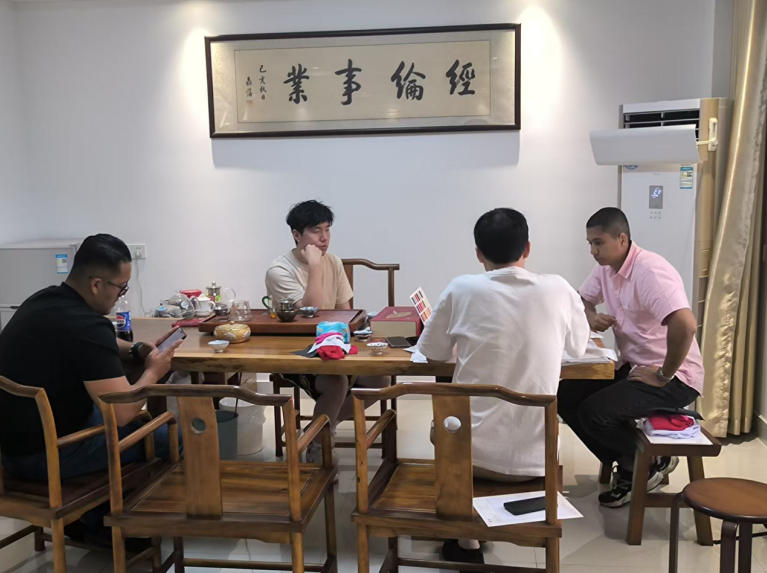
October 22, 2025– We recently welcomed a delegation of textile professionals from Costa Rica and Mexico to our manufacturing facility. The clients brought samples of performance fabrics for detailed analysis and production discussions, targeting end-uses such as hoodies, T-shirts, and soccer jerseys.
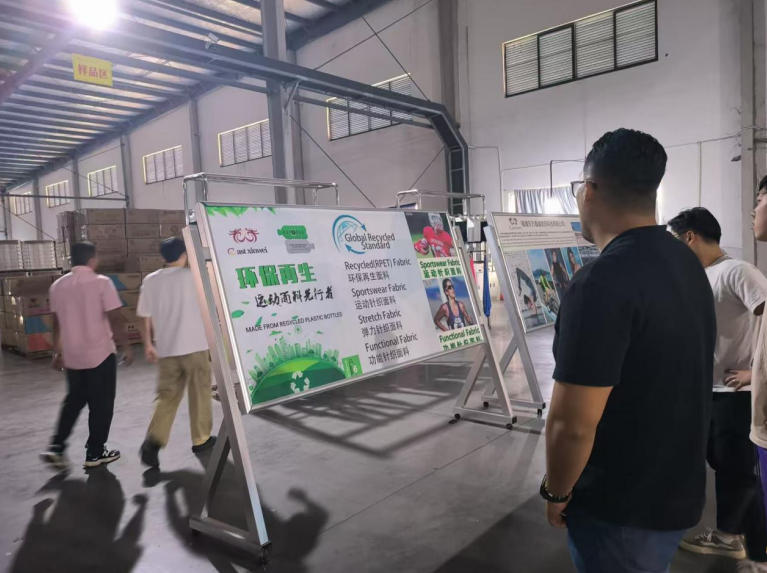
During the visit, the guests toured our production workshops, observing advanced knitting and finishing processes. They examined our cotton-based collections and functional sportswear materials, expressing strong approval for our quality control and customization capabilities.
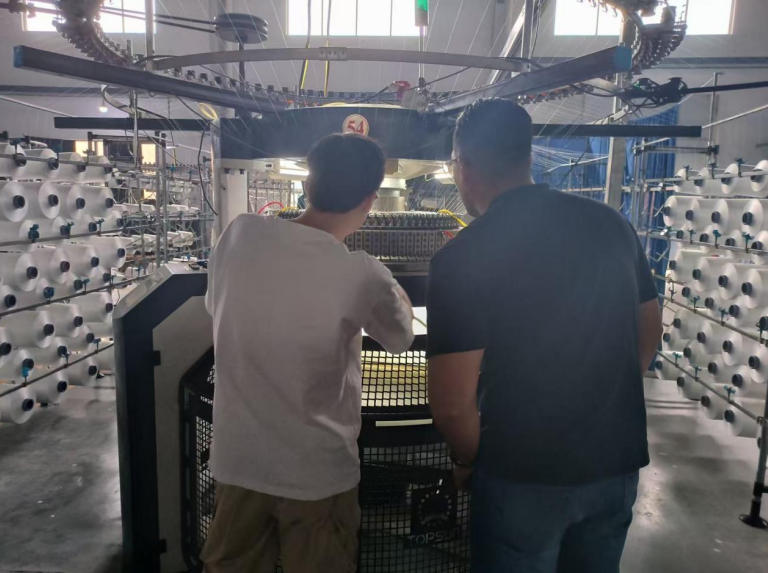
"Touching the fabrics and seeing the production line firsthand reinforced our confidence in their expertise," one visitor noted
The dialogue centered on optimizing fabric properties for moisture-wicking, durability, and elasticity to meet Central American market needs. Both parties explored sustainable alternatives, including recycled polyester and organic cotton options.
This visit underscores our commitment to global collaboration. By aligning our technical strengths with regional demand, we aim to co-create high-performance textiles with our clients.
When your brand sells outdoor sportswear, your customers expect more than just a t-shirt. They want sun protection on the trail, cooling relief at noon, and dry comfort after the climb. This 100% polyester knit fabric delivers all three in one construction — no coatings that wash out, no compromises. Moisture-wicking pulls sweat off the skin. UPF50+ blocks 98% of UV rays. And the cooling-touch finish drops surface temperature on contact, giving wearers instant relief the moment they pull it on.
Most functional fabrics force brands to choose: buy a UPF fabric here, a wicking fabric there, a cooling fabric from a third supplier. This fabric collapses three SKUs into one. For your production planning, that means fewer MOQ headaches, consistent dye lot matching, and a single inventory line that covers outdoor tees, cycling jerseys, fishing shirts, and hiking gear.
Polyester is a chemical fiber, and its raw materials are polyethylene terephthalate and ethylene glycol, which mainly come from petroleum, coal, and natural gas. It is a very practical synthetic fiber, widely used in fields such as textile and clothing manufacturing, bringing us a lot of convenience and comfort in our daily life.
Because of the polyester fiber made by spinning and post-processing, which has the advantages of good chemical resistance, heat resistance, thermoplasticity, light resistance, good elasticity and strong recovery ability, durability and wrinkle resistance. The disadvantage is that its dyeing, moisture absorption, and melt resistance are relatively poor, and it is also prone to pilling.
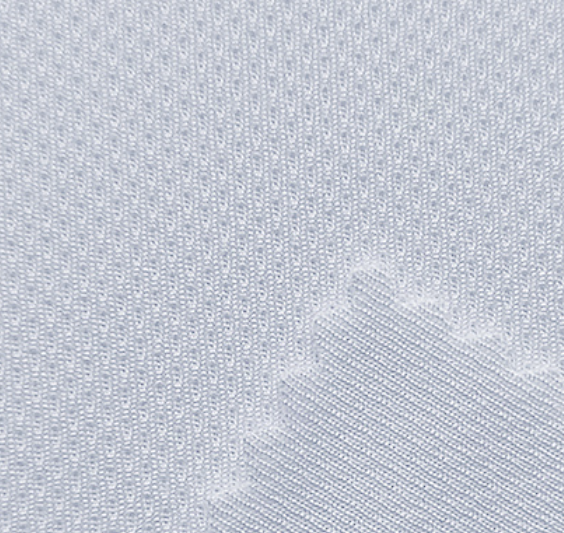
There are many advantages to polyester fabric, and the most representative one is its good chemical resistance, minimal damage caused by acid and alkali, and no fear of mold and insect infestation. It also has good heat resistance and thermoplasticity, similar to acrylic kfabric in light resistance, high strength and good elasticity, strong recovery ability, and the characteristics of firmness, durability, and wrinkle resistance.
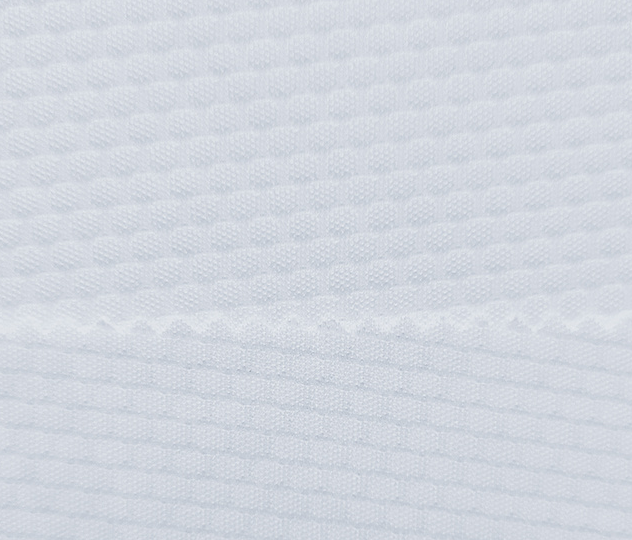
In the field of clothing, polyester fabric is often used to make casual wear, sportswear, outdoor clothing, etc. Due to its lightweight, comfortable, and durable characteristics, polyester fabric has been widely used in clothing production in these fields. At the same time, due to the relatively low price of polyester fibers, the manufacturing cost of polyester fabrics is also relatively low, making the price of polyester fabrics for clothing relatively affordable.
100%polyester knitted fabric have a lot kind of category,according to the different patterns, there are many types that can be distinguished,such as eyelet mesh fabric,honeycomb mesh fabric,sports jersey fabric etc.You can choose different styles to make clothing according to your needs.For example, if you need to make football jerseys, it is recommended to use100% polyester fabric,at a lower price, It has good breathability and water absorption,of course, we can also achieve this by adding additives.Meanwhile, 100%polyester fabrics are also suitable for sublimation printing.Our main product in the factory is also 100%polyester fabric, and we can customize according to your requirements to get the product you want.
100% polyester knitted fabric is an excellent product with affordable prices and a wide range of fabric uses.When you need to make football jerseys, t-shirts, and sportswear, you can consider using it to produce.Welcome to contact us, we have excellent products and can also provide you with good and high-quality service.
Nylon spandex legging bra fabric combines 80–85% nylon and 15–20% spandex, offering exceptional stretch (up to 500% elasticity) and shape retention for snug yet comfortable support. The blend ensures durability, moisture-wicking, and breathability, ideal for high-movement activities like yoga or running. Its interlock or knit structure resists pilling and maintains smoothness against the skin, while 4-way stretch enhances flexibility. Common in seamless designs, it supports compression for muscle stability and adapts to body contours without chafing. Innovations include UPF 50+, antimicrobial treatments, and recycled variants for sustainability. Lightweight (200–300gsm) and machine-washable, it balances performance, comfort, and long-term wear.
Team in Sync, Quality in Thread: A Glimpse into Our Culture------
Beyond the looms and samples lies the heartbeat of our company: our people. This video captures a day of laughter, collaboration, and shared challenges during our recent team-building retreat. We believe a united, joyful team is the foundation of the consistency and care woven into every yarn and fabric we produce. Because when our team thrives, your trust grows.
Premium 100% Polyester Jacquard Sportswear Jersey Fabric
Elevate your activewear collection with our premium 100% polyester jacquard knit fabric. Engineered for athletes and designed for style, this fabric combines advanced jacquard weaving technology with the performance benefits of high-quality polyester.
The jacquard technique creates intricate, permanent patterns and textures directly into the fabric, eliminating the need for prints that may crack or fade over time. This ensures your team uniforms, jerseys, or branded apparel maintain a crisp, professional look wash after wash. The fabric's lightweight construction (approximately 130-150 GSM) offers a comfortable, barely-there feel, while its excellent four-way stretch provides unrestricted movement for any sport or activity.
Functionally, this fabric excels in moisture management. It quickly wicks sweat away from the skin to the surface, where it evaporates, keeping wearers cool and dry during intense training or competition. Its 100% polyester composition ensures superior durability, resisting abrasion, shrinking, and wrinkling. The fabric is also quick-drying and colorfast, maintaining its vibrant appearance even after repeated use and laundering.
Versatile and reliable, this knit is ideal for a wide range of applications, including soccer jerseys, basketball singlets, running tops, fitness wear, and athleisure. We fully support custom OEM/ODM orders, offering a broad spectrum of color options and design possibilities to match your brand identity perfectly.
Choose our jacquard sportswear fabric for a winning combination of high-performance functionality, lasting durability, and distinctive aesthetic appeal that sets your products apart.
Nylons are white or colorless and soft; some are silk-like. They are thermoplastic, which means that they can be melt-processed into fibers, films, and diverse shapes. The properties of nylons are often modified by blending with a wide variety of additives.
At the very beginning, in the 1930s, entered the market with toothbrushes and women's stockings.
As more was developed, Many kinds of nylon are known. One family, designated nylon-XY, is derived from diamines and dicarboxylic acids of carbon chain lengths X and Y, respectively. An important example is nylon-6,6. Another family, designated nylon-Z, is derived from aminocarboxylic acids of with carbon chain length Z. An example is nylon.
Nylon polymers have significant commercial applications in fabric and fibers (apparel, flooring and rubber reinforcement), in shapes (molded parts for cars, electrical equipment, etc.), and in films (mostly for food packaging).
There are many types of nylon polymers.
• nylon 1,6;
• nylon 4,6;
• nylon 510;
• nylon 6;
• nylon 6,6.
And this article focuses on nylon 6.6 and 6, which used in textile industry.
This versatile and affordable nylon is lightweight and tough, making it ideal for activewear, undergarments, and carpeting. It's also moisture-wicking, but can absorb moisture, which can affect its dimensional stability.
This nylon is known for its durability and strength, and is often used in sportswear, outerwear, and industrial textiles. It's also waterproof and resistant to heat, making it a good choice for swimwear, tents, backpacks, and sleeping bags.
Nylon fabric has a significant presence in the sportswear market due to its unique properties that cater to the demands of athletic and active lifestyles.one of the most commonly used fibers in the textile industry.
• Strength and Durability: Nylon is known for its high tensile strength, making it extremely durable and resistant to wear and tear. This property makes it ideal for use in products that require high durability, such as ropes, parachutes, and military supplies.
• Elasticity: Nylon has excellent elasticity, allowing it to return to its original shape after being stretched. This makes it suitable for use in activewear, hosiery, and swimwear.
• Lightweight: Despite its strength, nylon is lightweight, making it comfortable to wear and easy to handle in various applications.
• Resistance to Chemicals: Nylon is resistant to many chemicals, oils, and greases, which contributes to its durability and longevity.
• Moisture-Wicking: Nylon fibers can wick moisture away from the body, making it a popular choice for sportswear and outdoor apparel.
• Abrasion Resistance: It is highly resistant to abrasion, which helps in maintaining the appearance and integrity of the fabric over time.
1. Athletic Apparel: Used in the production of shorts, leggings, tank tops, sports bras, and t-shirts due to its stretch and moisture management properties.
2. Activewear: Popular in yoga pants, gym wear, and other active lifestyle clothing because of its comfort and flexibility.
3. Compression Wear: Essential in compression garments that support muscles, enhance blood flow, and improve performance and recovery times.
4. Swimwear: Common in swimsuits and swim trunks due to its resistance to chlorine and saltwater, combined with quick-drying capabilities.
5. Outdoor Gear: Utilized in hiking, climbing, and cycling apparel where durability and weather resistance are critical.
1. Blended Fabrics: Combining nylon with other fibers like spandex or polyester to enhance specific properties such as stretch, comfort, and moisture management.
2. Microfiber Technology: Using finer fibers to create softer, more breathable fabrics without compromising on durability.
3. Anti-Microbial Treatments: Incorporating treatments that prevent odor-causing bacteria, enhancing the hygiene and lifespan of sportswear.
4. Eco-Friendly Nylon: Development of recycled nylon from post-consumer waste like fishing nets and fabric scraps, reducing environmental impact.
• Sustainability: Increasing consumer demand for eco-friendly sportswear is driving innovation in recycling and sustainable nylon production methods.
• Athleisure: The blending of athletic and leisure wear continues to grow, with nylon being a favored fabric due to its versatility and comfort.
• Smart Fabrics: Integration of technology into nylon fabrics to create smart sportswear that can monitor vital signs, track performance metrics, or provide enhanced comfort through temperature regulation.
• Customization: Advances in manufacturing allow for greater customization of nylon sportswear, catering to specific athletic needs and personal preferences.
The consumption share of nylon in apparel fabrics is a key metric that highlights the importance and prevalence of this synthetic fiber in the textile industry. To give consumers a more concrete understanding of nylon trends. Here's an overview of the consumption share and its context within the broader apparel fabrics market
• Overall Market Share: Nylon accounts for a significant portion of the synthetic fibers used in the apparel industry. While exact percentages can vary, nylon typically represents about 10-15% of the total synthetic fiber consumption in textiles.
• Synthetic Fiber Market: The synthetic fiber market is dominated by polyester, which constitutes around 55-60% of the market share. Nylon, being the second most common synthetic fiber, holds a substantial but smaller share in comparison.
• Comparison with Natural Fibers: When considering the entire apparel fabrics market, which includes both synthetic and natural fibers, nylon's share is lower due to the dominant presence of natural fibers like cotton, which makes up about 25-30% of the total fiber consumption.
• Activewear and Sportswear: Nylon is heavily used in activewear and sportswear due to its durability, elasticity, and moisture-wicking properties. In these segments, nylon can account for up to 30-40% of the fabric consumption.
• Lingerie and Hosiery: Nylon is a primary fabric for lingerie and hosiery, representing a significant share, often around 70-80%, due to its smooth texture, strength, and elasticity.
• Outdoor and Performance Gear: In outdoor apparel, such as jackets, pants, and gear designed for hiking or climbing, nylon is preferred for its abrasion resistance and lightweight properties. It constitutes approximately 20-30% of fabric consumption in this niche.
• Fashion and Everyday Apparel: For everyday fashion items like dresses, blouses, and pants, nylon is often blended with other fibers. Its share in this segment is lower, typically around 5-10%, due to the preference for natural fibers and other synthetics like polyester.
The consumption share of nylon in apparel fabrics highlights its critical role in the textile industry. While it holds a smaller overall share compared to polyester and natural fibers like cotton, its importance in specific segments such as activewear, lingerie, and outdoor gear underscores its versatility and unique properties. Trends in sustainability, technological advancements, and regional consumption patterns will continue to shape the role of nylon in the apparel fabrics market.
Single Jersey fabric is a lightweight, stretchable knitted textile made from cotton, wool, or synthetic fibers. Produced using a single set of needles, it features a smooth face and textured back with 4-way elasticity for unrestricted movement. Known for breathability, moisture absorption, and wrinkle resistance, it’s widely used in T-shirts, underwear, and sportswear. Modern variants incorporate recycled materials for sustainability, while advanced circular knitting machines ensure high-quality, consistent production. Its blend-friendly nature (e.g., spandex or rayon) enhances durability and comfort, making it a staple in casual and athletic apparel globally.
High-Performance 100% Polyester Moisture-Wicking Scale Mesh Fabric
Discover the ultimate combination of performance and comfort with our 100% polyester moisture-wicking scale mesh fabric. Engineered for athletes and active individuals, this specialized knit features a unique scale-like texture that enhances both aesthetics and functionality.
The fabric's primary advantage lies in its superior moisture management. The innovative scale mesh structure, combined with 100% polyester's natural wicking properties, rapidly draws sweat away from the skin to the fabric's surface. There, it spreads and evaporates quickly, ensuring wearers stay cool, dry, and comfortable during even the most intense physical activities. This makes it an exceptional choice for high-exertion sports and training environments.
Its lightweight and highly breathable construction allows for maximum airflow, preventing overheating. Despite its airy feel, the fabric is remarkably durable, offering good resistance to abrasion, stretching, and wrinkling. It is also quick-drying and colorfast, maintaining its shape and vibrant appearance through repeated use and washing. The distinctive scale pattern adds a modern, technical look that stands out, making it perfect for fashion-forward activewear.
Versatile and reliable, this mesh fabric is ideal for a wide range of applications, including sports jerseys, training tops, running vests, team uniforms, and athleisure wear. We offer full customization support for OEM/ODM orders, providing various color options to match your brand identity perfectly.
Choose our moisture-wicking scale mesh for a winning edge in performance apparel that combines technical excellence, lasting comfort, and distinctive style.
In an era where sustainability is becoming more and more critical, eco-consciousness is gradually making its way into the consumer market and people are beginning to realize the importance of environmental sustainability. In order to cater to the changing market and mitigate the environmental impact caused by the apparel industry, recycled fabrics have emerged, blending the need for innovation and recyclability into the fashion world.
This article focuses on what recycled fabrics are so that consumers can be more informed.
What is recycled fabric? Recycled fabric is textile material, made from reprocessed waste products, including used garments, industrial fabric scraps, and post-consumer plastics such as PET bottles. The primary aim of recycled fabrics is to reduce waste and environmental impact by reusing materials that would otherwise be discarded. Rpet Fabric can be derived from both natural and synthetic sources and are transformed into new textile products through various recycling processes.
It is further categorized into these types:
1. Recycled Polyester (rPET)
2. Recycled Cotton
3. Recycled Nylon
4. Recycled Wool
5. Recycled Textile Blends
Understanding the characteristics and advantages of recycling can be better utilized, the most prominent of which is the environmental attributes that are in line with the slogan of sustainable development of the society. Such as Reduced Waste--Made from post-consumer and post-industrial waste materials, recycled fabrics help decrease landfill accumulation. Or Lower Carbon Footprint--The production process for recycled fabrics typically uses less energy and water compared to virgin fabrics, resulting in a smaller carbon footprint.
Also, his quality is worth mentioning;
1.Durability: Advanced recycling processes ensure that recycled fabrics retain high durability and strength, often comparable to or exceeding that of virgin fabrics.
2.Include Softness and Comfort: Innovations in recycling technology allow for recycled fabrics to be as soft and comfortable as their non-recycled counterparts.
It is also due to this that he is widely used in the garment industry.
Once you've read the information above and really understand recycled fabrics, the next thing you need to do is to find the perfect way to use them in your business.
Fisrtly, you must get the authentication of the certificate and standards.
1.Global Recycled Standard (GRS): Ensures the recycled content, social and environmental practices, and chemical restrictions.
2.OEKO-TEX Certification: Confirms that the fabrics are free from harmful substances.
Here two systems are more authoritative. And the recycled brands more commonly known to consumers are REPREVE, that specializes in products that combine environmental protection and functionality, and is part of the American UNIFI Corporation.
Then, find your the main direction of your product so that you can accurately use their characteristics for your product. Recycled fabrics can be used in garments in various ways, catering to different types of clothing and fashion needs. Here's a detailed guide on how recycled fabrics are utilized in the garment industry:
1. Casual Wear
Recycled Fabric T-Shirts and Tops
●Recycled Cotton: Used for making soft, breathable Recycled Fabric T-shirts and tops.
●Recycled Polyester: Often blended with cotton to create durable and comfortable tops with moisture-wicking properties.
Jeans and Denim
●Recycled Cotton and Denim: Old jeans and fabric scraps are reprocessed to create new denim fabric, reducing the need for new cotton and minimizing waste.
2. Activewear and Sportswear
Leggings, Shorts, and Tops
Recycled Polyester (rPET): Commonly used in activewear due to its durability, flexibility, and moisture-wicking properties. It’s ideal for making leggings, sports bras, and athletic tops.
Recycled Nylon: Used in performance swimwear and sportswear due to its strength and resistance to wear and tear.
3. Outerwear
Jackets and Coats
Recycled Polyester and Nylon: These materials are used in making insulated jackets, raincoats, and windbreakers, providing warmth, water resistance, and durability.
Recycled Wool: Used for making stylish and warm winter coats and jackets.
4. Formal and Office Wea
Dresses, Skirts, and Blouses
Recycled Polyester Blends: Used to create elegant and professional attire such as dresses, skirts, and blouses. These fabrics can be tailored to have a smooth, wrinkle-resistant finish.
5. Underwear and Loungewear
Bras, Panties, and Loungewear
Recycled Nylon and Polyester: Used for making comfortable and durable underwear and loungewear. These fabrics offer excellent elasticity and softness.
Recycled Cotton: Ideal for breathable and soft loungewear and underwear.
6. Accessories
Bags, Hats, and Scarves
Recycled Polyester and Nylon: Used for making durable and stylish accessories such as backpacks, hats, and scarves.
Recycled Cotton and Wool: Used for softer accessories like scarves, beanies, and tote bags.
7. Children’s Wear
Clothing and Baby Products
Recycled Cotton and Polyester: Used to create soft, safe, and durable clothing for children. These materials are often chosen for their hypoallergenic properties and ease of cleaning.
8. Specialty Clothing
Eco-Friendly Fashion Lines
Designer Collections: Many fashion brands and designers are creating eco-friendly lines featuring garments made entirely from recycled fabrics, highlighting sustainability in high fashion.
Examples of Brands Using Recycled Fabrics in Garments;
Patagonia: Uses recycled polyester and nylon in their outdoor gear and clothing.
Adidas: Incorporates recycled ocean plastic into their sportswear and footwear lines.
H&M Conscious Collection: Features clothing made from recycled cotton and polyester.
Nike: Uses recycled polyester in their performance apparel and footwear.
Eileen Fisher: Focuses on sustainability by using recycled materials in their collections.
Hopefully the above points will serve you well.
Recycled fabric represents a significant step towards sustainable textile production, offering both environmental and economic benefits. Despite challenges in quality control and supply chain management, advancements in recycling technology and growing consumer demand for sustainable products are driving the adoption and innovation of recycled fabrics in the fashion and textile industry.
Spandex polyester mesh fabric is a high-performance textile combining polyester's durability with spandex's elasticity (typically 5–20% spandex). Its porous mesh structure enhances breathability and moisture-wicking, ideal for sportswear, activewear, and swimwear. The blend offers exceptional stretch (up to 500% elasticity) while maintaining shape recovery, ensuring comfort during dynamic movements. Lightweight yet durable, it resists wrinkles and abrasion, suited for yoga pants, compression gear, and outdoor apparel. Innovations include UV protection, antimicrobial treatments, and eco-friendly recycled variants. Widely used in Asia and Western markets, it balances functionality, modern aesthetics, and adaptability to diverse climates
Engineered for maximum airflow, this 100% polyester mesh knit fabric uses an open honeycomb structure to move heat and sweat out of the garment — the reason it's a proven best-seller for sports t-shirts and basketball jerseys. The 75D yarn delivers a lightweight 160–180 gsm body that stays breathable without feeling flimsy, while the plain-dyed finish keeps printing options wide open.
Moisture-wicking and quick-dry performance are built into the fiber itself, so athletes stay dry through full-court games and summer training sessions. Available in 1.5–1.85 m widths with custom dyeing from our in-house facility. Wholesale pricing scales from €0.73/m down to €0.53/m at volume — contact us for bulk quotes.
What is polyester?Polyester fabric has become a cornerstone of the modern textile industry, renowned for its durability, versatility, and affordability. In this blog, we’ll explore the fascinating world of polyester, diving into its history, production process, benefits, common applications, and tips for care and maintenance.
The History of Polyester

Polyester was first synthesized in the early 1940s by British chemists John Rex Whinfield and James Tennant Dickson. Their discovery paved the way for the commercial production of polyester fibers, which began in earnest in the 1950s. The fabric quickly gained popularity due to its resilience and ease of care, revolutionizing the fashion and textile industries.
Polyester fabric is a synthetic material made from polymer fibers, primarily derived from petroleum-based substances. It’s one of the most commonly used fabrics worldwide due to its durability, wrinkle resistance, and affordability. Here are some popular aspects of polyester fabric:
Durability: Polyester is highly resistant to wear and tear, making it ideal for items that undergo frequent use. Such as polyester fabric clothing(polyester fabric shirt, polyester fabric dress), polyester bag fabric,etc.
Wrinkle Resistance: Unlike natural fibers, polyester retains its shape and resists wrinkling, making it low-maintenance.
Moisture-Wicking: Polyester’s hydrophobic nature allows it to wick moisture away from the body, making it perfect for activewear. Such as the polyester fabric shirt,polyester fabric dress,So polyester fabric is good for summer.
Quick Drying: The fabric dries quickly, which is beneficial for both apparel and home textiles.
Affordability: Polyester is cost-effective, providing a cheaper alternative to natural fibers without compromising on quality.
Color Retention: The fibers hold dyes well, ensuring vibrant and long-lasting colors.
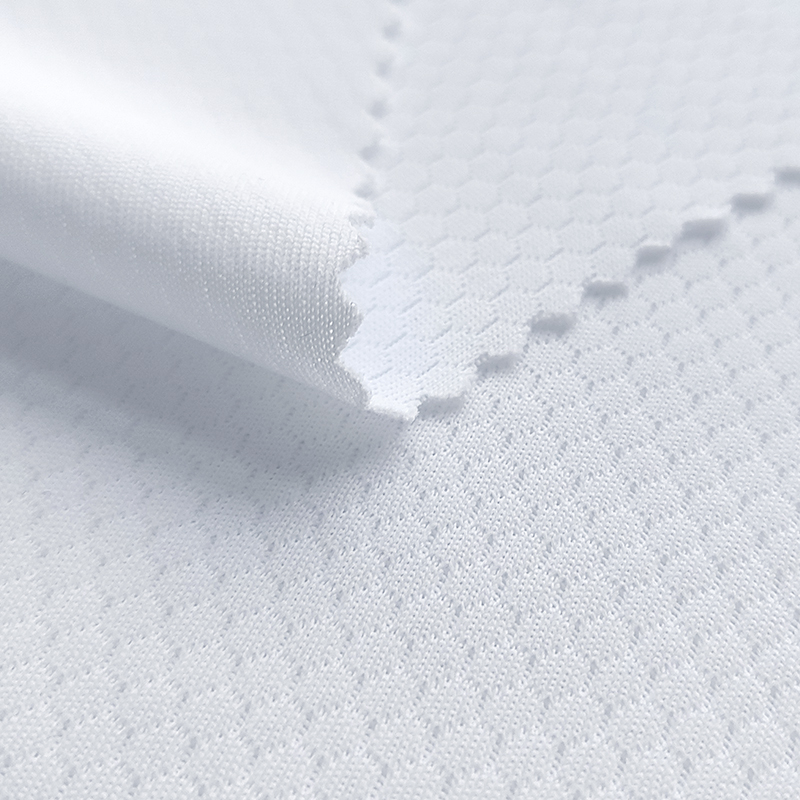
Fashion: From everyday polyester fabric clothing to high-performance sportswear. Any apparel items for business, formal or casual wear can be made from polyester. From socks and underwear to suits and everyday shirts, polyester is a staple in the fashion world. In addition to 100% polyester fabrics, He can also be combined with other fabrics to make more fabric types and can be used to make anything cotton fibers. as like polyester nylon fabrics, polyester spandex fabrics, polyester mesh fabrics, 60 cotton 40 polyester fabrics, and so on. polyester fabric has endless applications in apparel.
there are the other industry that polyester fabric refer to;
1. Home Textiles: Polyester fabric is widely used in home textiles for various purposes due to its numerous beneficial properties. Here are some common applications of polyester fabric in home textiles. Such as the Bedding: bed sheets(pillowcases, comforters, and blankets),
Curtains and Drapes, Table Linens, Rugs and Carpets.
2. Industrial Applications: The fabric is employed in making ropes, safety belts, and other industrial products that require strength and resilience.
3. Outdoor Gear: Polyester is favored for tents, backpacks, and outerwear because of its weather-resistant properties.
4. Bottles and Packaging: Beyond textiles, polyester (in the form of PET) is used extensively in the packaging industry, particularly for beverage bottles.
Polyester is found in several products and industries. Its durability makes it ideal for various items ranging from clothing to consumer products and industrial applications.Polyester’s versatility is reflected in its widespread use across various industries.
Caring for polyester fabric is relatively straightforward, and following these tips can help maintain its appearance and longevity:
Machine Washing: Polyester fabrics can typically be machine washed in warm water. Use a gentle cycle and mild detergent to avoid damaging the fibers. Avoid using bleach, as it can weaken polyester fabric and cause discoloration.
Cold Water Rinse: After washing, rinse polyester fabric in cold water to remove any remaining detergent and help prevent wrinkling.
Drying: Polyester fabric dries relatively quickly, either on a low heat setting in the dryer or by air drying. Avoid high heat settings, as they can cause shrinkage or damage to the fabric.
Ironing: Polyester is naturally wrinkle-resistant, but if ironing is necessary, use a low to medium heat setting. It’s best to iron polyester fabric while it’s still slightly damp or use a pressing cloth to avoid direct contact with the iron.
Storage: Store polyester garments or textiles in a cool, dry place away from direct sunlight to prevent fading and degradation of the fabric. Avoid hanging polyester items on wire hangers, as they can cause stretching or distortion.
Stain Removal: Treat stains promptly by blotting with a clean cloth and mild detergent or stain remover. Avoid rubbing, as it can push the stain deeper into the fabric. Rinse thoroughly with cold water after treating the stain.
Avoiding Abrasion: Polyester fabric can pill or develop fuzziness with repeated friction or abrasion. To minimize this, turn garments inside out before washing and avoid washing polyester items with abrasive materials like denim or garments with zippers or Velcro.
Dry Cleaning: Some polyester items, especially those with delicate embellishments or linings, may be labeled as dry clean only. Follow the care instructions on the garment’s label to avoid damaging the fabric.
By following these care tips, you can keep your polyester fabric looking its best and prolong its lifespan.
Polyester has a significant impact on various industries, especially the fashion industry, the development of polyester fabric in fashion has been marked by innovation, versatility, and adaptation to changing consumer preferences and industry trends. As technology continues to advance and sustainability becomes increasingly important, polyester will likely continue to play a significant role in the fashion landscape.
And more details can get through the article: What Is Polyester? A Complete Guide
Precision-engineered for controlled airflow, this 100% polyester round mesh knit fabric features uniform circular apertures that deliver consistent breathability across the entire surface — no hot spots, no uneven ventilation. At a featherweight 150 gsm, it's one of the lightest meshes in our sportswear line, making it the preferred choice for summer training tops and ventilated jersey panels.
The wicking function pulls moisture off the skin while the open-knit structure accelerates evaporation, keeping athletes dry through the toughest sessions. The 1.83 m width maximizes cutting yield for production efficiency. Plain-dyed, print-ready, and fully customizable — wholesale from Fuzhou Fangtuosi with custom dyeing available.
Knitted fabrics are created by intermeshing loops of yarns using knitting needles. Depending on the direction in which the loops are formed, knitted fabrics may be broadly categorized into two types—warp knitted fabrics and weft knitted fabrics. By controlling the loop (stitch) geometry and density, a wide variety of knitted fabrics can be produced. Because of the looped structure, the maximum fiber volume fraction of knitted fabric composites is lower than that of the woven or braided fabric composites. Generally, weft knitted fabrics are less stable and, hence, stretch and distort more easily than warp knitted fabrics; thus they are also more formable. Owing to their looped structure, the knitted fabrics are more flexible than the woven or braided fabrics. In order to enhance the mechanical properties, straight yarns can be integrated into the knit loops. In this way, fabric can be tailored for stability in certain directions and conformability in other directions.
Precision-engineered for controlled airflow, this 100% polyester round mesh knit fabric features uniform circular apertures that deliver consistent breathability across the entire surface — no hot spots, no uneven ventilation. At a featherweight 150 gsm, it's one of the lightest meshes in our sportswear line, making it the preferred choice for summer training tops and ventilated jersey panels.
The wicking function pulls moisture off the skin while the open-knit structure accelerates evaporation, keeping athletes dry through the toughest sessions. The 1.83 m width maximizes cutting yield for production efficiency. Plain-dyed, print-ready, and fully customizable — wholesale from Fuzhou Fangtuosi with custom dyeing available.
As a vertically integrated textile manufacturer, we specialize in producing high-performance fabrics through a streamlined 9-step process:
In the textile world, regenerated cellulose fibers hold a unique and important position. They retain the comfort of natural fibers while gaining improved performance through manufacturing processes. Although acetate, lyocell, modal, and rayon all belong to the "regenerated cellulose fiber" family, each possesses distinct characteristics. This article analyzes their differences and connections from multiple perspectives and introduces representative brands for each fiber.
These fibers share a common starting point: cellulose, a natural polymer derived from wood or cotton linters. Their essential difference lies in how raw materials are processed into fibers.
Rayon, the earliest regenerated cellulose fiber dating back to the late 19th century, uses the viscose process: cellulose reacts with sodium hydroxide and carbon disulfide to form a viscous viscose solution, which then solidifies into fiber through an acid bath. This process causes environmental pollution but pioneered human-made fiber technology.
Modal, developed by Austria's Lenzing AG in the 1950s, can be considered an upgraded version of rayon. It uses a modified viscose process with high-purity cellulose and special spinning technology, resulting in higher polymer chain orientation and greater wet strength.
Lyocell (branded as TENCEL™), the environmental pioneer introduced by Lenzing in the 1990s, employs an NMMO solvent-based closed-loop production process with a remarkable 99.7% solvent recovery rate, achieving near-zero pollution production.
Acetate follows a different chemical path—cellulose reacts with acetic anhydride to form cellulose acetate, which is then dissolved in acetone for spinning. This chemical modification makes its properties closer to synthetic fibers.
Rayon fabric features a smooth, cool feel and excellent drape with outstanding moisture absorption (11-13% moisture regain). However, it has low wet strength and is prone to deformation. It's commonly used in summer clothing, linings, and decorative fabrics.
Modal offers high wet modulus (maintaining strength when wet), excellent hand feel and drape, 50% higher moisture absorption than cotton, and low shrinkage. It's widely used in underwear, homewear, and high-end knitwear.
Lyocell combines the advantages of natural and synthetic fibers: cotton-like comfort, polyester-like strength, silk-like smoothness, plus strong moisture absorption and anti-bacterial properties. Its unique fibrillation characteristic can create special peach-skin effects.
Acetate features silk-like luster and smooth hand feel with good drape and thermoplasticity. However, it has poor moisture absorption (only 6-7% moisture regain), low strength, and poor alkali resistance. It's mainly used for high-end linings, women's apparel, and decorative fabrics.
As environmental concerns grow increasingly important, the production methods and sustainability of these fibers have become crucial evaluation criteria.
Traditional rayon scores low on environmental ratings due to its use of hazardous chemicals and difficult recycling process. Acetate has poor biodegradability because acetylation changes cellulose's structure.
Modal typically uses cellulose from sustainably managed beech forests, and its production process has less environmental impact than traditional viscose methods.
Lyocell represents the current environmental benchmark with its closed-loop production process, non-toxic and highly recyclable solvent, raw materials from sustainably managed forests, and biodegradable waste. It has received the European Award for the Environment from the EU.
• Mazza acetate fiber by Celanese
• Naia acetate fiber by Eastman Chemical
• Soalon by Mitsubishi Rayon
• TENCEL™ by Lenzing AG (market leader)
• Excel fiber by Birla Group
• Birla Excel by Birla Cellulose
• Lenzing Modal (market leader)
• Modal fiber by Shanghai Liou Fiber Development
• Modal fiber by Grasim Industries
• Viscose by Lenzing AG
• Birla Viscose by Aditya Birla Group
• Sateri viscose fiber by Sateri
These fibers are ubiquitous in our daily lives: Acetate is often used in high-fashion linings and elegant blouses; Lyocell is widely applied in denim, bedding, and high-end garments; Modal is the preferred material for premium underwear and homewear; Rayon is commonly found in summer dresses, shirts, and linings.
For example, the premium brand Allbirds uses Lyocell for eco-friendly footwear; lingerie giant Victoria's Secret extensively uses Modal material; many luxury brands use acetate as a silk alternative.
Consumers can distinguish these fibers through simple methods: acetate burns with a vinegar-like odor and melts into black hard lumps; rayon and modal burn like paper with little ash; lyocell leaves gray-white ash after burning.
For care: rayon requires careful hand washing; acetate is not alkali-resistant and should be washed with neutral detergents; modal and lyocell are relatively durable but still require following care label instructions.
From rayon to lyocell, the development of regenerated cellulose fibers demonstrates humanity's continuous exploration of materials science. This progress has not only improved fiber performance but also increasingly focuses on environmental sustainability. Understanding these fibers' characteristics and background helps us make informed purchasing decisions while supporting the textile industry's sustainable development.
As technology advances, we will likely see more high-performance, low-environmental-impact fibers emerge. However, as important milestones in this evolutionary journey, acetate, lyocell, modal, and rayon will continue to play their unique roles in the textile field.
Rain-ready, sweat-proof. This 100% polyester honeycomb knit fabric pairs a three-dimensional cellular structure with waterproof-breathable performance — the combination that keeps summer athletes dry in both directions: rain stays out, sweat escapes. The open honeycomb geometry creates natural air channels that work with, not against, the waterproof finish, so you get protection without the plastic-sheet feeling of conventional coated fabrics.
At 150 gsm with a soft hand feel, it drapes comfortably for sportswear tops and t-shirts while the 75D yarn keeps it strong enough for repeated outdoor wear. Plain-dyed and print-ready, with optional upgrades including UPF50+, cooling, and anti-microbial treatments.
East Xinwei provides eco-friendly recycled fabrics made from plastic bottles, discarded garments, and industrial waste.
With GRS and OEKO-TEX® certified production, we provide high-performance recycled fabric — including RPET fabric, Repreve textiles, and biodegradable fabric — widely used by global brands in sportswear, outdoor gear, and casual apparel.
Nylon spandex fabric has become an essential material in the textile industry, especially for activewear, swimwear, and performance apparel. Renowned for its remarkable elasticity, strength, and moisture-wicking properties, this fabric continues to be a top choice for athletes and fitness enthusiasts worldwide. As more brands look to provide their customers with high-performance garments, sourcing nylon spandex fabric wholesale has become a key strategy to meet growing demand. Moreover, nylon spandex fabric manufacturers have played a vital role in providing the raw materials that fuel this booming market.
What makes nylon spandex fabric stand out from other materials is its unique blend of two exceptional fibers. Nylon provides strength, durability, and abrasion resistance, making it ideal for garments that are subjected to frequent use. Spandex, also known as elastane, is famous for its high stretchability. When combined, the two fibers create a fabric that stretches up to five times its original length and returns to its initial shape after stretching. This ensures that garments made from nylon spandex retain their form and remain comfortable, even after long hours of use.
Another notable feature of nylon spandex fabric is its moisture-wicking properties. The fabric is designed to pull moisture away from the skin, keeping the wearer dry and comfortable during intense physical activity. This is particularly important for athletes and fitness enthusiasts who need garments that can keep up with their dynamic movements while ensuring comfort and performance.

Purchasing nylon spandex fabric wholesale offers significant advantages for businesses involved in manufacturing sportswear, swimwear, and other activewear products. Wholesale purchasing provides cost savings on large quantities of fabric, ensuring competitive pricing for companies that produce garments in bulk. In addition, sourcing fabric from trusted clothing fabric wholesale suppliers guarantees consistency in quality and performance, which is vital for maintaining brand reputation.
Manufacturers also benefit from working directly with nylon spandex fabric manufacturers, which offer customizable options. This flexibility allows businesses to tailor the fabric according to their specific needs, whether it's adjusting the weight, texture, or color of the fabric to meet market trends. With rapid prototyping capabilities, manufacturers can quickly produce small batches of customized fabrics, allowing them to respond faster to customer demands and emerging market opportunities.
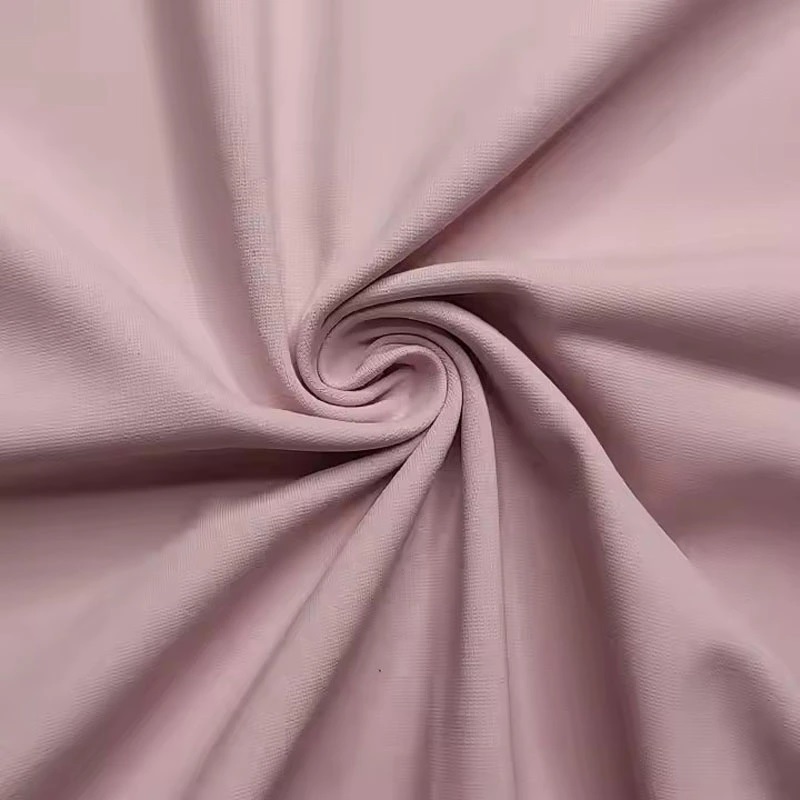
The versatility of nylon spandex fabric makes it suitable for a variety of applications. Below are some of the key features that make this fabric a popular choice for manufacturers and consumers alike:
High Stretchability: Nylon spandex fabric is highly elastic and can stretch up to five times its original length. This makes it perfect for activewear that requires a snug yet comfortable fit, like leggings, yoga pants, and swimsuits.
Durability: Nylon is a strong fiber that resists wear and tear, making nylon spandex fabrics durable even under high-stress conditions. It's ideal for garments that are washed and worn frequently.
Moisture-Wicking: The fabric's ability to draw moisture away from the skin ensures comfort during physical activities, keeping wearers dry even during intense workouts.
Shape Retention: One of the key advantages of nylon spandex is its ability to return to its original shape after stretching. This feature ensures that garments stay fitted and don't lose their elasticity over time.
Breathability: Nylon spandex fabric allows air to flow freely, preventing the buildup of heat and sweat, which is crucial during exercise or outdoor activities.
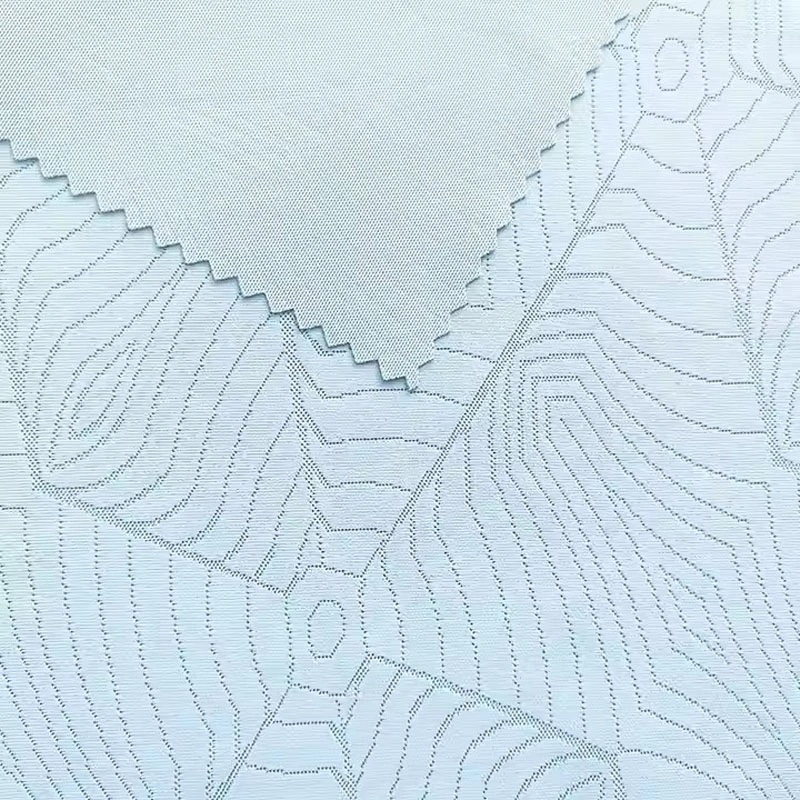
Fujian East Xinwei Textile Technology Co., Ltd., a trusted leader in textile manufacturing, is at the forefront of producing high-quality nylon spandex fabrics. Their vertically integrated process ensures a streamlined production from spinning and weaving to dyeing, resulting in fabric consistency and quick turnaround times. Their commitment to innovation, quality, and sustainability, as seen through their GRS, OEKO-TEX, and ISO certifications, makes them a valuable partner for businesses looking to source top-tier nylon spandex fabric.
By choosing East Xinwei as a supplier, manufacturers can take advantage of the company's 72-hour rapid prototyping capabilities, allowing them to experiment with new designs and finishes without long delays. With extensive experience in producing eco-friendly, high-performance fabrics for yoga, cycling, and team sports, East Xinwei has earned a reputation for delivering excellence from yarn to finished fabric.
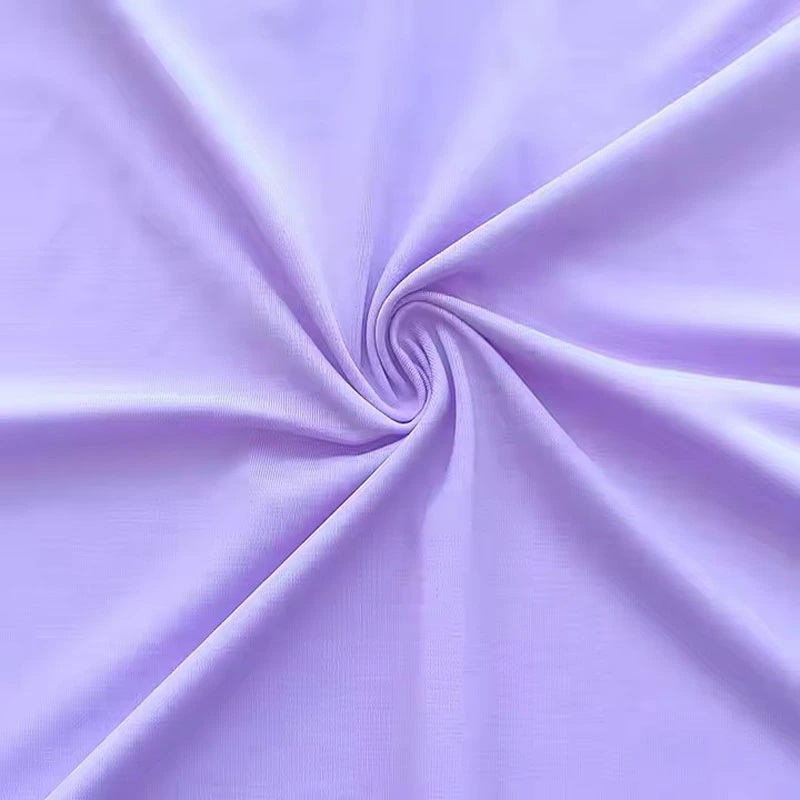
In conclusion, nylon spandex fabric is a top choice for activewear due to its combination of strength, flexibility, moisture-wicking properties, and comfort. Sourcing nylon spandex fabric wholesale from reputable nylon spandex fabric manufacturers ensures consistent quality, better pricing, and customization options, helping brands meet the growing demand for high-performance, eco-friendly fabrics.
In recent years, fitness and wellness have become deeply integrated into modern lifestyles, with yoga emerging as one of the most embraced practices worldwide. This growing interest in yoga has fueled a parallel demand for high-performance, comfortable, and sustainable apparel. At the heart of this demand lies yoga wear fabric, a specialized textile designed to support flexibility, breathability, and durability. East Xinwei Textile Technology Co. Ltd., a vertically integrated leader in textile manufacturing, has positioned itself at the forefront of this movement, supplying high-quality fabrics to global activewear brands.
Traditionally, yoga clothing was made from cotton-based materials that, while soft, lacked the performance features needed for today's dynamic yoga sessions. With the evolution of yoga into high-intensity formats like power yoga and hot yoga, athletes and casual practitioners alike began to seek advanced yoga wear fabric that could stretch, wick moisture, and endure repeated use. East Xinwei's production capabilities, which include recycled polyester and nylon blends, are designed precisely to meet these modern requirements. The company's commitment to 72-hour rapid prototyping ensures brands can quickly adapt to shifting market preferences without compromising quality.
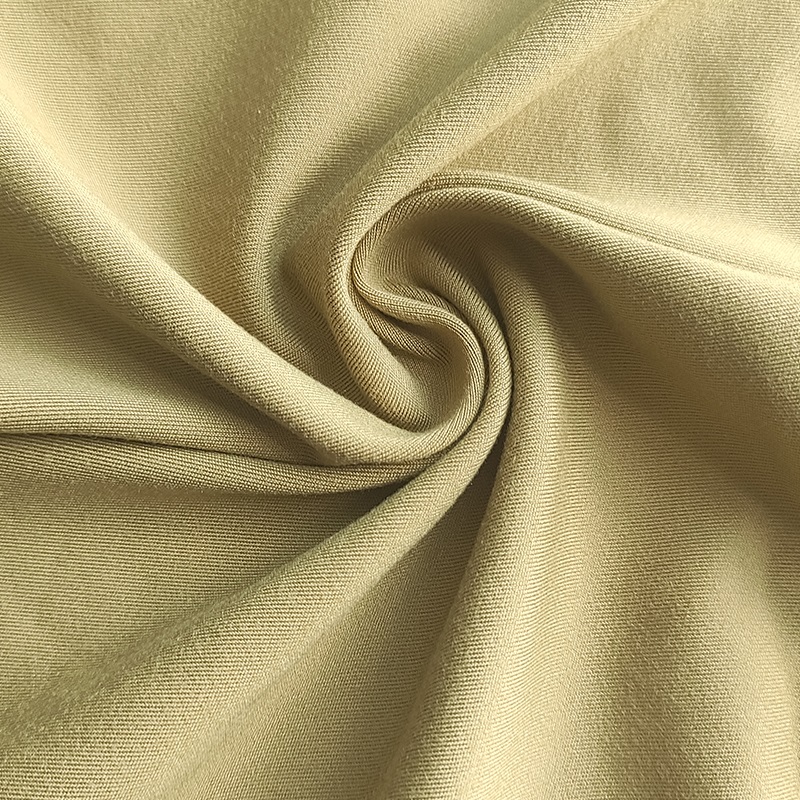
What sets high-performance yoga wear apart is not just its look or feel, but the science behind its functionality. Fabrics developed specifically for yoga must strike a balance between softness and strength, elasticity and compression, breathability and moisture control. East Xinwei, with its GRS, OEKO-TEX, and ISO certifications, ensures each yard of fabric meets these technical expectations while aligning with eco-conscious standards. The fabric must move with the body while holding its shape, and it must allow air to circulate while drawing sweat away from the skin. These complex needs have transformed yoga wear fabric into a blend of textile engineering and ergonomic design.
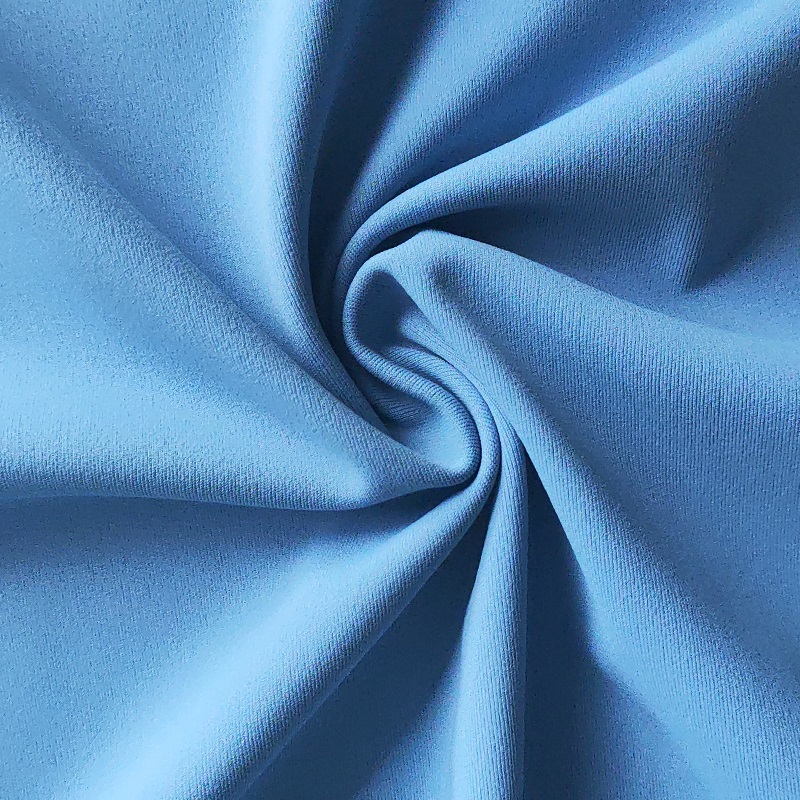
As yoga continues to define its unique identity within the fitness industry, so too has its apparel. While general sportswear fabric might prioritize abrasion resistance or support for rapid movement, yoga wear places a greater emphasis on comfort, stretch, and seamlessness. The table below outlines the key differences:
Attribute | Yoga Wear Fabric | General Sportswear Fabric |
Stretchability | High 4-way stretch for full flexibility | Moderate, often 2-way stretch |
Moisture-wicking | Prioritized for sweat absorption | Balanced with durability |
Surface softness | Ultra-soft for comfort during poses | Often slightly coarse or textured |
Compression level | Gentle compression for support | Higher compression for impact sports |
Seams and fit | Seamless or flat-seamed for comfort | Structured seams for high-impact zones |
This distinction highlights why yoga wear fabric cannot be simply replaced by conventional sportswear materials.
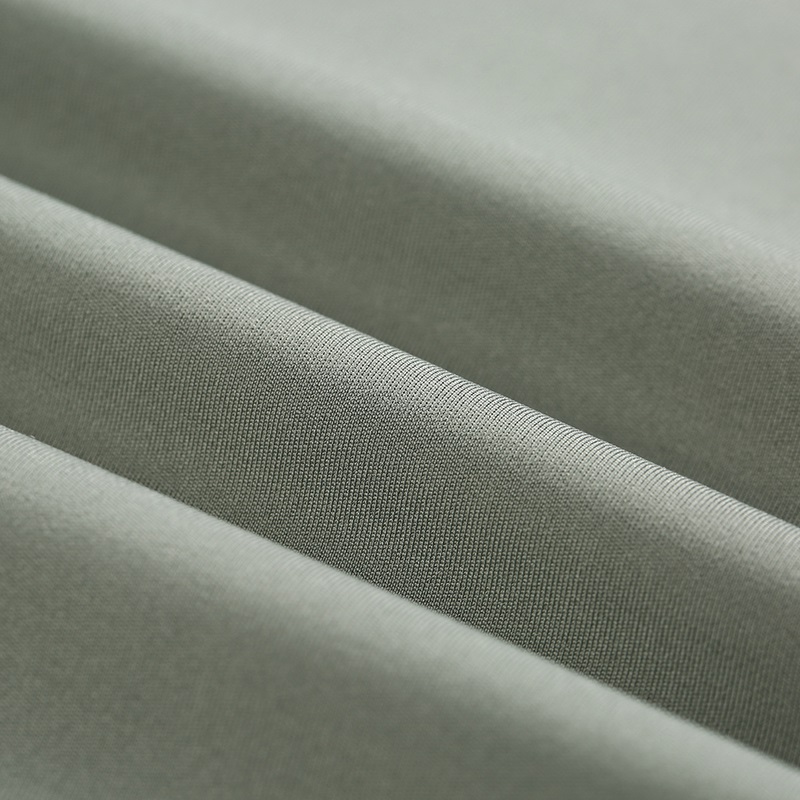
As yoga promotes balance, mindfulness, and sustainability, it's only natural that yoga enthusiasts gravitate toward brands offering eco-friendly options. East Xinwei's use of recycled textile materials and its commitment to sustainable manufacturing reflect a deeper alignment with the values of modern yoga practitioners. The company's integrated approach—from spinning to dyeing under one roof—not only ensures product traceability but also minimizes environmental impact. This transparent, responsible production process adds another layer of appeal to their yoga wear fabric offerings.
The rise of yoga wear fabric goes beyond textile innovation—it represents a shift in how people engage with their bodies, their environment, and their values. East Xinwei's leadership in producing high-performance, sustainable fabrics speaks to the industry's future: one where function meets ethics, and innovation meets tradition. As yoga continues to influence fashion, health, and consumer expectations, the fabric that supports this journey will remain an essential part of the story.
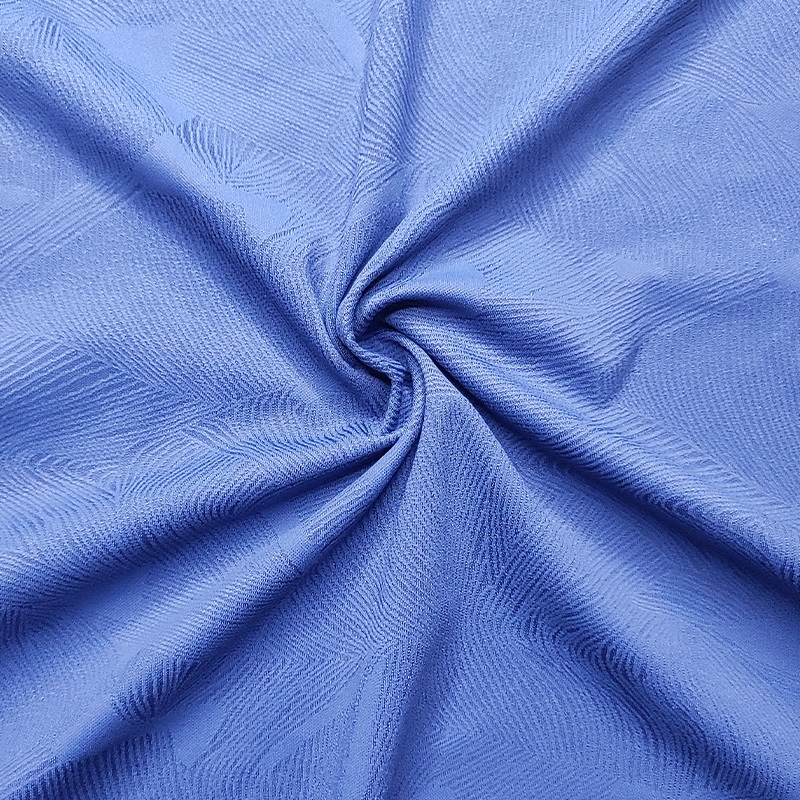
In the fast-paced world of business, where comfort, style, and performance intersect, the need for versatile clothing materials has never been more important. As professionals seek fabrics that not only look good but also enhance their daily performance, Dry Fit shirt fabric has emerged as the go-to option for business commuters. Thanks to its innovative design, the fabric offers comfort, breathability, and moisture-wicking properties, making it the ideal solution for long working hours and busy commutes.
Dry fit fabric is a high-performance textile designed to keep the wearer dry, cool, and comfortable throughout the day. Originally developed for athletic wear, the fabric's moisture-wicking properties quickly made it popular for various uses, including in business attire. Made from a blend of polyester, nylon, and sometimes spandex, the fabric allows sweat to evaporate rapidly, ensuring that the wearer feels fresh even during intense activities like commuting, meetings, or outdoor events. This feature makes it perfect for professionals who need both a polished look and functional comfort.
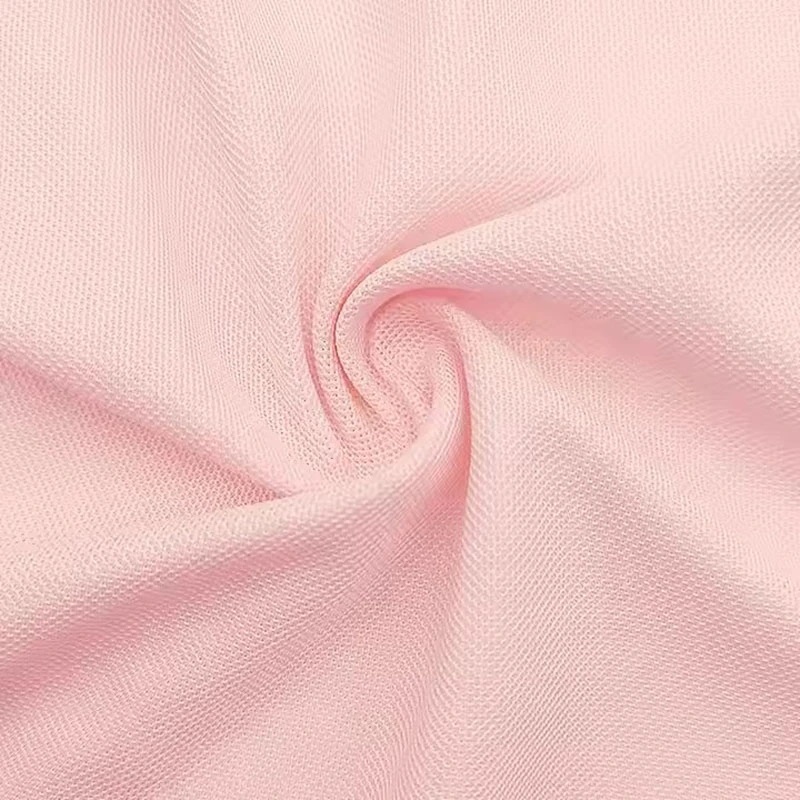
There are several advantages to using Dry-Fit fabric for business shirts, making it an increasingly popular choice among professionals. Here are the key benefits:
Moisture-Wicking: The primary benefit of Dry Fit shirt fabric is its ability to wick away moisture from the body, keeping the wearer dry throughout the day. Whether you're commuting in the summer heat or attending back-to-back meetings, this fabric ensures that sweat is absorbed and evaporated quickly.
Breathability: Dry-Fit shirts are designed to allow air to circulate around the body, offering ventilation that prevents the wearer from overheating. This is particularly important for people who have long commutes or work in environments that fluctuate in temperature.
Comfort and Flexibility: The fabric's soft texture and flexibility make it a comfortable choice for all-day wear. Many Dry-Fit fabrics incorporate a small amount of spandex or elastane, which adds stretch, allowing the shirt to move with the body, making it ideal for busy professionals.
Easy Care and Durability: Dry-Fit fabrics are designed to resist shrinking and fading, meaning they will maintain their appearance even after frequent washing. This durability makes them a low-maintenance, long-lasting option for business wear.
Eco-Friendly Options: As sustainability becomes more important in the textile industry, many manufacturers are producing Dry Fit shirt fabrics made from recycled polyester or other eco-friendly materials, contributing to the overall environmental benefit.
Dry Fit shirt fabric is more than just a fabric; it's a lifestyle choice for modern professionals who require high-performance attire without sacrificing style. The versatility of Dry-Fit fabrics makes them suitable for a wide range of applications:
Business Commutes: For professionals who walk or cycle to work, Dry-Fit fabric offers a perfect solution to stay dry and comfortable. It prevents excessive sweating during travel and ensures the wearer arrives at the office looking fresh.
Office Wear: Dry-Fit shirts are sleek and stylish, making them suitable for business casual and formal settings. Their moisture-wicking properties add an element of comfort that traditional fabrics can't match.
Corporate Events and Conferences: Whether attending a client meeting or participating in a corporate event, Dry-Fit shirts keep you looking sharp without the discomfort of traditional fabrics.
Active Business Professionals: For professionals who attend after-work activities such as gym sessions or business networking events, Dry-Fit shirts offer a flexible, multi-functional wardrobe solution.
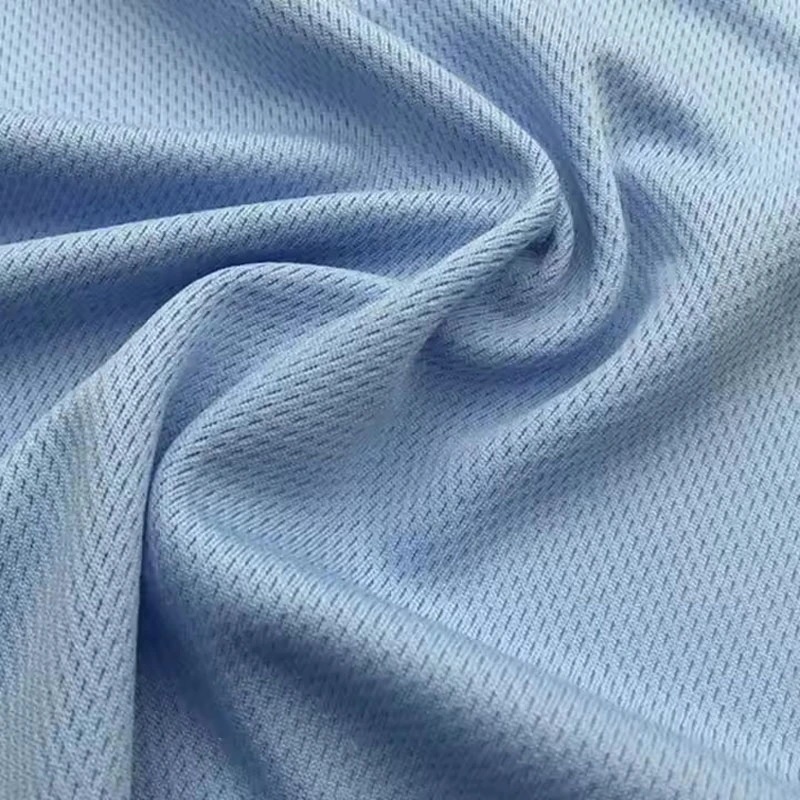
Selecting the best Dry Fit shirt fabric depends on several factors such as your comfort preferences, budget, and the level of performance required. Key considerations include:
Fabric Blend: Look for fabrics made from a blend of polyester, nylon, and elastane. These offer a good balance of moisture-wicking, breathability, and comfort.
Eco-Friendly Materials: Many manufacturers offer Dry-Fit fabrics made from recycled polyester or other sustainable fibers, so consider choosing these if you're environmentally conscious.
Fit and Style: Dry-Fit fabrics come in a variety of styles, from slim-fit to regular-fit shirts. Choose one that complements your body type and personal style.
Color and Design: Dry-Fit shirts are available in a wide array of colors and designs, so you can match them to your office dress code or personal preferences.
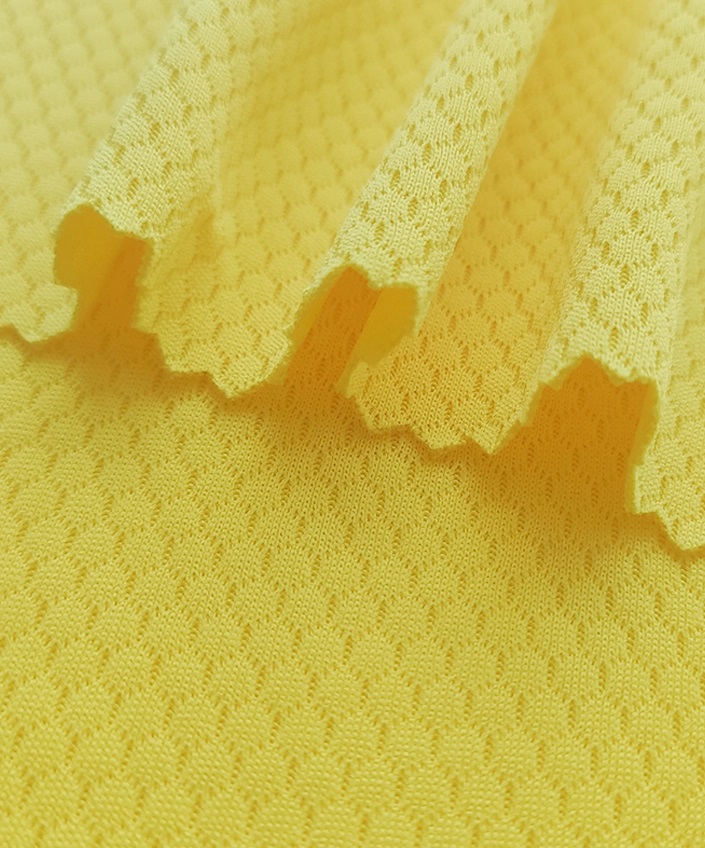
As business professionals seek more comfortable, functional, and sustainable clothing options, Dry Fit shirt fabric has emerged as an essential material in modern wardrobes. With its ability to manage moisture, improve comfort, and require less maintenance than traditional fabrics, Dry-Fit shirts are quickly becoming the preferred choice for professionals on the move. Whether for business commutes, office wear, or after-hours activities, Dry-Fit fabric offers the versatility and performance needed to succeed in today's fast-paced business world.
As the global demand for eco-conscious products rises, the textile industry is increasingly turning toward sustainable materials. One area where this shift is particularly noticeable is in the production of sportswear, where polyester tracksuit material is leading the way. Polyester, especially when made from recycled materials, offers an ideal balance between durability, performance, and sustainability. RPET fabric manufacturers, such as Fujian East Xinwei Textile Technology Co., Ltd., are at the forefront of this transformation, offering high-performance fabrics for activewear that support both athletes and the environment.
Polyester has long been the sportswear fabric of choice, valued for its exceptional durability and high-performance characteristics. Polyester tracksuit material is lightweight, moisture-wicking, and highly resistant to wear and tear, making it an ideal choice for activewear like tracksuits, yoga pants, and cycling gear. However, the rise of environmental awareness has led to the development of recycled polyester (RPET), which is made from post-consumer plastic bottles and other waste materials. This shift not only retains all the beneficial properties of traditional polyester but also offers a significant reduction in environmental impact.
The benefits of polyester tracksuit material made from RPET are numerous. RPET offers the same moisture-wicking properties, stretch, and durability as virgin polyester, but with a smaller carbon footprint. Manufacturers like East Xinwei ensure that their RPET fabric wholesale meets rigorous environmental and safety standards, including GRS, OEKO-TEX, and ISO certifications, which guarantee that the materials used in production are safe and environmentally responsible.
RPET fabric manufacturers are integral to the shift towards sustainable textiles in the fashion industry. By sourcing post-consumer plastic waste and transforming it into high-quality fabric, these manufacturers not only contribute to reducing the global plastic waste crisis but also provide industries with materials that help reduce their carbon footprints.
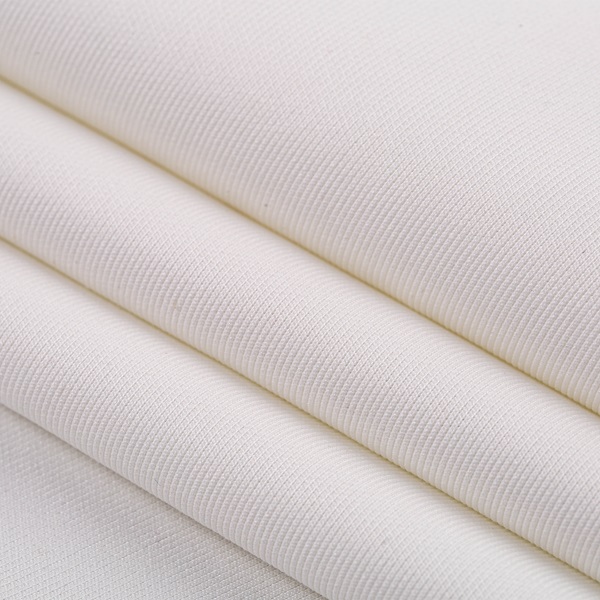
When comparing polyester tracksuit material made from RPET to traditional polyester, several key advantages stand out. The main benefits of using RPET in activewear include:
Eco-Friendly Production: RPET is made from recycled plastic bottles, helping to reduce waste and promote the circular economy.
Durability: RPET offers the same high durability as virgin polyester, making it perfect for high-performance sportswear.
Breathability and Moisture-Wicking: RPET fabrics provide excellent moisture-wicking properties, keeping athletes dry during intense activities.
Lightweight and Comfortable: RPET fabrics are lightweight and comfortable, providing flexibility and ease of movement in activewear.
With these properties, RPET tracksuit material is quickly becoming the go-to choice for sportswear brands focused on both performance and sustainability.
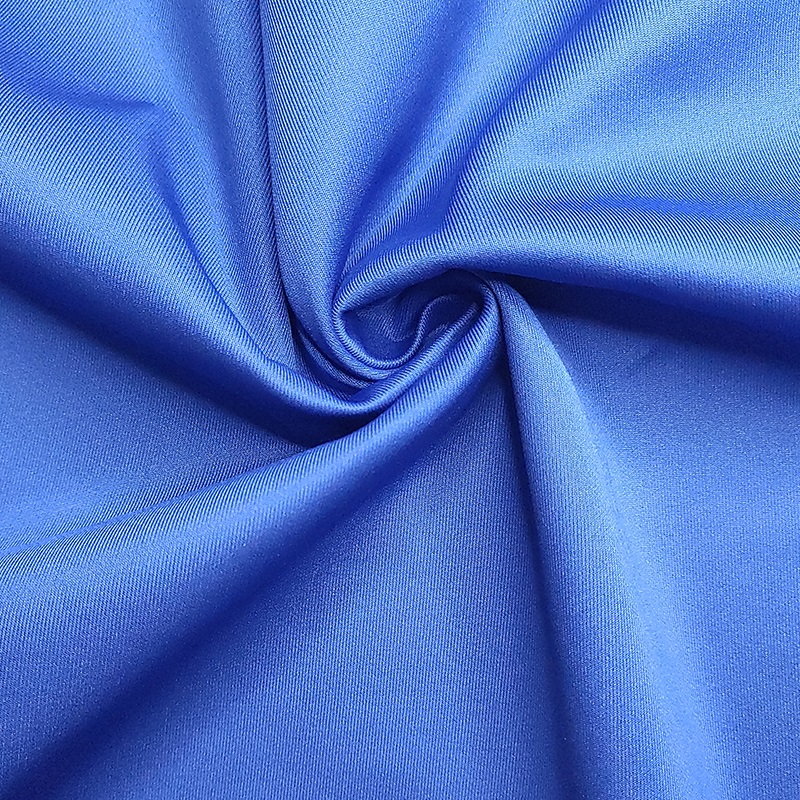
The global shift toward sustainability is reshaping the sportswear industry, and polyester tracksuit material made from RPET is at the heart of this change. As more brands demand eco-friendly materials, RPET fabric manufacturers are helping to lead the way by offering high-quality fabrics that meet performance and environmental standards.
Fujian East Xinwei Textile Technology Co., Ltd. is an excellent example of a company that combines innovative textile manufacturing with environmental responsibility. Their ability to produce large quantities of RPET fabric while adhering to strict sustainability certifications is paving the way for a more sustainable future in sportswear production. With their commitment to quality, excellence, and innovation, East Xinwei is set to continue shaping the future of the textile industry by delivering eco-friendly, high-performance fabrics for global sportswear brands.
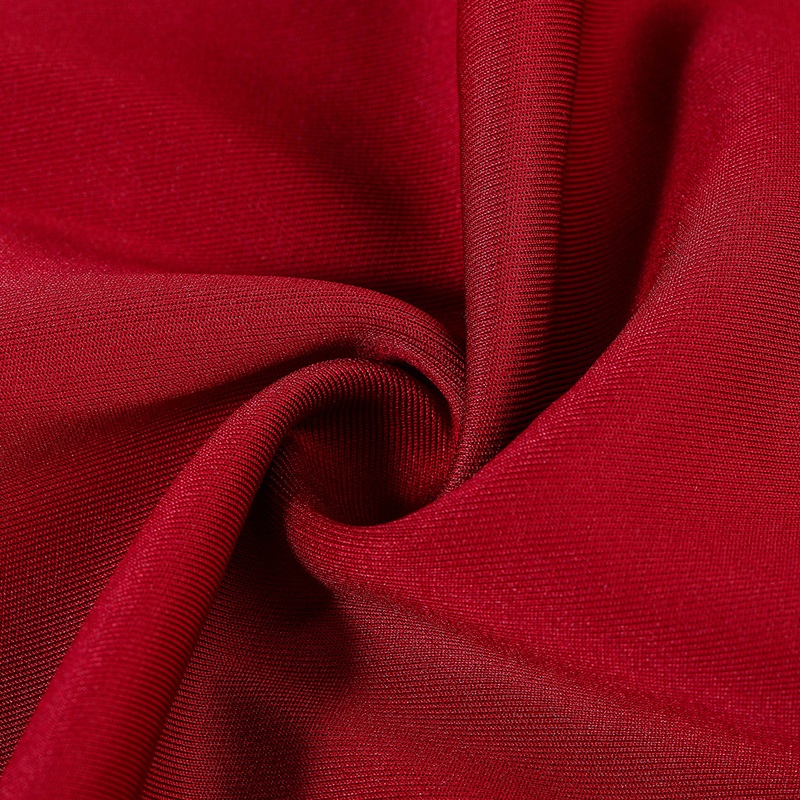
In the fields of outdoor activities, sportswear, and active lifestyles, functional fabrics have become essential. They're engineered to actively enhance comfort, protection, durability, and even sustainability. In this article, we’ll explore what makes a fabric functional, the main types available, and how these innovations improve your experience in sportswear and outdoor apparel.
Functional fabric is a category of advanced fabric materials designed to go beyond basic coverage. Unlike traditional fabrics, which primarily serve to protect and adorn, functional fabrics incorporate advanced technologies or treatments to offer additional benefits such as moisture-wicking, temperature regulation, antibacterial properties, UV protection, and stretchability.
A function fabric is designed with added properties that respond to specific needs: moisture management, temperature control, UV protection, antimicrobial defense, waterproofing, or stretch and recovery. These enhancements come from:
Advanced synthetic fibers (polyester, nylon, spandex blends)
Special treatments (moisture-wicking finishes, UV absorbers, silver ions)
Innovative weaves/knits (mesh structures, ripstop patterns, 4-way stretch)
Sustainable materials (recycled polyester, bio-based yarns)
Garments that perform better in real-world conditions—keeping you drier during workouts, cooler in heat, safer in sun, fresher after hours of sweat, and protected from rain.
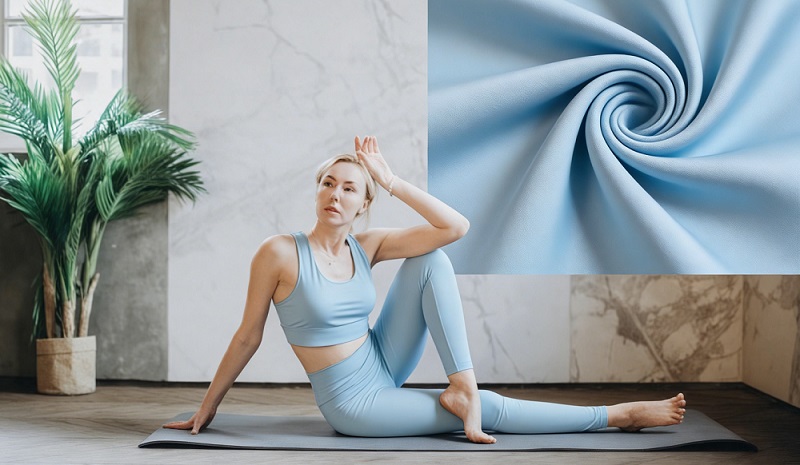
East Xinwei offers a wide range of functional fabrics, each engineered to meet specific performance needs. Here's a closer look at the main types:
This high-performance dry fit fabric uses advanced capillary action to rapidly pull sweat away from the skin to the outer surface for fast evaporation, keeping you dry, cool, and free from that uncomfortable clammy feeling during intense activity. Unlike ordinary cotton, which absorbs and holds moisture, East Xinwei’s Dry Fit fabrics are primarily made from premium polyester and nylon blends with spandex, featuring micro-grooves, hollow fibers (cross-shaped, Y-shaped or hexagonal), and hydrophilic-hydrophobic layering that accelerates moisture transport and drying time.
We offer multiple constructions — including single jersey, interlock, mesh, and jacquard — many incorporating recycled RPET and REPREVE® materials for eco-friendly performance. Whether for running, yoga, cycling jerseys, team sports, or swimwear, these moisture-wicking fabrics deliver exceptional breathability, quick-dry performance, 4-way stretch, shape retention, and long-lasting comfort.
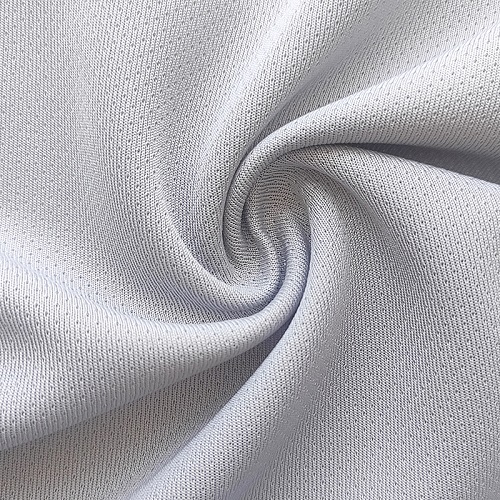
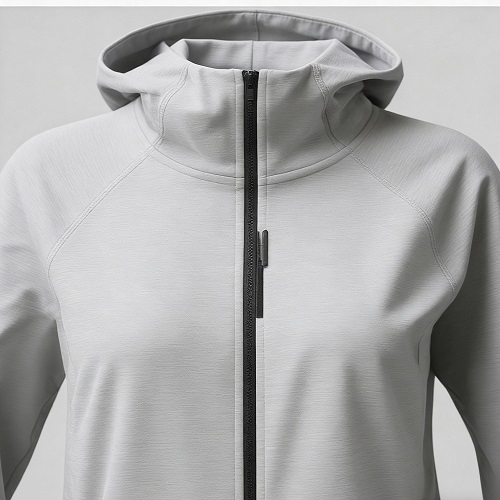
Engineered for superior sun protection, these UPF50+ fabrics block over 98% of harmful UVA and UVB rays, offering the highest level of UV defense available. Utilizing dense knitting structures, UV-absorbent dyes, and advanced inorganic coatings such as titanium dioxide (TiO₂) and zinc oxide (ZnO), East Xinwei’s UPF50 fabric delivers long-lasting protection that remains effective even after repeated washing and exposure to moisture.
Made primarily from high-performance polyester or nylon blends with spandex, they combine excellent breathability, quick-drying properties, and 4-way stretch while remaining lightweight and comfortable. Available in various constructions, including jacquard, mesh, and honeycomb patterns, these fabrics are perfect for outdoor sports like hiking, cycling, fishing, surfing, and team uniforms. We also offer sustainable recycled polyester UPF50+ options to meet eco-conscious brand demands.
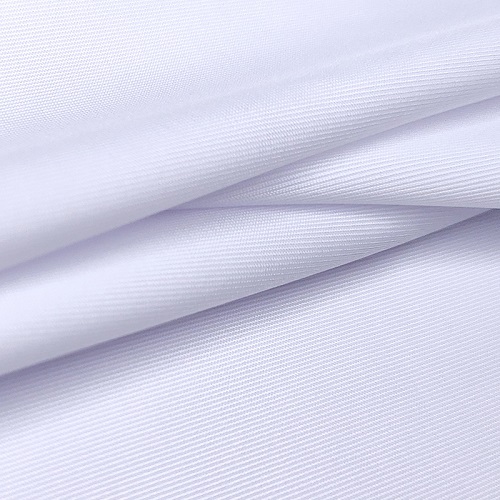
These advanced fabrics effectively inhibit the growth of odor-causing bacteria and fungi, keeping garments fresher for longer even during intense, high-sweat activities. Using built-in silver ion technology, natural bamboo kun, chitosan, and other high-performance antimicrobial agents, our anti bacterial fabric achieves over 99% bacterial reduction rate, with durable performance that can withstand 50+ washes.
Primarily constructed from recycled polyester and nylon blends, they integrate seamlessly with moisture-wicking and stretch properties. Whether for yoga wear, running gear, gym apparel, socks, or team sports, these fabrics deliver lasting odor control and enhanced hygiene. Natural bamboo-based options are also available for brands seeking greener antimicrobial solutions.
.jpg "/uploads/image/2026/03/11/function-fabric (1).jpg")
Designed to keep you dry in the harshest conditions, our waterproof textile fabric features high hydrostatic pressure ratings (up to 20,000mm) while maintaining excellent vapor transmission. Through advanced microporous membranes, polyurethane laminations, and fluorine-free DWR finishes, these functional fabrics block external water and wind while allowing sweat vapor to escape, preventing internal condensation and overheating.
Crafted from durable nylon and polyester blends — including ocean-recycled options — they offer outstanding abrasion resistance, flexibility, and 4-way stretch. Available in 2-layer, 2.5-layer, and 3-layer constructions, they are ideal for outdoor jackets, rain pants, mountaineering gear, ski wear, and performance outer layers.
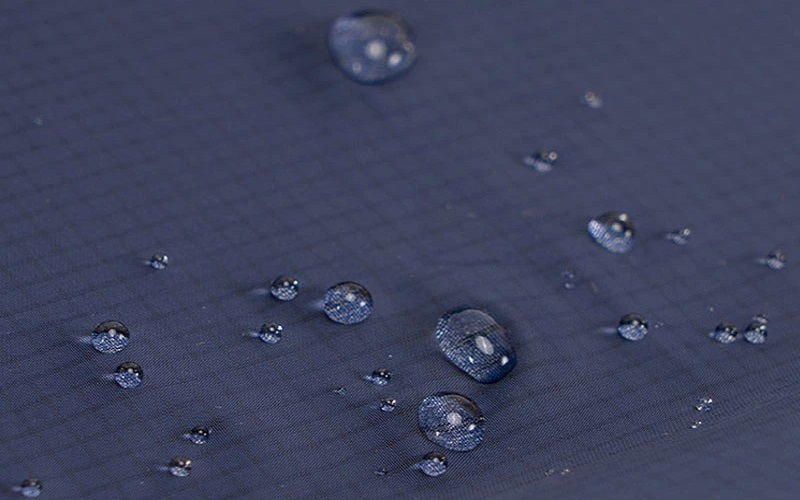
The cooling fabric material actively lowers skin temperature through multiple cooling mechanisms, including rapid moisture evaporation, radiative cooling, and phase-change materials. Featuring micro-grooved fibers (CoolMax technology), infrared-reflective yarns, and graphene-enhanced structures, East Xinwei’s cooling fabrics can reduce fabric surface temperature by up to 8°C and dry up to 5 times faster than regular cotton.
Made from premium polyester, nylon, and recycled blends with strategic hydrophilic-hydrophobic designs, they deliver instant cool-touch sensation and continuous thermoregulation during intense activity. Perfect for hot-weather training, summer activewear, yoga, cycling jerseys, and outdoor sports in warm climates.
Functional fabrics shine across diverse real-world scenarios, evolving from niche performance gear to everyday essentials. Here are key applications:
1. Sportswear and Athletic Performance
From running leggings and cycling jerseys to yoga pants and team uniforms, functional fabrics deliver moisture-wicking, quick-drying, 4-way stretch, and odor control. Athletes benefit from reduced fatigue, faster recovery (via FIR or compression), and unrestricted movement during high-intensity sessions like marathons, CrossFit, or gym workouts.
2. Outdoor and Adventure Apparel
Hiking jackets, mountaineering shells, fishing shirts, and ski base layers rely on waterproof-breathable membranes, UPF50+ protection, wind resistance, and thermoregulation. These fabrics handle rain, snow, intense sun, and temperature swings while keeping users dry and comfortable on multi-day treks or extreme conditions.
3. Athleisure and Everyday Activewear
The rise of athleisure blurs lines between workout and daily life. Functional fabrics now power casual hoodies, travel pants, commuter jackets, and all-day wear items with cooling effects, anti-odor properties, stretch comfort, and lightweight durability—perfect for office-to-gym transitions, long flights, or extended urban exploration.
4. Emerging and Specialized Uses
Smart wearables integrate sensors for real-time health tracking (heart rate, posture, fatigue) in fitness apparel.
Travel and multi-day wear demands long-wear comfort with anti-microbial and moisture management for 8–12+ hour use.
Sustainable casual lines incorporate recycled functional fabrics for eco-conscious everyday clothing like base layers and kidswear.
These applications show how functional fabrics adapt to modern lifestyles—prioritizing performance without sacrificing style or sustainability.
Wear Experience Priority: Focus on holistic comfort over single metrics.
Multi-Functional Blends: One fabric with wicking + UV + antibacterial.
Sustainability Dominance: Fluorine-free, recycled, low-impact dyeing.
Defined Product Roles: Fabrics tailored to specific scenarios (e.g., long-wear yoga vs. high-intensity gym).
Consider:
End-use requirements
Certifications (OEKO-TEX®, GRS)
Testing (AATCC/ISO)
Customization & samples (we offer 72-hour prototyping)
Scalability & reliability
At East Xinwei, our vertical integration, massive capacity, and focus on sustainable high-performance functional fabrics make us the ideal partner.
What is the difference between functional fabric and regular fabric?
Regular fabrics provide basic coverage; functional fabrics add active properties like moisture-wicking, UV protection, or temperature regulation.
Are functional fabrics sustainable?
Many are—look for recycled content (rPET, REPREVE), GRS certification, and fluorine-free treatments.
How long do functional properties last?
It depends on care—follow washing instructions to preserve wicking, waterproofing, and antimicrobial effects.
Can functional fabrics be used for everyday wear?
Absolutely—cooling, anti-odor, and stretch options make them ideal for athleisure, travel, and daily active lifestyles.
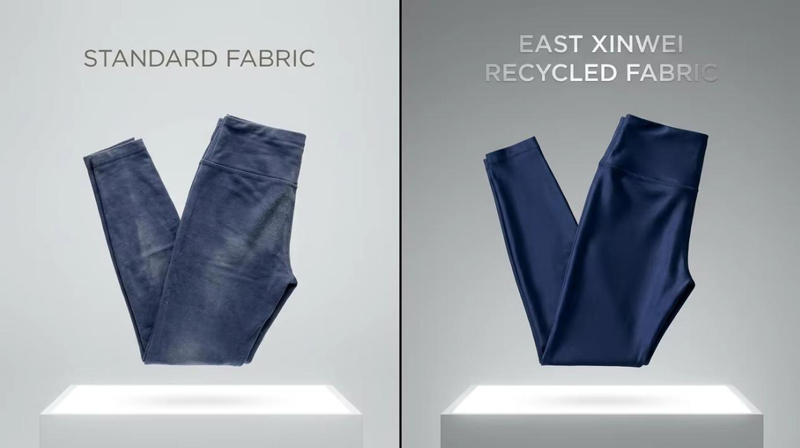
(Comparison of standard faded yoga leggings vs vibrant East Xinwei recycled fabric leggings with Level 4 color fastness)
Sustainable fashion is no longer a niche; it’s a requirement. Yoga and swimwear brands are increasingly willing to pay a premium for Recycled Fabrics to align with eco-conscious consumers. However, these high-margin products have a fatal flaw: Color Fading.
For a premium brand, nothing destroys customer trust faster than a high-end yoga pant that turns dull after three washes, or a vibrant swimsuit that bleeds in chlorinated water. In the world of performance textiles, color vibrancy is just as critical as stretch and comfort.
The Root of the Problem: Dyeing recycled fibers is inherently more difficult than virgin materials. Impurities and inconsistent fiber sources make dye adhesion unstable. Many factories resort to multiple "corrective washes" to meet standards, which leads to:
Increased Costs: Extra water, electricity, and labor.
Fiber Damage: Excessive wet processing weakens Spandex elasticity, leading to sagging garments.
Delayed Delivery: Constant rework disrupts production schedules.
At East Xinwei, we refused to accept these compromises. We’ve turned dyeing stability into a core competitive advantage.
In the textile industry, color fastness is graded from 1 to 5. While most factories struggle to maintain a stable Level 2 or 3, East Xinwei has set Level 4 and above as our baseline for mass production.
We utilize a proprietary system of high-grade anti-fading auxiliaries specifically engineered for recycled polyester and nylon-spandex blends. These are not standard fixatives; they are advanced molecular bonding agents that lock color deep within the fiber structure.
Performance: Our fabrics resist fading from sweat, chlorine, seawater, and high-intensity friction. This is why our partners can confidently promise: "Vibrant after 50 washes."
If auxiliaries are the "ammunition," temperature control is the "marksmanship." Even the best chemicals fail if the heat is inconsistent. Our factory employs a fully digitized thermal management system. We regulate temperature at the micron level throughout the dyeing, fixing, and post-treatment phases. This ensures dye molecules penetrate fibers at the optimal window, resulting in:
Saturated Hues: Richer, deeper colors.
Zero Batch Variance: Identical shades from the first yard to the last.
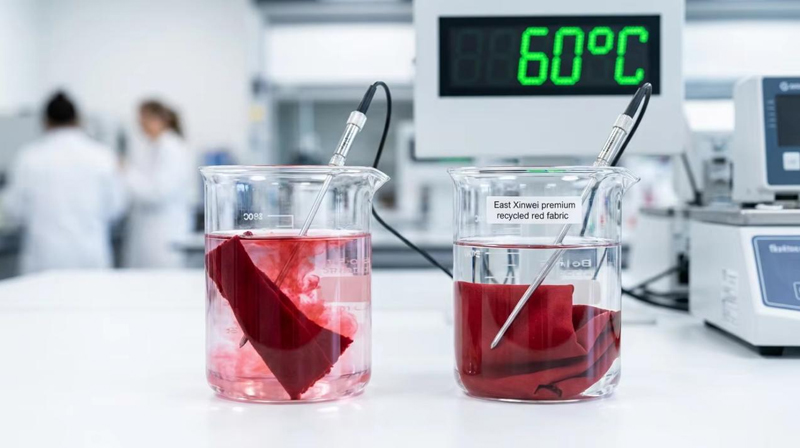
The true test of a factory's technical prowess is the number of washes required to achieve stability.
The Industry Standard: Competitors often require two or more washes to hit Level 3.5 or 4. This doubles the mechanical stress on the fabric.
The East Xinwei Standard: Our optimized dyeing curve allows us to hit Level 4 color fastness in a single wash.
Caption: Watch our Level 4 fabric withstand 100°C boiling water and 60°C warm water tests without any color migration or staining on adjacent white fabrics.
Triple Benefits for Brands:
1. Superior Sustainability (ESG Goals): A single wash consumes 50% less water than the industry average. Brands can quantify this in their ESG reports: "Produced with East Xinwei’s low-water dyeing technology."
2. Enhanced Tensile Recovery: Every extra wash degrades Spandex. Our "One-Wash" process protects the elastic recovery rate, ensuring yoga leggings keep their shape and swimsuits stay snug over time.
3. Premium Quality at Competitive Pricing: By cutting rework and utility costs by half, we offset the price of our premium auxiliaries. This allows us to offer a high-tier recycled fabric solution that doesn't eat into your profit margins.
Premium brands don't just sell fabric; they sell trust and experience. Color bleeding is the fastest way to lose both.
At East Xinwei, we’ve perfected the basics to achieve the extraordinary. Our "Level 4 Auxiliaries + Precise Temp Control + One-Wash" system isn't just a process—it’s a guarantee of stability across our 83,000 m² facility and 16 production lines.
By partnering with East Xinwei, you get:
Reduced Complaint Rates: No more returns due to fading.
Predictable Lead Times: No delays for corrective rework.
Verifiable Eco-Narratives: Real data for sustainable marketing.
Amid the global low-carbon transition, the activewear industry is undergoing a profound material revolution. Consumers no longer judge fabrics solely on functionality and comfort—they care deeply about the environmental footprint behind every garment.
Recycled polyester (RPET)—a green material reborn from discarded plastic bottles—has become the top choice for premium performance brands. Fujian East Xinwei Textile Technology, backed by GRS certification, ISO 9001, and OEKO-TEX Standard 100, has built a complete lineup of recycled performance fabrics.
This guide presents six core recycled fabrics engineered for running vests, quick-dry tops, and team sports uniforms. We address the quality and functionality questions that matter most to brand buyers.
Style No. | Composition | Weight × Width |
R0301SF2 | 100% Recycled Polyester | 145gsm × 165cm |
R0306 | 50% Recycled Polyester + 50% Virgin Polyester | 145gsm × 165cm |
R0305 | 100% Recycled Polyester | 155gsm × 180cm |
R0318-1 | 100% Recycled Polyester | 180gsm × 180cm |
Core Features:
Classic honeycomb structure: Uniform micro-holes create a 3D surface that maximizes airflow and accelerates sweat evaporation.
Multi-weight options: 145g for lightweight summer running vests; 180g for structured football and basketball jerseys.
Moisture-wicking capillary effect: Grooved fiber channels rapidly transport sweat from the skin side to the outer layer for diffusion.
GRS traceable: Every batch of 100% recycled variants comes with full sourcing documentation for brand ESG reporting.
Best For: Marathon running vests, professional quick-dry T-shirts, football training jerseys, cycling wear main fabric.
Style No. | Composition | Weight × Width |
9802 | 100% Recycled Polyester | 150gsm × 160cm |
RD09-1-160 | 100% Recycled Polyester | 160gsm × 180cm |
RD09-1-100-800 | 100% Recycled Polyester | 180gsm × 180cm |
E0129 | 92% Recycled Polyester + 8% Spandex | 270gsm × 160cm |
Core Features:
Textured pique surface: The signature granular feel stays dry against skin and won't cling when sweating.
Excellent shape retention: Superior structural stability compared to plain weaves. Collars and plackets resist sagging—Polo shirts stay crisp.
Elastane options available: The E0129 variant at 270g with 8% Spandex offers high stretch for premium sports Polos.
Vibrant dye saturation: Fibers take color evenly, ideal for logo embroidery and heat-transfer branding with sharp, clear results.
Best For: Sports Polo shirts, golf wear, corporate team uniforms, casual quick-dry T-shirts.
Style No. | Composition | Weight × Width |
EY-2-R183 | 100% Recycled Polyester | 160gsm × 183cm |
Core Features:
Fine micro-hole structure: Smaller, denser perforations than bird eye mesh for a more refined visual appearance while maintaining excellent breathability.
Extra-wide 183cm width: Significantly improves fabric utilization and reduces cutting waste for plus-size garments.
Two-sided texture contrast: Smooth and lustrous on the face side, breathable mesh on the reverse—reversible design potential.
Wash-resistant durability: High-tenacity polyester filament construction resists hole deformation, pilling, and snagging through repeated laundering.
Best For: Premium sports vests, sleeveless running tops, sports bra outer layers, gym wear panel inserts.
Style No. | Composition | Weight × Width |
RB01 | 50% Recycled Polyester + 50% Bamboo Fiber | 130gsm × 160cm |
Core Features:
Natural antibacterial deodorization: Bamboo kun (a natural bio-agent in bamboo) provides inherent antimicrobial properties—stays fresh even after prolonged exercise.
Silky-soft skin feel: Bamboo fiber delivers a luxurious, smooth hand feel that outperforms pure polyester in comfort—safe for sensitive skin.
Dual-function synergy: Recycled polyester provides quick-dry performance and durability; bamboo fiber contributes moisture absorption and natural odor control.
Ultra-light 130g: Barely-there wearing sensation, perfect for extended summer outdoor activities.
Best For: Yoga wear, morning run T-shirts,贴身 sports base layers, gym long-sleeve liners.
Style No. | Composition | Weight × Width |
E033AS | 100% Recycled Polyester | 160gsm × 160cm |
Core Features:
Longitudinal stripe texture: Vertical mesh stripes create a slimming visual effect—wearers appear taller and sharper.
Directional moisture channels: Vertical grooves guide sweat along the body's length for rapid diffusion, preventing localized wet patches.
Balanced 160g weight: Straddles breathability and coverage—neither too sheer nor too heavy.
Built-in design appeal: The unique stripe texture works as a full-garment main fabric or side-panel accent.
Best For: Slim-fit sports T-shirts, track and field training wear, basketball vest side panels, coordinated sports sets.
Style No. | Composition | Weight × Width |
R8809 | 100% Recycled Polyester | 140gsm × 170cm |
Core Features:
Universal hexagonal mesh: The most widely used mesh structure in activewear—consistent, balanced breathability.
Multi-scenario versatility: Functions equally well as main fabric, lining, pocket material, or ventilation panel inserts.
Outstanding cost-performance: Mature weaving process, stable quality, and fast lead times—ideal for large-volume sports uniform orders.
Practical 170cm width: Standard width compatible with most sports apparel cutting layouts, maximizing material utilization.
Best For: Sports jacket linings, basketball vests, school sports uniforms, backpack ventilation mesh.
Q1: Does recycled polyester underperform compared to virgin polyester?
A: No. High-quality recycled polyester is produced by re-melting and spinning recovered PET bottle flakes. The molecular structure is identical to virgin polyester. Our recycled fabrics match virgin polyester across all critical physical metrics—breaking strength, tear strength, and color fastness. Some high-tenacity variants even outperform standard virgin polyester. The only difference is the raw material source, not final performance.
Q2: How fast does the quick-dry function actually work? What standards do you meet?
A: All our sports-grade recycled fabrics undergo moisture-wicking treatment and meet the premium-grade requirements of GB/T 21655.1 (Textiles — Evaluation of Moisture Absorption and Quick-Drying). For the bird eye mesh specifically:
Water droplet spread time: ≤ 3 seconds
Evaporation rate: ≥ 0.18 g/h
Core zone dry time: Under 20 minutes
The more three-dimensional the mesh structure, the better the airflow—and the stronger the quick-dry performance.
Q3: Can recycled fabrics receive antibacterial, UV protection, and other functional finishes?
A: Absolutely. Our recycled fabric bases are compatible with a wide range of functional finishing processes:
Finish Type | Technology | Performance Standard |
Anti-Bacterial / Anti-Odor | Silver ion or bamboo charcoal | AAA-grade bacterial inhibition |
UPF 50+ UV Protection | UV-blocking finishing | UV blockage rate ≥ 98% |
Cooling Sensation | Contact cool finish | Qmax ≥ 0.15 (instant cool touch) |
Anti-Static | Anti-static treatment | Reduces cling and static build-up |
Specific functions can be customized to your brand's requirements.
Q4: What does GRS certification actually mean for my brand?
A: GRS (Global Recycled Standard) is the most authoritative international certification for recycled materials. It verifies not only the recycled content percentage in the finished product but also mandates full-chain traceability—covering recycled source verification, social responsibility, and environmental emissions across the entire supply chain.
As a fully GRS-certified facility, we provide Transaction Certificates (TC) for every recycled order. This enables your brand to:
Legally label products with recycled content claims
Fulfill ESG reporting requirements
Qualify for entry into premium European and North American retail channels
Q5: How is the color fastness? Will sports apparel fade after frequent washing?
A: We use high-temperature, high-pressure overflow dyeing combined with fixation finishing. All fabrics meet OEKO-TEX Standard 100 requirements:
Wash fastness: Grade 4–5
Rubbing fastness (dry/wet): Grade 4+
Perspiration fastness: Grade 4–5
Light fastness: Grade 4+
Under normal home laundry conditions, dark fabrics retain their original color after 50 wash cycles with no noticeable whitening or fading.
Q6: How do you prevent pilling? Sports apparel undergoes heavy friction.
A: We control pilling across three production stages:
Raw material: High-strength, low-shrinkage recycled polyester filament with superior breaking tenacity—fibers resist snapping into pills.
Knitting: Optimized loop structure and yarn twist reduce surface float length, lowering friction-induced pilling risk.
Finishing: Heat-setting and singeing processes minimize surface hairiness.
Finished fabric achieves Grade 4+ pilling resistance (GB/T 4802.1 standard), meeting the quality requirements of professional sportswear brands.
Q7: What is the typical lead time?
A: Standard lead time: 15–20 days for greige fabric dyeing, plus 3–5 days for functional finishing. For bulk orders, we guarantee ≥ 98% on-time delivery rate and support partial shipment scheduling.

The biggest pain point of summer sports is the sticky, suffocating feeling in high heat and humidity. A qualified summer sports fabric must conquer five challenges simultaneously: breathability, quick-drying, lightweight, sun protection, and skin comfort. Below, we analyze each fabric's cooling attributes through real-world summer wearing scenarios.
Mornings and evenings are cool; midday is warm. Choose fabrics with moderate substance but good breathability to transition from morning runs to daytime commutes.
Priority | Fabric | Why |
Top Pick | Recycled Pique 150–160g | Crisp and structured—seamless transition from office to sports field |
Runner-Up | Recycled Vertical Mesh 160g | Slimming silhouette for city jogging and gym sessions |
Styling Tip: Short-sleeve Polo + sports shorts. Add a light jacket for early mornings.
The prevailing temperature range for most regions in summer. Sweat output increases significantly—quick-dry and breathability become the top priorities.
Use Case | Fabric | Why |
High-Intensity Sports | Recycled Bird Eye Mesh 145g | 3D ventilation structure—stays dry even during heavy sweating |
Daily Casual | Recycled Bamboo Jersey 130g | Natural cooling + antibacterial—all-day comfort |
Women's Activewear | Recycled Mini Eyelet Mesh 160g | Breathable without transparency—confident solo wear |
Styling Tip: Vest or short-sleeve top + quick-dry shorts. Choose light colors to reduce heat absorption.
Mid-summer heatwaves or tropical southern regions. Fabrics must achieve ultimate lightness and maximum ventilation, plus sun protection.
Priority | Fabric | Why |
Top Pick | Recycled Bird Eye Mesh 145g + UPF 50+ finish | Maximum airflow + UV protection—outdoor essential |
Runner-Up | Recycled Polyester Mesh 140g | Full hexagonal mesh ventilation—perceived temperature drops noticeably |
Functional Upgrade: Add Cooling Finish—instant skin temperature reduction of 1–2°C upon contact.
Styling Tip: Loose-fit vests to minimize fabric-to-skin contact and maximize air convection.
Southern China's plum rain season or coastal high-humidity areas. The air itself is saturated, making sweat evaporation difficult—placing extreme demands on quick-dry capability.
Priority | Fabric | Why |
Top Pick | Recycled Bird Eye Mesh | 3D structure allows air to pass through and carry moisture away—dries 30% faster than flat fabrics |
Warning: Avoid high-GSM, high-density fabrics in high humidity—they get heavier and more stifling.
Functional Upgrade: Anti-bacterial finish is essential—bacteria multiply faster in humid environments.
Many assume lower GSM equals cooler wear. Not true. Breathability depends on structure, not thickness.
A 140g high-density plain weave may have far worse airflow than an 180g mesh fabric—because mesh has actual holes for air to pass through, while tightly packed plain-weave fibers block ventilation.
Our bird eye mesh ranges from 145–180g, yet its 3D mesh structure delivers 2–3× the airflow of a plain weave at the same weight. When selecting summer fabrics: judge the structure and breathability rating, not just the GSM number.
For daily wear, cotton feels pleasant against the skin. But for sports, cotton is a summer hazard.
Cotton absorbs sweat aggressively but wicks it terribly—moisture gets locked inside the fibers. The result: a heavy, wet garment clinging to your body, chilling you when the wind blows (increasing cold risk), and causing skin chafing through prolonged wet friction.
The RPET + mesh structure combination absorbs sweat and rapidly transports it to the surface for evaporation, keeping the fabric dry against your skin. This is the correct choice for summer sports.
Black does absorb more radiant heat than light colors—but only noticeably so under static, direct sunlight. Once you are moving with airflow, the fabric's breathability has a far greater impact on perceived temperature than its color.
A breathable black mesh can feel cooler than a non-breathable light-colored plain weave. If solar heating is a genuine concern, choose our UPF 50+ finished fabrics—UV rays are blocked and reflected before converting to heat on your skin, which is more effective than simply picking a light color.
Garment Panel | Recommended Fabric | Why |
Top / Vest (Main) | Recycled Bird Eye Mesh 145g | Maximum airflow—sustained dryness over long distances |
Side Panels | Recycled Vertical Mesh | Enhanced torso flank ventilation + visual slimming |
Back Neck / Underarm | Recycled Mini Eyelet Mesh | Targeted ventilation at high-sweat zones—fine texture, no skin irritation |
Garment | Recommended Fabric | Why |
Match Jersey (Main) | Recycled Bird Eye Mesh 155–180g | Structured body, crisp number/logo printing, unified team look |
Training Wear | Recycled Polyester Mesh 140g | Cost-effective, durable—top pick for bulk team orders |
Polo-Style Team Shirt | Recycled Pique 160g | Formal and polished for ceremonies and award presentations |
Garment | Recommended Fabric | Why |
Form-Fitting T-Shirt | Recycled Bamboo Jersey 130g | Silky smooth, no cling when sweating, natural antibacterial |
Cover-Up / Outer Layer | Recycled Mini Eyelet Mesh | Subtle sheer aesthetic—stylish for gym mirror selfies |
Vest Style | Recycled Vertical Mesh | Vertical stripes elongate proportions for a better visual silhouette |
Garment | Recommended Fabric | Why |
Polo Shirt | Recycled Pique 150–160g | Classic business-sport crossover—sweat marks less visible, suitable for clients and the course |
Skirt / Shorts | Recycled Mini Eyelet Mesh | Light and airy, no cling during movement—balances aesthetics and function |
Choosing the right fabric is only half the battle. Proper care ensures your summer activewear retains its function and appearance season after season.
Care Rule | Why |
Wash promptly—don't let sweat sit | Sweat mixed with bacteria breeds in the laundry basket, causing odors and fiber degradation. Wash on the same day as wear. |
Cold water, gentle cycle | Use water ≤ 30°C. High heat damages quick-dry coatings and fiber structure. Turn mesh fabrics inside out to reduce snagging. |
Skip the fabric softener | Softeners coat fibers with a film that clogs moisture-wicking pores—quick-dry performance degrades. Use standard laundry detergent only. |
Air dry in shade | Avoid direct sunlight. Prolonged UV exposure accelerates fiber aging and color fading. Hang mesh fabrics carefully to avoid stretching. |
Do not iron | Polyester has a low melting point. High-temperature ironing shrinks mesh pores and wrinkles fabric. Use low-temperature steam hanging if needed. |
With the above care routine, our recycled sports fabrics retain over 85% of their quick-dry performance after 50 wash cycles—full-season functionality without degradation.
Summer sports demand fabrics that breathe, wick, and endure—and increasingly, fabrics that tell a sustainability story. East Xinwei's six recycled sports fabric series delivers on all fronts: technical performance verified by lab data, environmental credentials backed by GRS certification, and versatility across every summer sport and temperature zone.
Ready to elevate your next activewear collection? Contact us for samples and technical spec sheets.
In the activewear industry, fabric selection directly determines wearing experience, athletic performance, and product quality. A great sports fabric must do more than just wick moisture — it must balance breathability, durability, comfort, and aesthetic appeal.
Today, we take a deep dive into East Xinwei's Sportswear Fabric collection, featuring 4 classic best-sellers and 4 distinctive specialty fabrics. From structure and recommended garments to ideal usage scenarios and functional properties, this guide delivers professional-level insight for brand buyers, designers, and anyone seeking a deeper understanding of performance textiles.
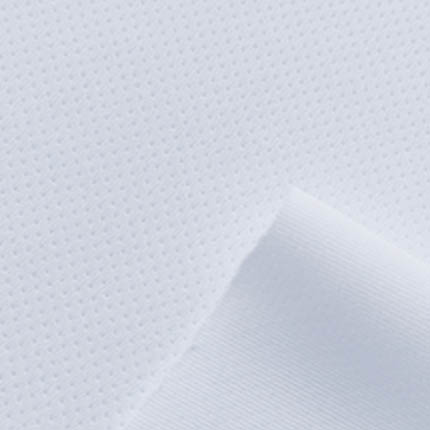
Bird eye mesh is one of the most iconic fabrics in sportswear. Named for the uniform circular perforations (0.5–1mm diameter) that resemble a bird's eye, it is produced via weft-knitting technology with a regular, neatly arranged hole pattern.
Core Advantages:
Feature | Benefit |
Moisture-Wicking Capillary Structure | "Bird eye" holes form capillary channels that rapidly diffuse and evaporate sweat. The 3D structure prevents clinging — always a "dry touch" feel. |
Balanced Breathability | Medium-sized perforations ensure steady airflow without excessive transparency. |
Durable & Wrinkle-Resistant | 100% polyester construction resists abrasion, tearing, deformation, and pilling through repeated washing. |
Dimensional Stability | The tuck-stitch structure offers better recovery than standard plain knits, with low shrinkage. |
Recommended Garments: Football jerseys, basketball jerseys, running vests, sports T-shirts, cycling wear, fishing shirts, team uniforms, quick-dry Polo shirts.
Ideal Scenarios: High-intensity cardio, team ball sports, summer outdoor running, gym training, corporate team uniforms. The top choice for sports team kits and event T-shirts.
Popular Specs: Weight range 120–220gsm, width 180–183cm. Available in multiple thicknesses for different seasons and applications.
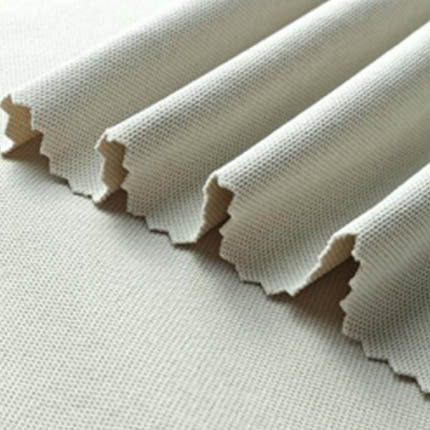
Pique fabric features a signature raised, textured surface — the classic "honeycomb" or "basket-weave" pattern that defines the Polo shirt. Polyester pique retains the crisp structure of traditional pique while adding quick-dry and breathable functionality.
Core Advantages:
Feature | Benefit |
Crisp, Structured Hand Feel | The pique construction gives the fabric natural body — garments stand up with a sharp silhouette, resisting collapse and wrinkles. |
Honeycomb Ventilation | The raised-and-recessed surface creates an air layer between fabric and skin, preventing sweat-induced clinging. |
Wash-and-Wear Durability | Polyester resists shrinkage and fading. Garments maintain their shape through repeated machine washing. |
Elastane-Upgraded Variants | Poly-Spandex pique adds stretch for unrestricted movement — ideal for golf and tennis. |
Recommended Garments: Business Polo shirts, golf wear, tennis wear, corporate uniforms, casual sports T-shirts, team-building apparel.
Ideal Scenarios: Business-casual commuting, golf/tennis and light sports, employee uniforms, branded event shirts, summer daily wear. Meets both athletic demands and polished appearance standards.
Popular Specs: 100% polyester: 130–230gsm. Poly-Spandex blend: 155–270gsm. Width: 170–193cm.
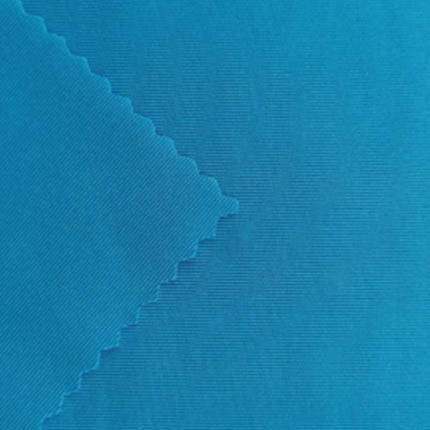
Poly-Spandex single jersey blends polyester with elastane in a single-knit construction. The face side is smooth, while the reverse has a subtle brushed texture. The Spandex content delivers exceptional 4-way stretch and recovery.
Core Advantages:
Feature | Benefit |
4-Way High Stretch | Spandex content ranging 5–13.5% enables unrestricted movement in all directions. |
Quick-Dry Breathability | Polyester fibers wick moisture far faster than cotton — dries quickly after sweating. |
Premium Matte Finish | Matte finishing eliminates cheap shine, delivering a refined, soft-surface aesthetic. |
Anti-Pilling Durability | High fiber tenacity resists sagging, snagging, and pilling through extended wear. |
Recommended Garments: Yoga wear, gym leggings, sports bras, fitted sports T-shirts, running apparel, loungewear, base layers.
Ideal Scenarios: Yoga & Pilates, gym strength training, running & cycling, home workouts, everyday layering. The top choice where body-hugging comfort meets functional performance.
Popular Specs: Weight 160–200gsm, Spandex ratio 5–13.5%. Choose higher Spandex content for greater compression.
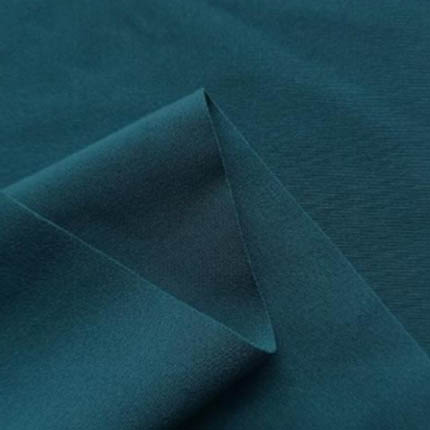
Interlock (double-knit) fabric is produced with a double-sided knitting process. Both sides are identical — smooth, flat, and uniformly textured — with a substantial, soft hand feel.
Core Advantages:
Feature | Benefit |
Double-Sided Smoothness | Identical face and reverse surfaces — no right/wrong side distinction, simplifying cutting and sewing. |
Substantial Yet Soft | Heavier and more substantial than single jersey, delivering comfort without being sheer. |
Superior Shape Retention | The double-knit structure is more stable — resists horizontal stretching and deformation. |
Universal Base Fabric | Compatible with solid colors, prints, embroidery, and diverse finishing treatments. |
Recommended Garments: Crew-neck sports T-shirts, hoodies, tracksuits, base layers, casual loungewear, children's activewear.
Ideal Scenarios: Daily casual sports, spring/autumn layering, team culture shirts, brand basic T-shirt lines. Broad GSM range covers spring through autumn.
Popular Specs: Weight 95–230gsm, width 158–183cm. From lightweight summer pieces to heavier autumn/winter variants.
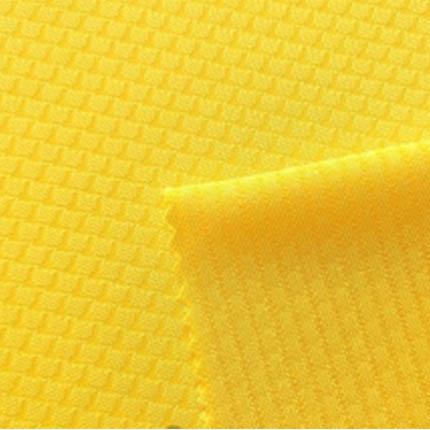
Honeycomb mesh features a regular hexagonal, raised-and-recessed surface texture. As a single-layer flat knit, it is lightweight, soft, and molds comfortably to the body.
Core Advantages:
Feature | Benefit |
3D Ventilation Structure | Hexagonal cavities form shallow air channels — highly efficient air circulation. |
High Visual Recognition | The unique honeycomb texture adds design sophistication beyond standard mesh — elevates product tier. |
Ultra-Light & Soft | Only 0.3–1mm thick — lightweight, flexible, and barely perceptible against the skin. |
Functional Upgrade-Ready | Compatible with moisture-wicking, water-repellent, and other finishing processes. |
Recommended Garments: Sports T-shirts, running vests, jersey linings, ventilation panel inserts, sun-protective inner layers.
Ideal Scenarios: Summer marathons, outdoor running, brand lines emphasizing design differentiation, garment ventilation zones. A specialty fabric that balances aesthetics and function.
Popular Specs: Weight 100–280gsm, width 160–183cm.
Scuba fabric, also known as air-layer fabric, uses a "face-middle-back" triple-layer sandwich construction. Connecting yarns between the two outer layers create a silent, insulating air pocket.
Core Advantages:
Feature | Benefit |
3D Structured Body | The built-in air layer gives garments natural structure — no collapsing, with a premium drape. |
Lightweight Insulation | The internal air pocket forms a natural thermal barrier — warmth without bulk. |
4-Way Stretch (Spandex Variants) | Elastane-containing versions deliver excellent elastic recovery — body-hugging without deformation. |
Wrinkle-Resistant Shape Retention | Resists creasing through wear and maintains silhouette through repeated laundering. |
Recommended Garments: Sports hoodies, baseball jackets, tracksuits, bomber jackets, joggers, skirts, dresses.
Ideal Scenarios: Spring/autumn sportswear layering, casual tracksuits, streetwear-inspired activewear, structured sports-fashion pieces. A trending fabric in the athleisure movement.
Popular Specs: 100% polyester: 220–280gsm. Poly-Spandex variants available at higher weights. Width: 150–183cm.
Butterfly mesh features elongated, butterfly-shaped perforations with 30–50% larger open area than bird eye mesh. It ranks among the most breathable sports meshes available.
Core Advantages:
Feature | Benefit |
Ultra-High Breathability | Oversized butterfly perforations maximize airflow — extreme heat dissipation efficiency. |
Ultra-Lightweight | Typically 95–150gsm — nearly weightless wearing sensation. |
Distinctive Texture | The butterfly pattern is highly recognizable with strong design appeal. |
Superior Quick-Dry | Large open area accelerates moisture evaporation. |
Recommended Garments: Summer sports vests, jersey ventilation panels, linings, sun-protective apparel, fishing shirts, breathable sports pants.
Ideal Scenarios: Peak-summer high-intensity sports, high-temperature workwear, garment ventilation zones, outdoor activities demanding maximum heat dissipation.
Popular Specs: Weight 95–180gsm. Available in 100% polyester and elastane-blend stretch variants.
Micro Cool mesh incorporates cooling fibers or a cooling finish on a polyester base, generating an instant temperature-drop sensation upon skin contact while retaining the mesh's breathable structure.
Core Advantages:
Feature | Benefit |
Instant Contact Cooling | Rapidly draws heat away from the skin on contact — Q-max value meets cooling standards (≥ 0.15 W/cm²). |
Breathable & Quick-Dry | Mesh structure + polyester fibers deliver dual-action moisture transport and evaporation. |
Stretch Variant Available | Elastane-containing versions provide body-hugging stretch for unrestricted movement. |
Perceived Temperature Drop | Wearers report a 2–3°C lower perceived temperature compared to standard fabrics. |
Recommended Garments: Cool-touch sports T-shirts, running apparel, gym wear, summer yoga wear, ice-silk sun-protective clothing.
Ideal Scenarios: Peak-summer outdoor sports, hot yoga, summer gym sessions, tropical climate activewear. Purpose-built for hot climates and heat-sensitive individuals.
Popular Specs: 100% polyester: 150gsm. Poly-Spandex: 125gsm. Width: 160–165cm.
Q1: Is quick-dry function just a chemical coating? Will it wash out?
A: This is the most frequently asked question. Genuine, high-quality quick-dry performance is not reliant on chemical coatings — it stems from the fiber's physical structure:
Type | Mechanism | Durability |
Physical Structure (Permanent) | Modified cross-section fibers (cross-shaped, Y-shaped, hollow) or mesh knit structures create permanent wicking channels. | 100+ washes with zero degradation. Our polyester mesh and pique series fall into this category. |
Chemical Agent (Temporary) | Hydrophilic agents are applied to the fabric surface. Good initial effect but fades after 10–20 washes. | Common in low-cost, low-quality fabrics. |
East Xinwei's sports fabrics are primarily physical-structure-based, verified through professional lab testing, with guaranteed wash durability.
Q2: Polyester vs. Nylon — which is better for sportswear?
A: There is no absolute winner — only scenario-specific advantages:
Attribute | Polyester | Nylon |
Quick-Dry Speed | Faster — top choice for heavy sweating | Moderate |
Abrasion Resistance | High | Higher — best for extreme durability needs |
Hand Feel | Crisp, structured | Softer, silkier — "bare-skin" sensation |
Color Fastness | Excellent | Good |
Price | More cost-effective | Typically higher |
Best For | Outdoor sports, team uniforms, general gym wear | Premium yoga wear, sports bras, next-to-skin compression garments |
Quick rule: Choose polyester for value and fast drying. Choose nylon for premium skin feel and high elasticity.
Q3: Are "cooling" and "quick-dry" the same thing?
A: No. They are two independent functions:
Cooling (Contact Cool Sensation): Addresses the "instant temperature drop upon touch." Achieved through rapid heat conduction from skin to fabric. National standards require Q-max ≥ 0.15 W/cm² to qualify as a cooling fabric.
Quick-Dry: Addresses "how fast sweat evaporates after you start sweating." Measured by moisture evaporation rate.
A cooling fabric is not necessarily quick-dry, and vice versa. Premium products can achieve both — our Micro Cool series delivers cooling + quick-dry dual functionality.
Q4: Does pilling automatically mean poor quality?
A: Pilling cannot be simplistically equated to poor quality. It requires objective understanding:
All knitted fabrics will pill to some degree — it is a natural result of fiber entanglement through friction.
Polyester fibers have high tenacity, so pills that form do not easily detach — they may appear more visible than on cotton.
High-quality fabrics undergo singeing, shearing, and anti-pilling finishing to significantly reduce pilling.
Judgment standard: Light initial pilling that stabilizes over time is normal. Large-scale, severe pilling that continuously worsens is a genuine quality issue.
Q5: How can I objectively evaluate moisture-wicking performance?
A: Assess across three dimensions:
Structure: Mesh > Pique > Plain knit. More and deeper perforations = better sweat transport.
Fiber type: Modified cross-section polyester > standard polyester > cotton. Physical wicking fibers outperform standard fibers.
Drop test: Place a water droplet on the fabric. Faster spread and more uniform absorption = better moisture management. Premium fabrics absorb and diffuse a droplet within seconds.
Q6: What functional finishes can be applied to sports fabrics?
A: East Xinwei supports a wide range of customized functional finishes:
Finish | Technology |
Moisture Wicking | Capillary-effect fiber structure or hydrophilic finishing |
Quick Dry | Enhanced evaporation through fiber and structure engineering |
UPF 50+ UV Protection | UV-blocking finishing — ≥ 98% UV blockage rate |
Anti-Bacterial / Anti-Odor | Silver ion (Ag+) or bamboo charcoal treatment |
Cooling Touch | Contact cool sensation finish (Qmax ≥ 0.15) |
Water-Repellent | DWR (Durable Water Repellent) treatment |
Brushed / Peached | Mechanical surface finishing for soft, sueded hand feel |
Custom combinations can be developed based on your product positioning and target scenarios.
A great sports fabric is the intersection of technology and craftsmanship — and the foundation of every wearing experience. From the versatile classics like bird eye mesh and pique to the distinctive specialties of honeycomb, scuba, butterfly mesh, and micro cool, every fabric has its ideal stage.
Fujian East Xinwei Textile Technology operates a complete vertical supply chain — from spinning and knitting to dyeing and finishing. Certified under GRS, ISO 9001, and OEKO-TEX Standard 100, with a monthly dyeing and finishing capacity exceeding 3,000 tons, our products reach 50+ countries worldwide. Whether you need proven best-sellers or specialized performance fabrics, we deliver stable, high-quality supply at scale.
Choosing the right fabric is choosing the soul of your product. We hope this guide helps you make more professional, precise decisions in sportswear fabric selection.
Fujian East Xinwei Textile Technology Co., Ltd. High-Performance Functional Knitted Fabrics — Sustainable Solutions Since 2010. [Inquiry Now]
Moisture management is one of the most important performance requirements in modern activewear. Running shirts, football jerseys, cycling tops, gym wear, and training uniforms must help wearers remain comfortable during movement and perspiration.
However, buyers often treat moisture-wicking fabric and quick dry fabric as if they mean the same thing. These properties are closely related, but they describe different stages of moisture management.
Moisture wicking refers to how effectively a fabric transfers perspiration away from the skin. Quick drying describes how rapidly that moisture evaporates after it has spread across the fabric. A material may perform well in one area without delivering equally strong results in the other.
Understanding moisture wicking vs quick dry performance helps sportswear brands choose fabrics according to garment construction, activity intensity, climate, fit, and end-user expectations.
A moisture-wicking fabric is designed to transfer liquid perspiration from the inner surface of a garment toward its outer surface.
This movement is generally supported by capillary action. Small spaces between fibers and yarns draw moisture through the fabric and distribute it across a larger surface area.
The main purpose is to reduce the amount of sweat remaining next to the wearer’s skin. When moisture spreads more evenly, the garment usually feels less wet and uncomfortable during exercise.
Moisture-wicking performance depends on several factors:
Fiber type
Yarn structure
Knitting construction
Fabric density
Fabric weight
Surface treatment
Finishing process
Polyester is widely used in performance apparel because it absorbs relatively little moisture. However, polyester fiber alone does not automatically produce effective wicking. The yarn, knitting structure, and finishing process must also support moisture transfer.
Mesh, bird-eye, honeycomb, jacquard, and engineered jersey structures can help guide moisture while improving airflow.
A quick dry fabric is designed to release moisture efficiently after it has been absorbed or transferred across the textile surface.
Drying speed depends partly on how much water the fiber retains. Polyester generally absorbs less moisture than cotton, which is why polyester sportswear often dries faster after exercise or washing.
Fabric construction also affects drying time. A lightweight, open-knit structure normally dries faster than a dense and heavy fabric because more surface area is exposed to moving air.
The main factors affecting drying performance include:
Fiber moisture absorption
Fabric GSM
Knit openness
Yarn size
Air permeability
Exposed surface area
Environmental temperature
Humidity
A fabric may spread moisture effectively but still dry slowly if it is thick, dense, or highly absorbent. In contrast, a lightweight material may dry quickly without moving perspiration away from the skin particularly well.
For this reason, buyers should not evaluate drying performance based only on fiber composition.
| Comparison Point | Moisture-Wicking Fabric | Quick-Dry Fabric |
|---|---|---|
| Main function | Moves perspiration away from the skin | Helps moisture evaporate rapidly |
| Primary mechanism | Capillary transfer and surface spreading | Low moisture retention and increased evaporation |
| Main wearer benefit | Reduces wetness next to the skin | Shortens the time the garment remains damp |
| Key influencing factors | Yarn, knit structure, density, and finish | Fiber absorption, GSM, airflow, and surface area |
| Typical applications | Running, cycling, football, and gym wear | Training shirts, outdoor sportswear, and travel apparel |
| Testing focus | Moisture transfer and spreading | Drying rate and remaining moisture |
High-performance sportswear usually requires both properties. Perspiration should first move away from the wearer’s skin, spread across the outer fabric surface, and then evaporate efficiently.
Fabric construction can influence moisture performance as much as fiber content.
A smooth jersey surface can provide comfortable skin contact, while a textured structure may create channels that help moisture move through the fabric. Open mesh can improve ventilation, although excessively large openings may reduce coverage or affect printing quality.
Common structures used in sportswear fabric include the following.
Bird-eye mesh contains small, evenly distributed openings. It is widely used in football shirts, training tops, sports T-shirts, and breathable uniforms.
The structure improves airflow and gives the fabric a recognizable athletic appearance.
Honeycomb fabric has a raised or cellular surface. This textured construction can support ventilation while giving the finished garment a more distinctive appearance.
It is suitable for sports T-shirts, football jerseys, basketball uniforms, and training apparel.
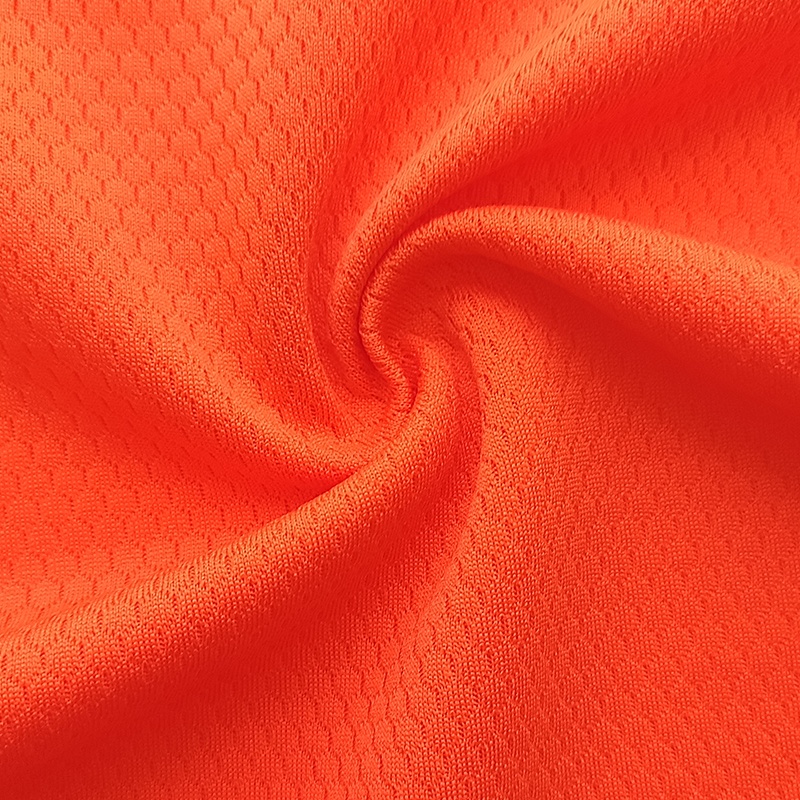
Interlock is smoother and normally denser than mesh. It provides better coverage, dimensional stability, and durability.
Lightweight polyester interlock is commonly used for running shirts, cycling tops, and team uniforms. Polyester spandex interlock can also be used for stretch activewear.
Jacquard knitting creates patterns directly in the fabric structure. These patterns can improve appearance and may also be designed to support airflow in selected zones.
Jacquard structures are suitable for sports brands that want performance and visual differentiation within the same fabric.
Polyester is one of the most common choices for dry fit fabric because it absorbs little water, dries efficiently, and supports a wide range of functional finishes.
It is suitable for:
Running shirts
Football jerseys
Cycling apparel
Gym tops
Training uniforms
Tracksuits
Polyester also works well with sublimation printing, making it practical for customized teamwear and sports jerseys.
Nylon normally provides a softer surface and smoother hand feel. It is frequently used for yoga wear, leggings, sports bras, and fitted gym apparel.
Although nylon absorbs more moisture than polyester, a well-engineered nylon fabric can still provide effective moisture management. Its final performance depends on GSM, yarn selection, knitting density, and finishing.
Cotton absorbs moisture readily, which can feel comfortable during light activity. However, it may retain perspiration and remain wet for longer than polyester.
Cotton-polyester blends offer a balance between natural hand feel, dimensional stability, and drying performance. They are often used in casual sportswear, polo shirts, T-shirts, and low-intensity training apparel.
Running tops and gym shirts require rapid moisture transfer, strong airflow, and low garment weight.
Lightweight polyester mesh, bird-eye, or jersey fabrics are practical starting points. Buyers should also assess chafing risk, seam placement, drying speed, and performance after repeated washing.
Team jerseys require breathability, durability, printing compatibility, and color consistency.
Polyester mesh and jacquard fabrics are commonly selected because they support ventilation and customized graphics. The fabric should also resist snagging and distortion during frequent use.
Cycling garments require moisture management, stretch, aerodynamic fit, and comfort during prolonged body contact.
A smooth polyester spandex fabric may be used for the main body, while mesh panels can be placed under the arms, across the back, or in other high-heat areas.
Yoga and studio garments prioritize softness, stretch recovery, coverage, and comfort.
Nylon spandex or polyester spandex interlock fabrics are often suitable. Moisture performance remains important, but it must be balanced with opacity, support, and shape retention.
Outdoor training apparel may require moisture management together with cooling, UV protection, or antibacterial performance.
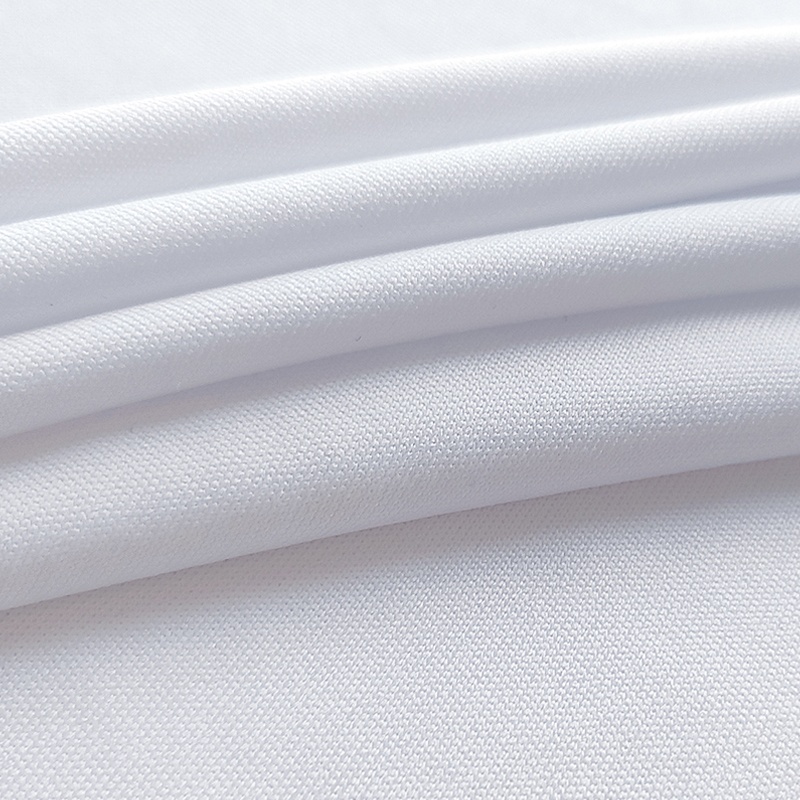
For sports-inspired T-shirts, polo shirts, and travel apparel, buyers may choose polyester, cotton blends, or functional pique fabrics.
The final choice depends on whether the brand prioritizes fast drying, natural softness, easy care, or everyday comfort.
Marketing descriptions such as “quick dry,” “moisture wicking,” or “Dri-Fit” should be supported by sample evaluation and relevant testing.
Before bulk production, buyers should confirm:
Fabric composition
Finished GSM
Usable width
Knit structure
Moisture-spreading performance
Drying time
Air permeability
Shrinkage after washing
Colorfastness
Functional durability after repeated laundering
A simple water-drop test can provide an initial indication of moisture spreading, but it should not replace standardized laboratory testing.
The finished fabric should also be evaluated in the intended color and construction. Dyeing, printing, brushing, heat setting, and other finishes may influence moisture behavior.
East Xinwei supplies functional fabric for running apparel, football jerseys, cycling wear, gym clothing, yoga wear, sports T-shirts, and other performance garments.
Available development directions include:
Moisture-wicking polyester fabric
Quick-dry mesh and jersey
Bird-eye and honeycomb structures
Polyester spandex fabric
Nylon spandex fabric
Cooling fabric
Antibacterial fabric
UPF fabric
Recycled polyester and recycled nylon options
To receive a suitable fabric recommendation, buyers should provide the garment type, target composition, GSM, usable width, color, stretch requirement, functional performance, estimated order quantity, and intended market.
Specialized function fabrics engineered for maximum performance and comfort. Integrating moisture-wicking, UV resistance, 4-way stretch, and eco-friendly materials such as recycled polyester and ocean-recycled nylon, our textiles support sportswear, outdoor gear, and technical apparel with durability, sustainability, and certified quality.
As a trusted fabric manufacturer and supplier in the textile industry, East Xinwei delivers top-tier functional textiles tailored to your needs, ensuring superior fabric materials that enhance product performance and market appeal.
Fabric weight is one of the first specifications buyers review when developing sportswear. It affects coverage, breathability, drape, warmth, durability, printing, and the feel of the finished garment. However, selecting the right GSM is not as simple as choosing a heavier fabric for better quality or a lighter fabric for better comfort.
GSM means grams per square meter. It indicates how much one square meter of fabric weighs, but it does not directly describe thickness, softness, stretch, or performance. Two fabrics with the same GSM can feel different because of their fiber composition, yarn size, knitting structure, density, and finishing process.
Brands should therefore use GSM as one part of a complete specification. The intended garment, climate, activity level, fit, opacity requirement, and target cost should all be considered before sampling begins.
GSM provides a standardized way to compare fabric weight. A 150 GSM fabric is generally lighter than a 250 GSM fabric, but weight alone does not determine whether it is suitable for a particular garment.
When selecting sportswear fabric, buyers should review GSM together with composition, knit construction, usable width, stretch direction, recovery, shrinkage, surface texture, and functional finishing.
A compact polyester interlock may provide more coverage than an open mesh with a similar weight. A brushed fabric can feel thicker because its raised surface traps more air. Buyers comparing types of sportswear fabrics should therefore request physical samples rather than rely only on a GSM number.
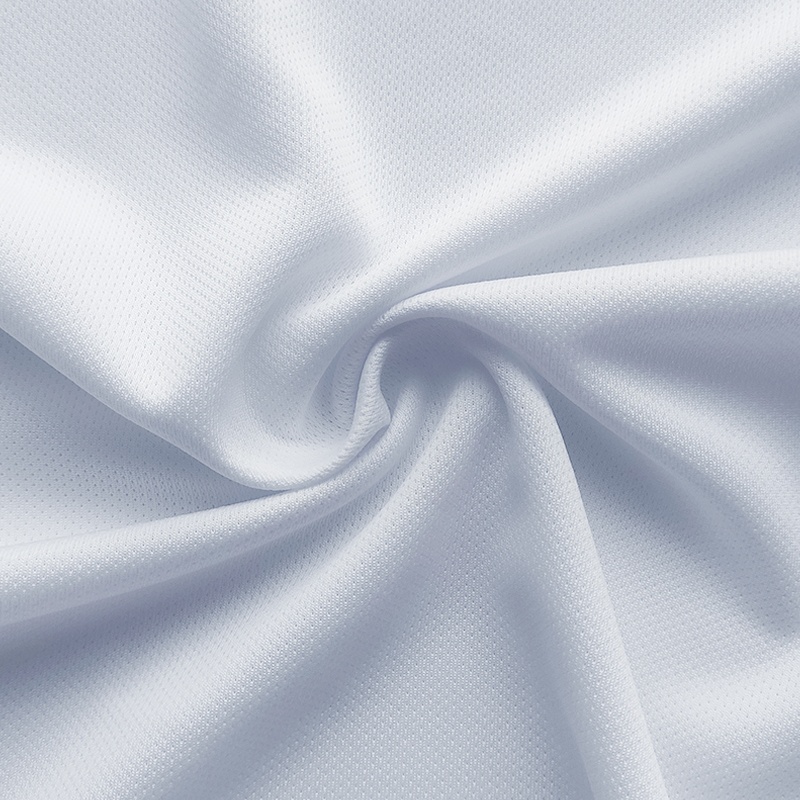
The following ranges are useful development starting points rather than fixed rules. The final specification should be confirmed through fabric and garment testing.
| Garment | Common Starting Range | Main Priorities |
|---|---|---|
| Running and training shirts | 120–180 GSM | Breathability and fast drying |
| Football and basketball jerseys | 120–180 GSM | Ventilation, printing, durability |
| Sports T-shirts | 150–210 GSM | Comfort, coverage, shape retention |
| Polo shirts | 180–240 GSM | Structure, drape, collar balance |
| Leggings | 220–300 GSM | Opacity, recovery, support |
| Sports bras | 230–320 GSM | Stability, coverage, compression |
| Tracksuits | 220–320 GSM | Structure, movement, durability |
| Hoodies and joggers | 280–400 GSM | Warmth, body, softness |
For leggings, low weight can improve flexibility, but an excessively light fabric may become transparent when stretched. A suitable leggings fabric must provide enough coverage at the intended color and stretch level.
Medium-weight nylon spandex or polyester spandex interlock is often selected because it can combine a smooth appearance, four-way stretch, and shape recovery. Higher GSM does not automatically prevent show-through, however. Knitting density, yarn coverage, fabric color, and stretch percentage are equally important.
When evaluating 4 way stretch fabric, brands should test:
Opacity during bending and stretching
Recovery after repeated extension
Waistband stability
Pilling resistance
Seam performance
Dimensional change after washing
Sports bras may require a firmer construction than matching leggings, especially for medium- or high-impact designs. The fabric must provide adequate stability without making the garment uncomfortable or restricting movement.
A lightweight football jersey fabric should help reduce heat buildup while supporting printing, seam strength, and repeated washing. Mesh, bird-eye, jacquard, and lightweight interlock structures are commonly used for football, basketball, running, and training apparel.
Very open mesh can improve airflow, but it may affect the sharpness of detailed printed graphics. A smoother polyester structure can provide a more even surface for printing while still supporting moisture management.
The final selection should balance:
Air permeability
Moisture spreading
Drying speed
Snagging resistance
Printing quality
Seam durability
Comfort against the skin
Some performance jerseys combine several fabric structures. A smooth main-body fabric may be paired with a more open mesh under the arms or across the back to improve ventilation in high-sweat areas.
Sports T-shirts generally sit between lightweight jerseys and heavier lifestyle garments. A lower GSM can suit hot-weather running, gym training, and promotional sportswear, while a medium weight normally provides better coverage and a less transparent appearance.
Fabric construction is just as important as weight. A lightweight polyester jersey may feel smooth and dry quickly, while bird-eye or honeycomb structures can create additional airflow. Cotton blends may provide a softer casual feel but usually manage moisture differently from polyester performance fabrics.
Buyers should also consider whether the T-shirt will be loose-fitting or close-fitting. A fitted garment normally needs better stretch, recovery, and coverage than a relaxed training shirt.
For polo shirt fabric, GSM is only one part of the decision. Pique structure, fiber composition, shrinkage, collar stability, surface pilling, and drape all influence the finished garment.
Cotton-rich pique can provide a traditional hand feel and breathable wearing experience. Polyester or recycled polyester pique can support faster drying, easier care, and functional finishing. Cotton-polyester blends may offer a balance between comfort and dimensional stability.
The body fabric should be approved together with the collar and cuffs. A body fabric that is too light may not balance well with a heavy rib collar, while a fabric that is too heavy can make the polo feel stiff in warm conditions.
Hoodies and joggers normally require more body and warmth than performance tops. French terry, fleece, double-knit polyester, cotton blends, and stretch sweatshirt fabrics are common options.
A heavier hoodie fabric may feel more substantial, but it can also increase garment weight, drying time, shipping cost, and heat retention. Buyers should select GSM according to the season, target climate, and market positioning rather than assuming the heaviest option is always the best.
For lightweight training tracksuits, a smooth polyester double knit may be more suitable than thick fleece. It can provide structure and durability without adding excessive warmth.
For autumn and winter hoodies, brushed fleece or heavier French terry can provide additional insulation and softness. Stretch may also be added when the garment requires greater freedom of movement.
Fabric quality depends on more than weight. A heavy fabric can still have poor recovery, inconsistent color, excessive shrinkage, or an unstable surface. A lighter fabric can perform well when it uses suitable yarns, compact knitting, and controlled finishing.
The correct question is not simply, “What is the highest GSM available?” Instead, buyers should ask:
Does the fabric provide the required coverage?
Does it recover after stretching?
Is it comfortable in the intended climate?
Can it meet the required printing or dyeing process?
Does it maintain its width and weight after washing?
Is the fabric suitable for the garment’s price positioning?
Selecting excessive weight can increase material consumption and shipping cost without creating a meaningful improvement in garment performance.
GSM can change during dyeing, finishing, heat setting, and washing. Buyers should confirm whether a quoted weight refers to greige fabric, finished fabric, or finished fabric after washing.
A practical purchase specification should include:
Target finished GSM and permitted tolerance
Fiber composition
Finished usable width
Color and finishing requirements
Stretch and recovery
Shrinkage limits
Testing method
Approved sample or sealed standard
Measurements should be taken from several areas of the fabric because the edge and center of a roll may vary. Bulk inspection should compare GSM with width, appearance, color, and hand feel rather than checking weight in isolation.
East Xinwei supplies knitted fabrics for leggings, sports bras, jerseys, training shirts, polo shirts, tracksuits, hoodies, joggers, and other activewear products.
Available fabric directions include:
Polyester and polyester spandex fabrics
Nylon spandex fabrics
Mesh and jacquard structures
Cotton and cotton-blend fabrics
Pique fabric
French terry and fleece
Moisture-wicking and quick-dry finishes
Cooling, antibacterial, and UV-protection options
Recycled polyester and recycled nylon fabrics
For a more accurate recommendation, buyers should provide the garment type, target GSM, composition, usable width, color, stretch requirement, hand feel, intended market, estimated quantity, and required tests.
Choosing the right fabric GSM requires more than matching a garment name to a standard weight range. GSM should be assessed together with composition, knitting structure, density, stretch, opacity, finishing, climate, and end-use requirements.
Lightweight fabrics can improve ventilation and reduce garment weight, while medium- and heavyweight fabrics can provide greater coverage, structure, warmth, or support. The best choice is the fabric that meets the finished garment’s performance and appearance requirements after testing.
East Xinwei supports fabric selection and sample development for different sportswear applications. Brands and garment manufacturers can provide their target garment specifications to compare suitable fabric constructions before moving into bulk production.
Dry Fit is a high-performance synthetic fabric engineered for rapid moisture-wicking and quick-drying, primarily used in sportswear and outdoor apparel. Composed of polyester or nylon blended with spandex, its hydrophobic fibers create capillary action to pull sweat away from the skin, accelerating evaporation. Innovations like Nike’s Dri-FIT technology utilize microporous structures for breathability and lightweight comfort, ideal for running, yoga, or cycling. Unlike cotton, Dry Fit minimizes chafing, retains shape during intense activity, and often integrates UV resistance or antimicrobial treatments. Brands like Columbia and The North Face enhance it with coatings (e.g., Omni-Tech) for weatherproof versatility
Hot-weather exercise can feel demanding even before a workout begins. High temperatures, direct sunlight, humidity, and perspiration all affect how comfortable sportswear feels during running, cycling, gym training, hiking, and outdoor yoga.
The right clothing cannot change the weather, but it can help the body manage heat and moisture more comfortably. This is where cooling fabric becomes valuable. By combining suitable fibers, lightweight knitting structures, airflow, moisture management, and functional finishing, cooling sportswear can create a fresher and lighter wearing experience during summer activities.
For consumers choosing warm-weather activewear, comfort depends not only on appearance. Breathability, drying speed, stretch, softness, and garment construction all influence how clothing performs during movement.
Cooling fabric is a functional textile developed to support a cooler, drier, and more comfortable feeling during wear. It may use specially selected fibers, yarn structures, knitted surfaces, or cooling finishes to reduce the heavy and sticky sensation often associated with hot-weather clothing.
Some cooling textiles provide a cool-touch sensation when they first contact the skin. Others improve comfort by spreading perspiration, increasing airflow, or helping moisture evaporate more efficiently.
A well-designed cooling sportswear fabric may include several characteristics:
Lightweight construction
Breathable knitting
Moisture spreading
Quick-dry performance
Smooth contact with the skin
Flexible stretch
Low moisture retention
Cooling performance should be viewed as a complete fabric system rather than a single feature. Fiber composition, yarn type, GSM, knitting density, surface texture, and finishing process all contribute to the final wearing experience.
For example, a lightweight mesh fabric may support airflow, while a smooth jersey construction may provide softer skin contact. A stretch interlock fabric can offer coverage and flexibility for fitted activewear.
During physical activity, the body produces perspiration to help regulate temperature. If clothing holds too much moisture against the skin, it may begin to feel heavy, damp, and uncomfortable.
A suitable summer workout fabric helps manage this moisture by moving it across the textile surface and exposing it to airflow. This supports faster evaporation and reduces the amount of sweat concentrated in one area.
Cooling activewear can improve comfort in several ways.
First, breathable knitting structures allow warm air to escape more easily. Mesh, bird-eye, honeycomb, and lightweight jersey constructions are commonly used in summer sportswear because they create space for airflow.
Second, moisture wicking fabric helps move perspiration away from the inner surface of the garment. This prevents moisture from remaining concentrated next to the skin.
Third, quick dry fabric helps the garment release moisture more efficiently. This is useful during long workouts, repeated training sessions, and outdoor travel.
Finally, lightweight and flexible fabrics reduce the feeling of restriction. They allow the garment to move naturally with the body during stretching, running, cycling, and strength training.
Cooling clothing is not only about feeling cold. Its main value is helping the wearer remain lighter, drier, and more comfortable throughout activity.
Cooling textiles can be used across many summer activities and garment types.
Running creates continuous body heat and perspiration. Lightweight breathable sportswear with moisture management can help reduce discomfort during outdoor or treadmill sessions.
Suitable garments include running T-shirts, sleeveless tops, shorts, and lightweight jackets.
Gym clothing needs freedom of movement as well as moisture control. Cooling polyester jersey, mesh panels, and stretch fabrics can be used for training tops, leggings, sports bras, and fitted shorts.
Cycling garments remain close to the body for extended periods. A smooth, quick-drying fabric can provide comfort, while strategically placed mesh panels may increase ventilation around the back and underarm areas.
Summer hiking requires clothing that remains comfortable through changes in temperature and activity level. Cooling T-shirts, lightweight long-sleeve tops, and UV-protective garments can support outdoor comfort.
Outdoor yoga, Pilates, and stretching require soft, flexible fabrics that move with the body. Cooling stretch fabrics can combine a smooth hand feel with moisture management and four-way stretch.
Performance materials are also suitable for travel, commuting, and casual clothing. Cooling polo shirts, T-shirts, dresses, and athleisure garments can provide everyday comfort without looking overly technical.
Consumers can evaluate several features when selecting clothing for hot-weather exercise.
Breathability: Look for lightweight knitted structures, mesh panels, or textured surfaces that allow air to move through the garment.
Moisture management: A good sportswear fabric should help spread perspiration rather than allowing it to remain concentrated against the skin.
Drying speed: Fast-drying garments are particularly useful for running, travel, gym sessions, and repeated wear.
Softness: Summer activewear should feel smooth and comfortable, especially around the neck, underarms, waist, and other high-contact areas.
Stretch: Flexible fabrics support natural movement during exercise. Leggings, cycling apparel, yoga wear, and fitted tops usually benefit from four-way stretch.
Garment fit: A very tight garment may feel warmer if the fabric has limited airflow. A relaxed or body-mapped design can improve comfort depending on the activity.
Outdoor protection: For running, hiking, cycling, and water sports, consumers may also look for UPF protection.
Care instructions: Proper washing helps maintain softness, stretch, moisture management, and surface quality. Following the garment label is the safest way to preserve performance.
No single feature determines comfort. The best summer activewear combines appropriate fabric, garment design, fit, and intended use.
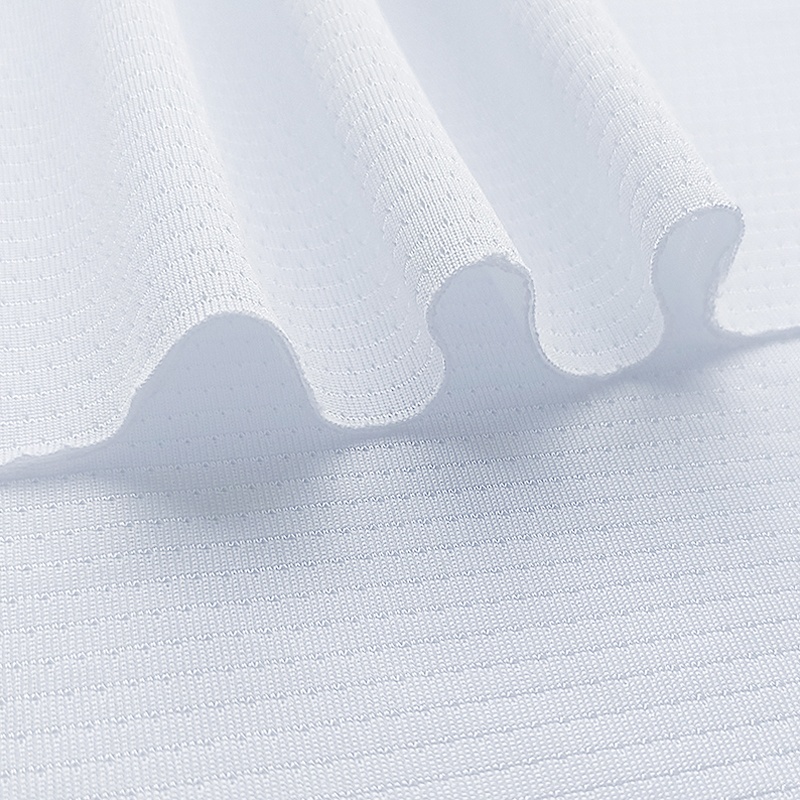
East Xinwei develops knitted fabrics for running shirts, gym wear, cycling apparel, yoga clothing, team uniforms, sports T-shirts, and other activewear applications.
Available development directions include cooling fabric, moisture-wicking jersey, quick-dry polyester fabric, breathable mesh, bird-eye structures, honeycomb fabric, stretch interlock, antibacterial fabric, UPF fabric, and recycled performance materials.
Different garments require different combinations of softness, airflow, stretch, coverage, and drying performance. A lightweight running shirt may use breathable mesh or jersey, while leggings and yoga wear may require a denser four-way stretch construction with cooling and moisture-management functions.
For sportswear brands and garment manufacturers, East Xinwei can recommend fabric directions based on the intended garment, composition, weight, width, color, stretch, hand feel, and functional requirements.
Comfortable summer sportswear begins with a fabric that helps manage heat, movement, and perspiration. By selecting breathable, lightweight, and quick-drying materials, consumers can enjoy a fresher wearing experience during exercise and daily activities.
Explore East Xinwei’s functional sportswear fabrics and share your product requirements to develop a suitable cooling textile solution.
UPF50+ fabric blocks over 98% of harmful UV rays (UVA/UVB), ideal for prolonged outdoor activities. Made frompolyester or nylon blendswith dense weaves, it combinesnatural UV resistance with lightweight breathability. Advanced treatments like TiO₂/ZnO coatingsor UV-absorbent finishes enhance protection without compromising airflow. Its quick-drying,abrasion-resistant properties suit high-intensity sports(e.g., surfing, hiking), while flatlock seams and multi-panel designs ensure flexibility. Certified under standards like GB/T 18830and AATCC 183, UPF50+ balances sun safety with performance durability.
Anti-bacterial fabric is a specialized textile designed to inhibit or eliminate harmful microorganisms (e.g., bacteria, fungi) through chemical, physical, or biological mechanisms. It prevents bacterial growth, reduces odors, and enhances hygiene, making it ideal for medical, sportswear, and daily-use applications
Cooling fabrics achieve thermal regulation through moisture-wicking, radiation, and evaporation. Advanced materials like PP/POE@ZnO microfibers use porous structures to reflect >90% solar radiation and emit heat via infrared, enabling daytime radiative cooling. CoolMax employs micro-grooved fibers to rapidly wick sweat, enhancing evaporative cooling (5× faster drying than cotton). Hybrid designs integrate phase-change materials (e.g., graphene) or bio-based membranes for dynamic heat absorption. Breathable, waterproof layers (e.g., 2.5-layer laminates) balance airflow and durability. Sustainable innovations include fluorine-free DWR coatings and recycled polymers. Certifications like OEKO-TEX® ensure safety and performance. Ideal for sportswear and outdoor gear.
Choosing the right stretch fabric affects fit, comfort, durability, color, production cost, and the final positioning of an activewear collection. Two of the most common options are polyester spandex fabric and nylon spandex fabric. Both provide elasticity and shape recovery, but they perform differently in finished garments.
Polyester blends are often selected for fast-drying sports tops, teamwear, cycling apparel, and scalable performance collections. Nylon blends are frequently preferred for premium leggings, yoga wear, sports bras, and other close-fitting garments where softness matters.
The better choice depends on the intended product, target price, desired hand feel, finishing requirements, and testing standards.
Polyester spandex fabric combines polyester yarn with elastane to create a stretchable textile that is durable, easy to care for, and suitable for repeated movement.
Depending on its knitting structure and finishing process, it can be produced as single jersey, interlock, mesh, jacquard, brushed fabric, or other performance constructions.
Polyester contributes dimensional stability, wrinkle resistance, and relatively low moisture absorption. Spandex adds elasticity and helps garments return to their original shape after stretching.
This combination works well for:
Running shirts
Cycling jerseys
Gym tops
Tracksuits
Team uniforms
Leggings
Swimwear
Sports jackets
Polyester blends can also support sublimation printing, quick-dry finishes, UV protection, cooling treatments, and recycled polyester options. These characteristics make them practical for performance collections that require consistent production across multiple colors and styles.
Nylon spandex fabric, also called polyamide elastane fabric, combines nylon’s smooth surface and abrasion resistance with the stretch and recovery of spandex.
It is commonly used for yoga leggings, sports bras, fitted gym wear, swimwear, compression garments, and premium athleisure.
Compared with many polyester blends, nylon spandex usually offers a softer and more refined touch. It can create a smooth, close-to-skin feeling that works especially well for garments designed to follow body movement.
Nylon spandex can be produced with different surface effects, including:
Matte finishes
Brushed surfaces
Ribbed structures
Single jersey
Interlock
Jacquard patterns
However, fiber composition alone does not determine performance. Yarn specification, fabric weight, knitting density, dyeing, heat setting, and finishing also affect softness, recovery, pilling resistance, and color consistency.
| Comparison Point | Polyester Spandex | Nylon Spandex |
|---|---|---|
| Hand feel | Smooth to slightly crisp; brushing can increase softness | Usually softer, silkier, and more skin-friendly |
| Moisture behavior | Low moisture absorption and generally fast drying | Absorbs more moisture but can still dry efficiently |
| Abrasion resistance | Durable for regular sportswear applications | Often preferred for high-friction, close-fitting garments |
| Color and printing | Suitable for sublimation and teamwear production | Suitable for rich solid colors and premium matte appearances |
| Cost direction | Often more economical for larger programs | Frequently positioned at a higher level |
| Common applications | Jerseys, running tops, cycling wear, and tracksuits | Leggings, yoga wear, sports bras, and swimwear |
| Recycled options | Recycled polyester is widely available | Recycled nylon is available for selected programs |
Both materials can be engineered as 4 way stretch fabric, but the presence of spandex does not automatically guarantee good recovery.
A fabric may stretch significantly yet still show bagging at the knees, waistband, elbows, or seat after repeated wear. This is why stretch percentage should not be the only factor considered during fabric selection.
For leggings fabric and sports bra materials, recovery should be evaluated together with:
Fabric weight
Knitting density
Stretch modulus
Compression level
Repeated extension
Heat-setting quality
A softer fabric is not always more supportive, while a firmer fabric is not automatically more durable.
Nylon spandex often feels smoother during deep stretching and body movement. Polyester spandex can provide a slightly more structured feel and may be easier to adapt across several garments in the same collection.
Polyester absorbs relatively little moisture, which is one reason it is widely used in performance tops and outdoor sportswear.
When combined with a suitable knit structure or moisture-management finish, polyester fabric can spread perspiration across a larger surface and support faster evaporation.
Nylon absorbs more moisture than polyester. This can contribute to a comfortable hand feel, but its drying performance should still be tested for the intended application.
A lightweight nylon jersey behaves differently from a dense nylon interlock. Similarly, an open polyester mesh performs differently from a brushed polyester fabric.
The safest approach is to compare tested samples made with the intended:
Fabric construction
GSM
Color
Finishing treatment
Garment design
Washing method
A general fiber description cannot fully predict how the final garment will perform.
Polyester spandex is a practical option for sublimated jerseys, cycling apparel, football shirts, and other types of printed teamwear because polyester works well with heat-transfer printing.
It is also suitable for solid-dyed activewear, textured jacquards, mesh fabrics, and brushed winter sportswear.
Nylon spandex is often selected when a collection requires rich solid colors, a premium matte appearance, a smooth surface, or a soft-touch finish. It can work especially well for minimal yoga collections and fashion-led athleisure.
Color approval should always be completed on the actual fabric construction. The same color standard may look different on polyester and nylon because of differences in:
Fiber luster
Surface texture
Dye affinity
Knitting density
Finishing process
Brands should therefore approve lab dips and bulk color samples on the final fabric rather than relying only on a digital color reference.
For premium yoga leggings, fitted shorts, and soft sports bras, nylon spandex is often the stronger starting point.
Its smooth touch and body-conforming stretch can improve comfort during bending, stretching, and low-impact training. Dense nylon interlock structures can also provide coverage and support.
Polyester spandex can still be suitable when the collection requires quick drying, printed designs, recycled polyester content, or more cost-efficient production.
For running shirts, football jerseys, cycling tops, and printed team uniforms, polyester spandex is frequently more practical.
It supports quick-dry performance, printing flexibility, durability, and scalable production. Mesh or jacquard constructions can also be used to improve ventilation in high-sweat areas.
Polyester spandex is commonly selected for tracksuit set, training pants, and school sports uniforms because it combines structure, durability, elasticity, and easy-care performance.
Nylon spandex may be used when the collection requires a smoother, lighter, or more premium appearance.
Either fiber can be suitable for swimwear.
The decision should be based on:
Chlorine resistance
UV protection
Colorfastness
Recovery after wet stretching
Resistance to saltwater
Required hand feel
Intended frequency of use
For multi-category activewear collections, using both materials can be more effective than forcing one fabric across every product.
East Xinwei supplies different sportswear fabric constructions for yoga wear, leggings, sports bras, swimwear, cycling apparel, gym wear, team jerseys, and tracksuits.
Available product directions include:
Polyester spandex jersey and interlock
Nylon spandex single jersey and interlock
Four-way stretch jacquard fabric
Recycled polyester spandex blends
Recycled nylon spandex blends
Stretch mesh structures
Quick-dry and moisture-wicking finishes
Cooling, antibacterial, and UPF options
For a new fabric development, provide the garment type, target composition, GSM, usable width, color, hand feel, stretch direction, functional requirements, estimated order quantity, and intended market.
These details help the fabric team recommend a suitable construction and prepare relevant samples.
There is no universal winner in the polyester spandex vs nylon spandex comparison.
Polyester spandex is often the more practical option for fast-drying tops, printed sportswear, team uniforms, cycling apparel, tracksuits, and cost-sensitive production programs.
Nylon spandex is often favored for premium leggings, yoga wear, sports bras, swimwear, and close-fitting garments that require a softer touch and smooth appearance.
The final decision should be based on the finished garment rather than the fiber name alone. By comparing fabric construction, GSM, stretch recovery, color, finishing, testing results, and cost, brands can select a material that performs consistently from sampling through bulk production.
East Xinwei supports customized fabric selection and sample development for different activewear applications. Share your specifications and intended garment use to discuss a suitable polyester spandex or nylon spandex solution.
Function fabrics are revolutionizing outdoor and sportswear by merging advanced material science with user-centric design. Here’s how they elevate performance across critical dimensions:
Sportswear competition has moved beyond looks. A premium sports T-shirt must wick sweat in seconds, cool on contact, block UV rays, and resist odor — and these are not marketing claims. Each function is a measurable physical metric, verifiable in a laboratory.
Fujian East Xinwei Textile Technology has built a complete Functional Fabric lineup spanning moisture-wicking, quick-dry, cooling, UPF 50+, and silverion antibacterial performance. This guide presents 4 classic best-sellers and 4 specialty fabrics — parameters, the science, garment applications, and the procurement questions brand buyers ask most.
Functional fabrics are textiles engineered — through fiber modification, structural design, or finishing treatment — to deliver performance beyond basic coverage.
The six core functions:
Function | What It Does |
Moisture Wicking | Transports sweat from the skin to the fabric's outer surface for evaporation |
Quick Dry | Accelerates moisture evaporation — fabric dries fast after sweating |
Cooling | Removes heat on skin contact — instant perceived temperature drop |
UPF 50+ | Blocks UV radiation — protects skin during outdoor activity |
Anti-Bacterial | Inhibits bacterial growth — reduces odor |
Water-Repellent | Surface bead-up effect — resists light rain and splashes |
Critical buyer distinction — fiber-level vs. coating-level technology:
Technology | How It Works | Wash Durability |
Fiber-Level (Permanent) | Modified cross-section fibers (cruciform, Y-shape, grooved) or mineral particles embedded during melt-spinning | 100+ washes, no decay. The function is the fiber itself. |
Coating-Level (Temporary) | Chemical agents applied to the fabric surface | Degrades after 10–20 washes. Budget fabrics rely on this. |
Procurement rule: ask which functions are fiber-level and which are finish-level. Fiber-level functions justify premium pricing; coating-level functions should be priced as commodities.
Parameter | Detail |
Style | EY-4 |
Composition | 100% Moisture-Wicking Polyester |
Weight × Width | 145gsm × 183cm |
Uses modified cross-section polyester fibers (cruciform, Y-shaped, or grooved) whose micro-capillary channels transport sweat several times faster than standard round polyester.
Key Advantages:
3-second sweat diffusion—capillary action spreads moisture instantly across the surface, no clinging
Bird-eye ventilation—circular perforations create air channels for efficient heat dissipation
Permanent structure-based wicking—100 washes, zero decay
Best cost-performance—the volume seller of the category
Best For: Sports T-shirts, running vests, football/basketball jerseys, team uniforms, quick-dry Polos, gym wear.
Parameter | Detail |
Style | FD07 |
Composition | 100% Polyester |
Weight × Width | 140gsm × 180cm |
Double-knit construction with identical face and reverse sides. Polyester's inherent hydrophobicity plus quick-dry finishing delivers fast evaporation.
Key Advantages:
Double-sided smooth — no right/wrong side, simplifies cutting and sewing
Efficient quick-dry — fiber + finish accelerates evaporation
Substantial soft hand feel — more body than single jersey, not sheer
Versatile base — solid colors, printing, and embroidery all compatible
Best For: Crew-neck sports T-shirts, hoodies, tracksuits, base layers, team culture shirts. The most adaptable functional fabric, covering spring through autumn.
Parameter | Detail |
Style | FU07 |
Composition | 100% Polyester |
Weight × Width | 140gsm × 180cm |
UV-blocking agents integrated into the fiber (fiber-level, not surface coating) block 98%+ of UVA/UVB, meeting the highest textile sun-protection rating, UPF 50+.
Key Advantages:
UPF 50+—highest textile UV rating; blocks 98%+ of UVA/UVB
Lightweight 140gsm—comfortable in summer heat
Wash-stable protection—retains UPF 50+ after 50 washes
Smooth jersey surface—comfortable against skin
Best For: Sun-protection T-shirts, outdoor quick-dry tops, fishing and cycling wear, long-sleeve running tops, beach cover-ups.
Parameter | Detail |
Style | EY-7 |
Composition | 100% Moisture-Wicking Polyester |
Weight × Width | 140gsm × 183cm |
Combines moisture-wicking fiber technology with double-knit structure: the substance of double knit plus the sweat-transport of modified fibers.
Key Advantages:
Double-sided comfort — soft against the skin
Moisture-wicking — modified fibers prevent sweat cling
Excellent shape retention — resists horizontal stretching
Broad application — sports to casual
Best For: Premium sports T-shirts, Polos, sports hoodies, casual sets, yoga cover-ups.
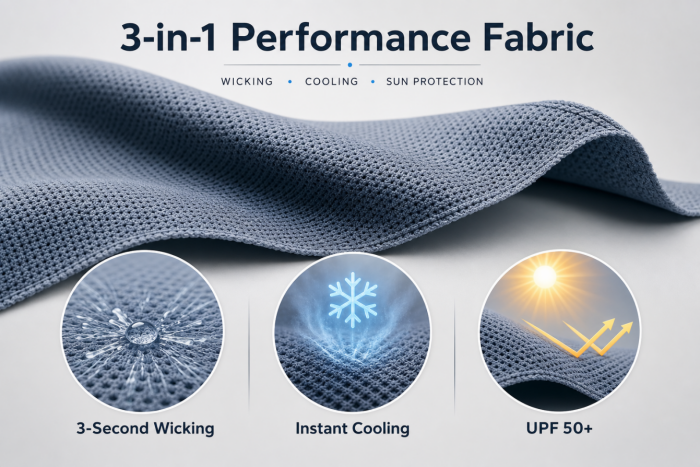
Parameter | Detail |
Style | TD07 |
Composition | 100% Functional Polyester |
Weight × Width | 150gsm × 165cm |
The flagship: three functions engineered as one system. Cruciform fibers handle moisture transport, cooling particles handle contact heat removal, UV blockers handle sun protection — each operates at a different layer, none interfering with the others.
Key Advantages:
3-in-1 wicking + contact cooling + UPF 50+ in one garment
Perceived temperature 3–5°C lower than standard T-shirts
Fiber-level core functions—wash-durable
Premium positioning —ideal for mid-to-high-end sports brands
Best For: Premium cooling quick-dry T-shirts, professional outdoor tops, long-sleeve running wear, sun-protective garments, golf wear.
Parameter | Detail |
Style | FD13-1 |
Composition | 100% Polyester |
Weight × Width | 150gsm × 170cm |
Dual protection: UV blocking for the skin, silver-ion (Ag+) antibacterial for odor control — ideal for prolonged outdoor wear.
Key Advantages:
UPF 50+ blocks 98%+ of UV radiation
Ag+ inhibits 99%+ of bacteria (S. aureus, E. coli)
Long-lasting odor control — fresh after heavy sweating
Multi-scenario — outdoor, travel, daily commute
Best For: Outdoor quick-dry T-shirts, long-sleeve sun-protective tops, fishing and hiking wear, travel T-shirts, sports bras.
Parameter | Detail |
Style | CMP003 |
Composition | 75% Polyester + 17% Cocotex + 8% Micax Mica Cooling Fiber |
Weight × Width | 170gsm × 160cm |
Combines polyester durability with natural plant-fiber comfort. Cocotex (coconut/bamboo carbon fiber) provides inherent adsorption and antibacterial properties; Micax mica fibers deliver contact cooling.
Key Advantages:
Natural antibacterial— bamboo-kun component inhibits odor
Mica cooling— mineral powder embedded in fiber conducts heat away
Breathable porous structure — drier than cotton
Sustainable story — natural plant raw materials for eco-conscious consumers
Best For: Nature-positioned sports T-shirts, casual quick-dry tops, yoga wear, loungewear, sensitive-skin consumers.
Parameter | Detail |
Style | K0026 |
Composition | 92% Polyester + 8% Spandex |
Weight × Width | 170gsm × 168cm |
Cooling function built into a poly-spandex single jersey: 8% Spandex delivers 4-way stretch, cooling fibers deliver contact temperature drop.
Key Advantages:
Contact cooling— Q-max meets the national cooling standard (GB/T 35263, ≥ 0.15 W/cm²)
4-way stretch— 8% Spandex moves with the body, no restriction
Quick-dry — polyester fiber wicks sweat fast
Premium matte finish— avoids the "plastic look" of cheap cooling fabrics
Best For: Cooling yoga wear, gym compression leggings, sports bras, running compression tops, ice-silk base layers.
Fabric | Style | Composition | Core Function | Weight × Width |
Wicking Bird Eye | EY-4 | 100% Wicking Polyester | Moisture Wicking | 145gsm × 183cm |
Quick-Dry Double Knit | FD07 | 100% Polyester | Quick Dry | 140gsm × 180cm |
UPF 50+ Jersey | FU07 | 100% Polyester | UPF 50+ Sun Protection | 140gsm × 180cm |
Wicking Double Knit | EY-7 | 100% Wicking Polyester | Moisture Wicking | 140gsm × 183cm |
Triple-Function | TD07 | 100% Functional Polyester | Wicking + Cooling + UPF 50+ | 150gsm × 165cm |
UV + Antibacterial | FD13-1 | 100% Polyester | UPF 50+ + Ag+ Anti-Bacterial | 150gsm × 170cm |
Bamboo Fiber Tee | CMP003 | 75% Poly + 17% Cocotex + 8% Micax | Natural Anti-Bacterial + Cooling | 170gsm × 160cm |
Cooling Stretch | K0026 | 92% Polyester + 8% Spandex | Cooling + 4-Way Stretch | 170gsm × 168cm |
All fabrics support custom functional combinations. Professional test reports available for every function.
Q1: Is moisture wicking the same as quick dry?
A: No — two related but distinct functions. Moisture wicking solves how fast sweat travels from skin to fabric surface (capillary effect; the goal is no cling). Quick dry solves how fast water evaporates from the fabric (hydrophobicity + large evaporation surface; the goal is fast drying). Premium fabrics deliver both in sequence: wick first, then evaporate — that sequence keeps a garment dry through a full workout.
Q2: Is cooling fabric a gimmick? Will the cooling effect wash out?
A: Cooling is real — but there are two grades. Physical/mineral cooling (jade, mica, boron-nitride particles embedded at melt-spinning): permanent, survives 100 washes. This is what East Xinwei uses. Chemical cooling (menthol/xylitol surface agents): fades within 3–5 washes. Buyer check: look for a Q-max value on the label — China's national standard (GB/T 35263) requires Q-max ≥ 0.15 W/cm² for certified cooling fabrics.
Q3: What does UPF 50+ actually mean? Does it survive washing?
A: UPF (Ultraviolet Protection Factor) measures UV blockage. UPF 50+ means less than 1/50 of UV penetrates — over 98% blocked — the highest textile rating. Fiber-level UV protection (blockers added during spinning) retains UPF 50+ after 50 washes; coating-level protection drops after 10–20 washes. Dark, dense fabrics naturally block more UV; UPF certification confirms performance regardless of color.
Q4: Is silver-ion (Ag+) antibacterial safe for skin?
A: Yes — when properly certified. Ag+ disrupts bacterial cell membrane proteins and acts only on surface bacteria; it does not enter the body. Fabrics certified under OEKO-TEX Standard 100 are non-irritating, safe for pregnant women and sensitive skin. Quality silver-ion fabrics achieve 99%+ inhibition of S. aureus and E. coli, retaining effectiveness after 50 washes. The risk is substandard suppliers with unstable silver release — which is why certification-backed sourcing matters.
Q5: Is bamboo fiber naturally antibacterial? How does it compare to synthetic antibacterial?
A: Bamboo contains a natural antimicrobial compound, "bamboo kun," partially retained in bamboo pulp fiber — studies show 75–90% inhibition against E. coli and S. aureus. Bamboo is inherently antibacterial (gentler, more eco-friendly, but weaker and washes out gradually); synthetic antibacterial is added via finishing (stronger, more stable, but artificial). Key caveat: bamboo-kun content scales with fiber percentage — fabrics with under 40% bamboo content have limited antibacterial effect. Our CMP003 pairs 17% Cocotex with 8% Micax for a balanced natural-positioning blend.
Q6: Is more function always better? Does a 3-in-1 fabric compromise each function?
A: It depends entirely on engineering level. A well-engineered multi-function fabric designs each function at a different layer — modified cross-section (wicking) + mineral particles (cooling) + UV blockers (sun protection) — functions coexist without interference. That is how our TD07 is built. A poorly engineered version stacks three coatings on the surface; they compete for space, each performs worse, and all wash out quickly. Buyer rule: verify whether functions are fiber-level or coating-level before ordering.
Q7: How can I quickly evaluate a functional fabric before ordering?
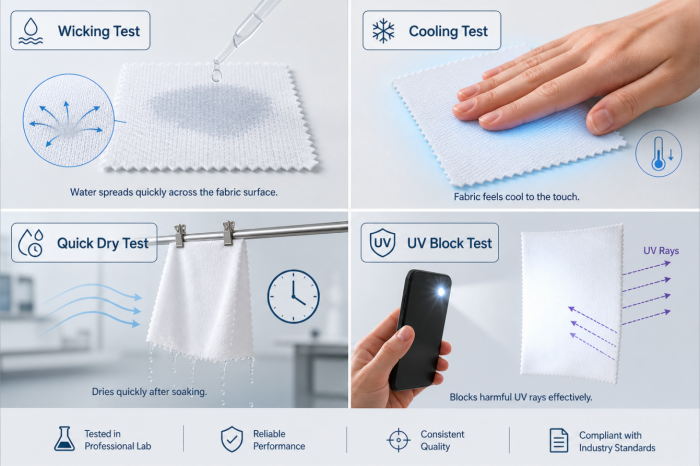
A: Four at-home tests work in minutes:
Test | Method | Pass Criterion |
Wicking | Drop water on the surface | Spreads within 3 seconds; beading = poor wicking |
Cooling | Touch the back of your hand to the fabric | Instant cool sensation (first-contact moment only) |
Quick Dry | Wet the fabric, hang in airflow | Dries 2–3× faster than cotton in identical conditions |
UV Blocking | Cover a phone flashlight with the fabric | Less light transmitted = better blocking (rough check — rely on UPF certification for approval) |
Q8: Can functions be customized and combined?
A: Yes. East Xinwei supports the full stack — wicking, quick-dry, UPF 50+, antibacterial, cooling, water-repellent — plus popular combinations (wicking + quick-dry, cooling + quick-dry for summer, UPF + antibacterial for outdoor, 3-in-1/4-in-1 for premium lines). Process: select the fabric base (mesh/pique/double-knit/jersey), choose the function stack, sample to confirm performance and hand feel. Buyer advice: match function count to price positioning — more functions mean higher cost; a $5 retail tee does not need a 4-in-1 fabric.
Q9: How should functional fabrics be laundered to preserve performance?
A: Machine washable, but care determines function lifespan. Cold water (≤30°C) — high heat damages fiber structure and finishes. No fabric softener — softeners coat fibers and clog capillary channels, killing wicking and quick-dry performance. No bleach, wash inside out, and air dry (avoid tumble drying). Fiber-level functions survive 100+ washes; finish-level functions retain most performance through 50 washes with proper care.
Q10: Some quick-dry shirts feel "plastic." How do I choose better hand feel?
A: Plastic feel comes from three sources: low-grade fiber (rough cross-section — premium polyester is polished for a smooth hand), ultra-thin dense construction (proper GSM and looser knitting feel better), and missing after-treatment (quality mills add brushing or hydrophilic finishing). Buyer checklist: touch (fine, draping, not stiff), look (even surface, natural luster — not oily), squeeze (recovers fast, few wrinkles). Consider nylon-spandex blends if softness is a priority — nylon feels notably silkier.
Q11: Quick-dry or cotton for sports?
A: For athletic scenarios, quick-dry wins decisively: cotton holds sweat, clings wet and heavy, takes half a day to dry, and breeds odor bacteria in damp conditions. Quick-dry fabric transports sweat away, dries in 1–2 hours, and gains negligible weight when wet. Cotton's strengths — softness, comfort, no static — suit casual wear. Rule: cotton for daily, functional fabric for movement.
Q12: Can water-repellent fabric double as a raincoat? Waterproof and breathable at once?
A: Know the three grades. DWR (durable water repellent): bead-up lotus effect — sheds light rain and splashes but not prolonged downpours; keeps full breathability. Coated waterproof: genuinely waterproof but zero breathability — plastic-sheet feel. Waterproof-breathable membrane (e.g., Gore-Tex): blocks rain and vents sweat vapor — professional outdoor shells at premium cost. For sportswear, DWR is the standard choice: it handles light rain, sweat stains, and beverage spills while maintaining breathability.
Fujian East Xinwei Textile Technology Co., Ltd. operates an 83,000 m² base in Sanming, Fujian, with 400+ circular knitting machines and 12 texturing lines. Our subsidiary, Fujian Naqi Textile, provides in-house dyeing and finishing (monthly capacity 3,000+ tons). Certified: GRS, ISO 9001, OEKO-TEX Standard 100. Exporting to 50+ countries; international trade managed by Fuzhou Fangtuosi Textile Materials Ltd.
Every functional claim at East Xinwei ships with a professional test report — wicking speed, Q-max value, UPF rating, antibacterial inhibition rate. Single function or custom combination, we deliver fiber-level quality at scale.
Our cotton fabric portfolio combines innovation and sustainability, offering versatile solutions for diverse needs. Organic cotton prioritizes eco-friendly cultivation, while artificial cotton (e.g., rayon blends) enhances affordability and softness. Cotton-bamboo charcoal integrates natural odor resistance, ideal for activewear. Cotton-polyester blends balance durability and wrinkle resistance, whereas 100% cotton delivers breathability and comfort. Cotton-spandex nylon spandex ensures stretchability for form-fitting apparel. Tencel-cotton and Modal-cotton blends elevate softness and moisture-wicking, aligning with luxury and performance demands. Each variant adheres to rigorous quality standards, from OEKO-TEX certifications to advanced finishes, ensuring functionality across fashion, sportswear, and home textiles.
Sportswear & Activewear: Cycling, running, yoga, gym apparel
Swimwear & Beachwear: Chlorine-resistant, quick-dry fabrics
Workwear & Uniforms: Durable, breathable, antibacterial
100% cotton fabric is a natural fiber textile made solely from cotton plants, prized for its breathability, softness, and hypoallergenic properties. It excels in moisture absorption, making it ideal for sensitive skin and hot climates. However, it wrinkles easily, shrinks if improperly washed, and lacks elasticity. Common in apparel (T-shirts, underwear), bedding, and medical textiles, it ensures comfort and durability. Eco-friendly options feature OEKO-TEX® certification for chemical safety. To maintain quality, avoid hot water and prolonged soaking during washing
Cotton spandex is a blended fabric combining natural cotton (typically 95-98%) with spandex/elastane (2-5%). It merges cotton’s breathability, softness, and hypoallergenic properties with spandex’s high elasticity (stretches 5-8x). Ideal for activewear (jogging suits, yoga pants), casual apparel (T-shirts, jeans), and workwear (jackets), it ensures comfort and freedom of movement. The fabric resists wrinkles and wicks moisture efficiently, though it may pill or shrink if improperly washed. Advanced versions integrate MXene coatings for smart wearables or organic cotton for eco-conscious production. A versatile choice balancing durability and adaptability across climates and activities
Cotton Polyester is a blended fabric combining cotton (natural breathability) and polyester (synthetic durability). Common blends include TC (≥65% polyester, ideal for wrinkle-resistant uniforms/industrial fabrics) and CVC (≥65% cotton, prioritizing softness for casualwear/medical textiles). Benefits: durability, cost-effectiveness, and easy care (quick-drying, shrink-resistant). Drawbacks: lower moisture-wicking vs. pure cotton, static buildup, and pilling. Used widely in apparel (T-shirts, jeans), home textiles, and workwear for balanced comfort and resilience.
Cotton bamboo is a blended textile combining natural cotton with bamboo-derived fibers (via mechanical/chemical processing). Known for breathability and moisture-wicking (3.5x faster than cotton), it regulates temperature and resists odors due to bamboo’s natural antimicrobial agent, “Bamboo Kun”. Soft, hypoallergenic, and UV-resistant, it’s ideal for undergarments, activewear, and bedding. Eco-friendly: bamboo grows rapidly with minimal water, and the fabric biodegrades naturally. Blends (e.g., 95% cotton + 5% bamboo) enhance durability while maintaining comfort. Certified options (e.g., OEKO-TEX®) ensure safety
Cotton is a natural plant-based fiber derived from the seed hairs of the cotton plant (Gossypium species). It has been cultivated for millennia, with origins traced to ancient India and Mesoamerica .
Cotton is generally considered high-quality for clothing due to its natural properties and versatility, but its quality depends on factors like fiber type, processing, and blend ratios. Here's a detailed benefits of cotton for clothing:
Explore our performance-driven apparel engineered for every sport: From chlorine-resistant swimwear with UPF50+ protection to moisture-wicking football/basketball jerseys featuring dry fit inspired breathability . Yoga leggings and bras prioritize 4-way stretch for unrestricted movement, while cycling wear integrates compression zones. Our GRS-certified hoodies and joggers blend eco-conscious materials with thermal regulation, complemented by casual tees using odor-control fabric. Certified OEKO-TEX and ISO compliant, each category delivers sport-specific functionality without compromising style—aligning with our "Quality First, Excellence Always" ethos for global athletes.
East Xinwei Textile pioneers high-performance sustainable fabrics for sportswear brands. Specializing in GRS-certified recycled polyester, OEKO-TEX® compliant nylon-spandex blends, and GOTS organic cotton, we engineer fabrics that merge eco-conscious innovation with athletic excellence. Our UPF50+ swimwear materials resist 200+ chlorine hours, while 4D-stretch yoga fabrics endure 10,000+ motion cycles. Advanced tech like graphene thermoregulation and phase-change microcapsules powers functional textiles for cycling, hiking, and competitive sports. Partnering with SGS-certified labs, we deliver AAATCC/ISO-tested durability, transforming 8M+ plastic bottles annually into premium activewear. Redefining sportswear sustainability, one thread at a time.
We are a diversified enterprises, we have knitting factory, dyeing factory and import & export trading company.
we are located in Sanming city, Fujian Province, welcome to visit our factory!
Knitting Factory: Fujian East Xinwei Textile Technology Co.,Ltd.
Dyeing Factory: Fujian Naqi Textile Technology Co., Ltd.
Trading Company: Fuzhou Fangtuosi Textile Materials Ltd.
Sure! We can provide A4 size sample, You just need to pay some shipping cost. Please send your address and phone number to me, I will help you to check the cost for it. If you need some meter samples, please let me know!
For some type, we have color cards. and we usually custom the color based on Pantone color number or physical color sample, we will make lab-dip ( small color sample, size: 5*5cm) for each color.
Pls pick up the Pantone color number from it, Pantone website :
https://connect.pantone.com/#/picker?pantoneBook=pantoneFhCottonTcx
Usually MOQ is 500KG/type, If lower than the MOQ, we can help you to do smaller quantity, Just need to charge some extra cost.
We have OEKO-TEX, GRS, ISO, SGS certificates etc.
Usually: T/T, 30% deposit paid before production, 70% balance paid before shipping.
Partner with Fujian East Xinwei Textile for premium sportswear and sustainable fabrics. Contact us today to customize your textile solutions with quality, innovation, and reliability you can trust.
The page you're looking for couldn't be found.
It looks like this was the result of either a mistyped address or an out-of-date bookmark.
East Xinwei is an advanced clothing fabric manufacturer. We specialized in producing heated gear including sportswear fabric, recycled fabric, as well as function fabric. Welcome to click the left or the below to find more that you may be interested in.
This website collects information from our users at several different points on our website in order to process reservations and better serve you with pertinent information. This website is the sole owner of the information collected on this site. We will not sell, share, or rent this information to any outside parties, except as outlined in this policy. Information collected includes name, shipping address, billing address, telephone numbers, e-mail address, and payment information such as credit card. Your username and password are to remain confidential and you should not share this information with anyone. This page Privacy and Security Policy is part of this Agreement, and you agree that the use of data as described in the Privacy and Security Policy is not an actionable breach of your privacy or publicity rights. These website information practices are further described in its Privacy and Security Policy.
East Xinwei is an advanced clothing fabric manufacturer. We specialized in producing heated gear including sportswear fabric, recycled fabric, as well as function fabric. Welcome to click the left or the below to find more that you may be interested in.
Partner with Fujian East Xinwei Textile for premium sportswear and sustainable fabrics. Contact us today to customize your textile solutions with quality, innovation, and reliability you can trust.


